



 134 / 218

[
] 132
I
N NEW RESEARCH
with slum dwellers in six African cities,
ActionAid has uncovered that there are few, if any, collec-
tive mechanisms for reducing flood risks or for managing
floods once they do happen. Instead, poor people are left to
fend for themselves however they are able.
1
Urbanization and climate change in Africa
Environmental refugees are already swelling the tide of rural-
to-urban migration across Africa. The trend is expected to
increase as climate-related drought and floods intensify and
grow more frequent, and rural Africans seek a more secure life
in the city. By 2030, the majority of Africa’s population will live
in urban areas. However, global warming is also bringing
increased chronic flooding to the cities, increasing the vulner-
ability of the urban poor throughout Africa.
Already the urban poor have no choice but to build their
homes and grow their food in hazardous places such as river
flood plains. Others construct their shelters on steep, unsta-
ble hillsides, or along the foreshore on former mangrove
swamps or tidal flats. Whether already vulnerable to destruc-
tive floods, damaging landslides or storm surges, climate
change is making the situation of the urban poor worse.
The right to adequate housing and ‘continuous improvement
of living conditions’ was recognized more than three decades
ago by the governments that ratified the International
Covenant on Economic, Social and Cultural Rights. Six years
ago, at the UN Millennium Summit, world leaders set a specific
target for realizing that right by pledging to achieve ‘a signifi-
cant improvement in the lives of at least 100 million slum
dwellers’ by 2020. However, in Africa – the world’s fastest
Climate change, flooding and
the protection of poor
urban communities in Africa
Ian Douglas, Emeritus Professor, School of Environment and Development,
University of Manchester, Jack Campbell and Yasmin McDonnell,
Emergencies and Conflict Team, ActionAid International
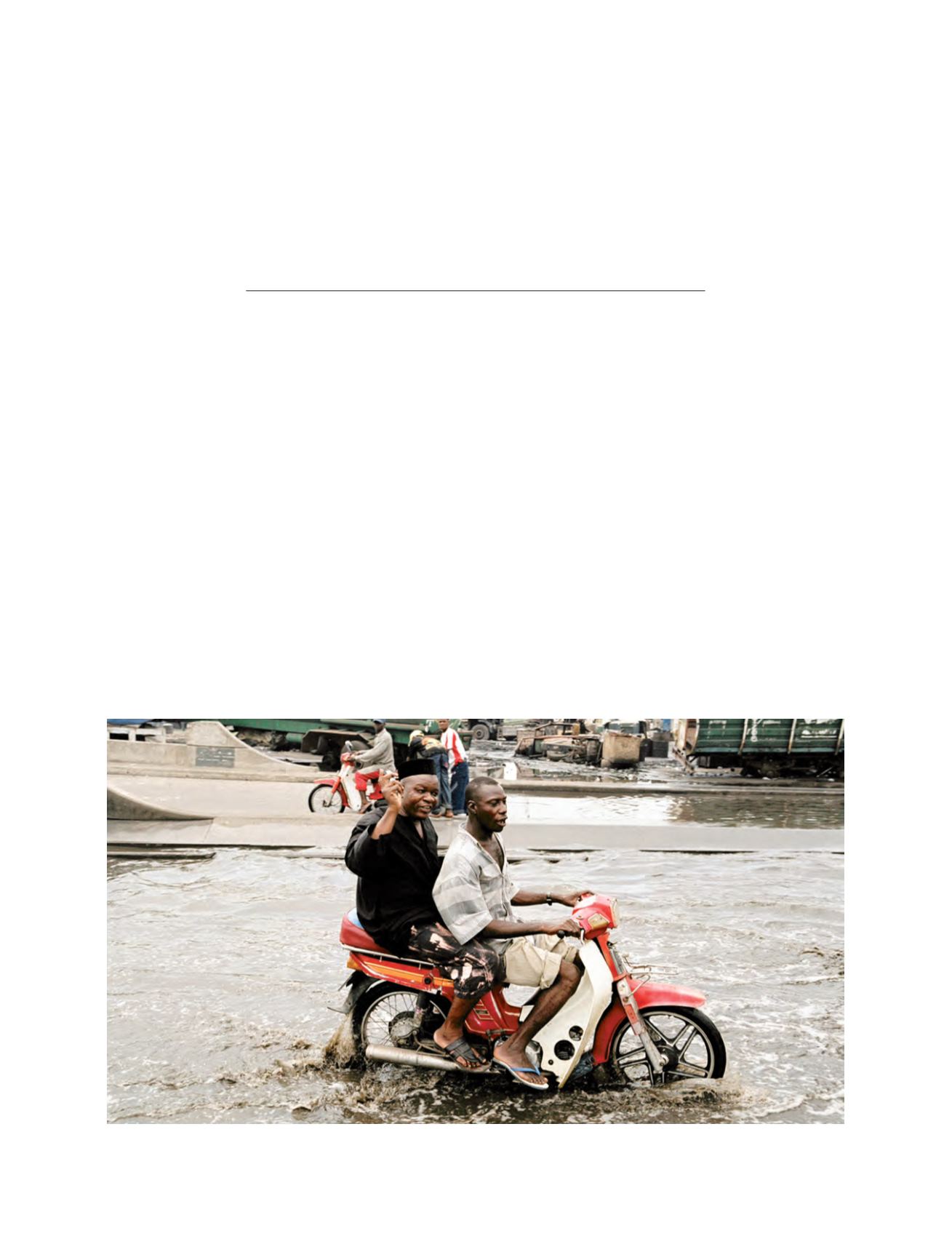
Flooding in Lagos, Nigeria
Photo: Gideon Mendel/Corbis/ActionAid