



 178 / 218

[
] 176
studies, we estimate value using surveys in which a representa-
tive sample of the relevant population expresses a stated
preference. This preference can then be directly or indirectly
used to determine willingness to pay for a good or service. The
value obtained for the good or service is contingent on the nature
of the constructed market described in the survey scenario.
A recent study used the stated preference approach to esti-
mate US households’ values for potential improvements in
day-to-day weather forecasts.
1
In this study, the researchers
developed a survey instrument to elicit the value placed by
households on improved weather forecasting services. The
investigators took great care in developing the survey to ensure
that respondents would understand the commodity being
valued (weather forecasts) and to make sure that the survey’s
results would be valid and reliable. In addition to valuation
information, the survey elicited information on households’
sources, uses, and perceptions of weather information.
Four attributes of weather forecasts were considered in the
survey: the frequency of forecast updates, the accuracy of one-day
forecasts, the accuracy of multiday forecasts, and the geographic
detail of forecasts. Different combinations of improvements in
forecast quality were offered to individuals who were asked to
choose between forecast ‘packages’ and a proposed cost for the
forecast improvement. This means that the study used a ‘stated
choice’ approach to stated preference valuation. The researchers
then used statistical analysis to determine individuals’ marginal
values for changes in the different forecast attributes.
Using the values estimated for changes in the attribute levels,
the study calculated individuals’ value for a programme that
would increase all attributes to their maximum level as
USD17.88 per year per household. As expected, values for
improving weather forecasts were found to be related to
sociodemographic characteristics such as income and educa-
tion, the amount of time an individual spends working
outdoors, and how individuals use weather information in
making behavioural decisions.
Using a different valuation question, the study also elicited
individuals’ value for weather forecasts as currently provided
through both public and private distribution channels. This
value was USD109 per year per household.
Based on 2000 census estimates of approximately 105 million
US households, the investigators estimated the total value for
improving weather forecasts to the maximum levels proposed
in the survey to be USD1.87 billion per year. Similarly, the total
value to US households for weather forecasts as currently
provided was estimated to be USD11.4 billion per year.
The benefits of improved weather forecast quality, as esti-
mated in the US households study, could be used to evaluate
a programme to improve forecasting capabilities, if an estimate
of the cost of improvement is available. Consider the follow-
ing hypothetical illustration: in the 1980s, the National
Weather Service undertook the Modernization and Associated
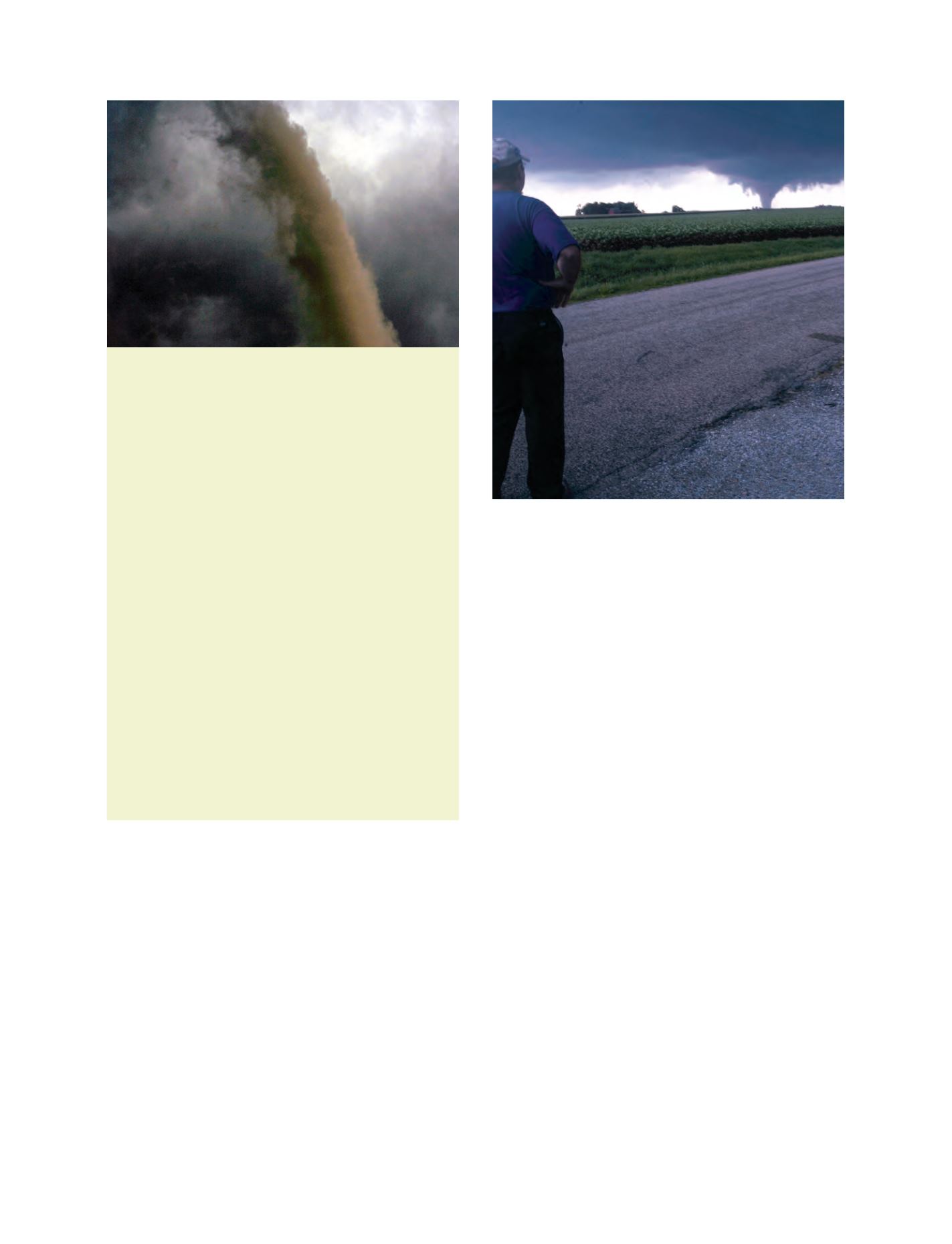
Tornado warnings
Between 1992 and 2004, the National Weather Service’s (NWS)
NEXRAD radar system prevented over 330 fatalities and 7,800
injuries from tornadoes, at a monetized benefit of over USD3
billion, compared with a total capital and site acquisition and
preparation cost of less than USD1.7 billion (in 2004).
Tornadoes during the day are much less dangerous than at
night, with fatalities 64 per cent lower and injuries 43 per cent
lower for daytime tornadoes. This provides indirect evidence
that tornado warnings are saving lives, but suggests that
improvements in the dissemination of warnings at night could
save more lives.
Residents of mobile homes remain at risk from tornadoes: over
40 per cent of fatalities occur in mobile homes, and the fatality
rate is more than ten times greater than that for residents of
permanent homes.
In 2002, 186 million person hours were spent under tornado
warnings in the US, and the value of this time was about USD3
billion. The NWS is experimenting with refining its tornado
warnings from the current county basis. This could reduce the
person hours under tornado warnings by half, or more
.
Source: Sutter, D and Simmons, K.
The value of tornado warnings and improvements in
warnings
. Presentations at the American Economics Association annual meeting (Boston,
January 2006) and the American Meteorological Society annual meeting (February 2006).
The economic benefit of tornado warnings is huge
Photo: NOAA