


 119 / 210

[
] 117
C
onfronting
F
amily
P
overty
lies and beneficiary families as well as children of prisoners
have worse health outcomes than other children. The 2013
Child Poverty Monitor notes that M
ā
ori children are also
proportionally more exposed to the impacts of poverty, as
evidenced by rates of admissions to hospital for infectious and
non-infectious diseases often associated with poverty. Data on
admissions for infectious diseases show significantly higher
rates for M
ā
ori than non-M
ā
ori for pertussis, meningococcal
disease, acute rheumatic fever and rheumatic heart disease,
and serious skin infections.
To improve well-being and health outcomes for M
ā
ori,
wh
ā
nau-centred initiatives have been introduced. These
wh
ā
nau ora (well and healthy) approaches champion an
integrated delivery of services and resources that focus on
collective well-being outcomes rather than solely focusing on
the individual. This whole-of-family approach aligns well with
M
ā
ori values and will hopefully deliver positive outcomes for
M
ā
ori wh
ā
nau and achieve a significant reduction of wh
ā
nau
poverty. It is also significant that many of these initiatives
are designed, implemented and delivered by M
ā
ori for M
ā
ori.
It is well known that education is integral to the devel-
opment of human potential. New Zealand produces high
educational outcomes for some while at the same time deliver-
ing low educational achievement for others. M
ā
ori educational
achievement needs to be understood within the context of this
high quality, low equity education system. M
ā
ori education-
alists have noted the contribution that M
ā
ori communities
have made to education in New Zealand. The development
of M
ā
ori-language immersion preschool, primary, secondary
and tertiary institutions has led to increased M
ā
ori participa-
tion at all educational levels. However, most M
ā
ori children
attend mainstream English-medium schools and, while the
last 40 years have seen a significant shift in attitudes towards
incorporating M
ā
ori dimensions into the curriculum, the
achievement gains for M
ā
ori children have been modest.
Current research and policy initiatives indicate that increased
levels of achievement for M
ā
ori children include attending to
school and community leadership, teacher quality, wh
ā
nau
engagement, a responsive and accessible curriculum, the
guidance of M
ā
ori children onto academic pathways that
encourage higher education, and prioritizing student reten-
tion. Leadership needs to go beyond the school gates and
demonstrate a commitment to M
ā
ori communities to fully
address inequities in M
ā
ori student achievement. A recogni-
tion that change has occurred gives reason for optimism in
the future, but there is much that needs to be done to move
beyond incremental change towards positive transforma-
tive change. Quality early childhood education through to
tertiary-level participation is key to wealth creation in the
broadest sense by creating the conditions for M
ā
ori to lead
rich productive individual and collective lives.
Paid employment is clearly identified as one of the most
important pathways out of poverty. While paid employ-
ment generates income, it also allows higher levels of social
engagement and life satisfaction. For M
ā
ori, work that is
secure, sustainable and available greatly contributes to indi-
vidual and collective well-being. M
ā
ori make up a relatively
young and fast-growing share of the New Zealand working-
age population. Department of Labour data shows that M
ā
ori
have weaker labour market outcomes, on average, than the
broader population. In an ageing population the younger age
profile of M
ā
ori should be seen as an asset, yet they have been
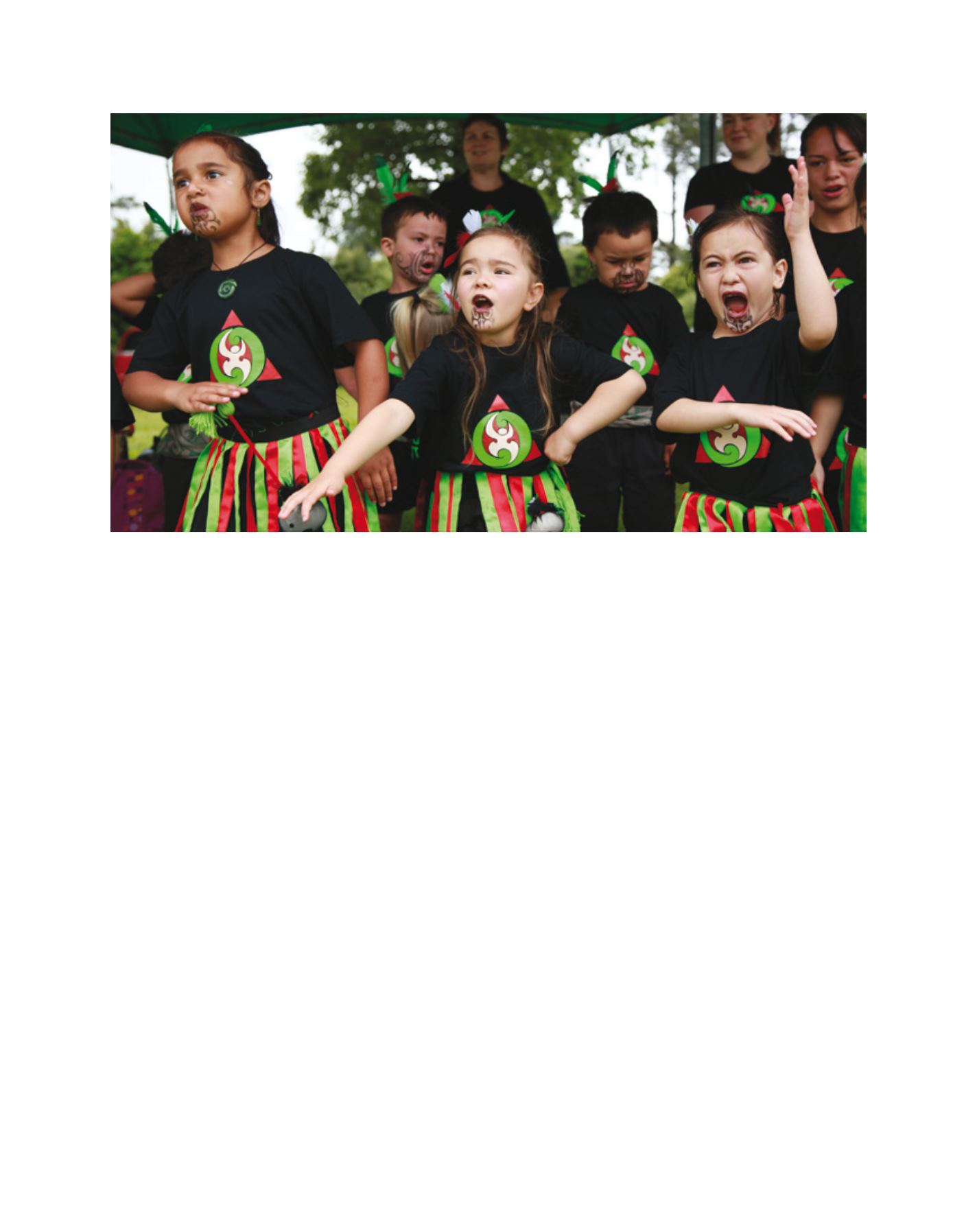
Incorporating M
ā
ori dimensions in the curriculum has led to modest achievement gains for M
ā
ori children, but more must be done to move beyond incremental
change towards positive transformation
Image: Josie McClutchie, Ng
ā
Pae o te M
ā
ramatanga