


 116 / 210

[
] 114
C
onfronting
F
amily
P
overty
achievable for everyone. The National Crusade Against
Hunger is probably the best example of how this works,
since it is focused on the population that suffers hunger with
the aim of guaranteeing their right to food. For the crusade,
hunger is defined as a situation that faces the extreme poor as
explained before but, in addition, access to food is one of the
social deprivations they suffer. In 2012 the population with
these characteristics added up 7.01 million people distributed
all over the country.
The National Crusade Against Hunger’s approach is holis-
tic and puts the family at the centre. For example, with the
scheme SIN-HAMBRE 290, thousands of families have a card
to buy basic foods in Diconsa stores. On the other hand,
Liconsa distributes fortified milk among families with scarce
resources to improve their nutrition. Food supplements are
also distributed to pregnant women, school breakfasts for
children and food supplies for seniors.
However, the National Crusade Against Hunger does not stop
at providing assistance. It has a productive branch where the
family also plays an important role. For example, it encour-
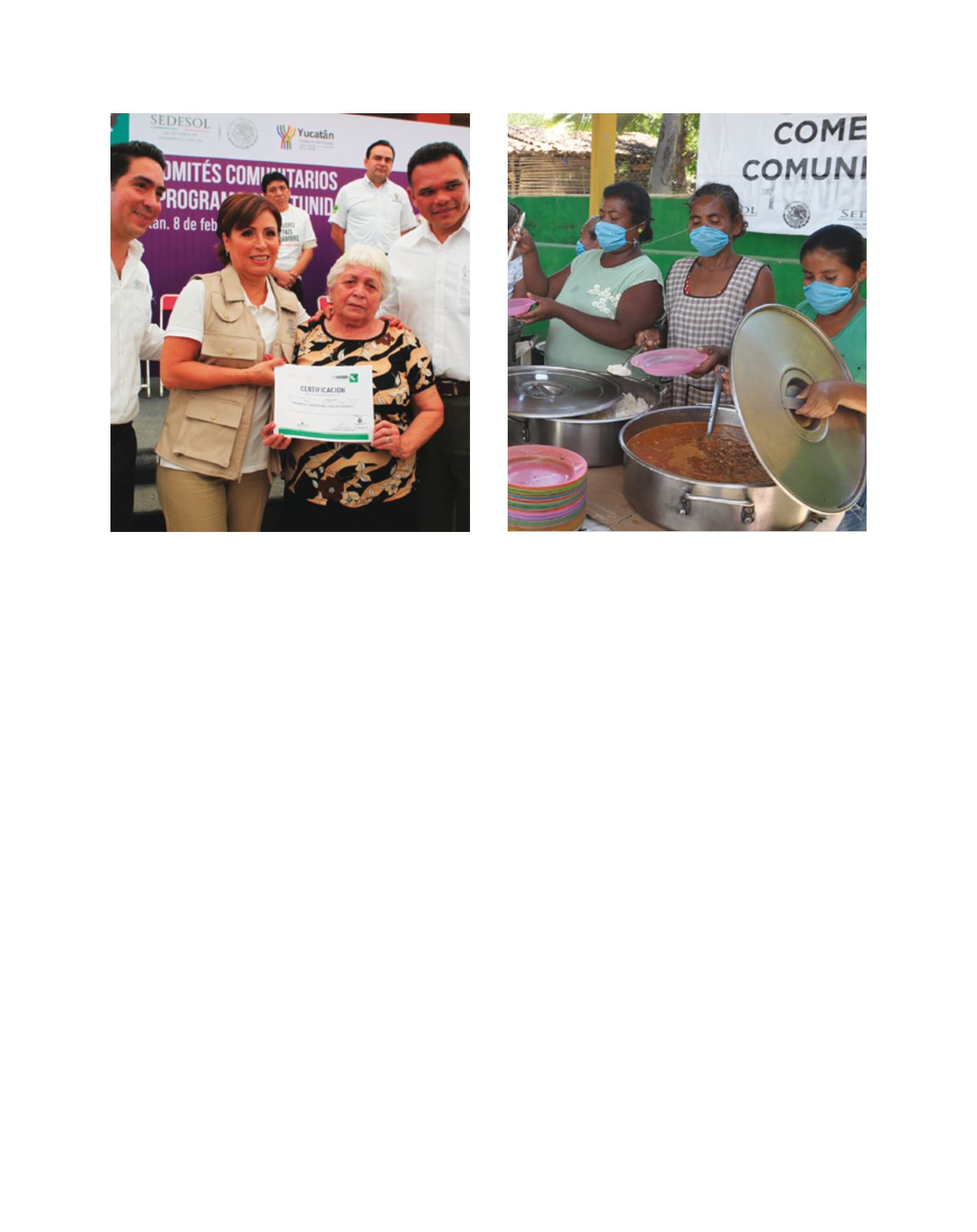
ages backyard animals for home consumption, the creation of
kitchen gardens and community kitchens. With these, families
have access to food they grow themselves and their vulnerabil-
ity to food supply and price volatility is reduced.
Furthermore, the crusade also provides a series of
programmes to improve families’ income through train-
ing, technology innovation, infrastructure and equipment,
among others. One of the most important of these
programmes is called Productive Options. It finances the
entrepreneurial ideas and projects of poor families that
wish to start a business. Another programme to support
families’ income is the Temporal Employment Programme,
with which people with seasonal jobs can work temporarily
in projects of common benefit.
In addition to the improvement of education, health, access to
food, employment and income, there are programmes to improve
dwellings – for example, with respect to materials in floors, walls
and roofs, or expanding the provision of basic services such as
electricity or piped water. In this way, the crusade also takes
into account actions to improve the family’s vital space and its
community. As a matter of fact, social participation is one of the
greatest pillars of the crusade and of the social policy in general.
Social participation has been encouraged through thousands of
community commitees, as well as through NGOs. It is through
social participation mechanisms that communities prioritize
their needs and channel their demands to local and federal
governments. In other words, we are putting the communities
in the driver’s seat in their development process and, at the same
time, we are reconstructing the social fabric.
Overall, Mexico has a social policy with a life cycle perspec-
tive, and the Government’s programmes and strategies are
targeted to provide a holistic approach to the family. There is
an institutional framework that cares for all family members
in their different life stages. In addition to the various
programmes, there are institutions that promote actions for
the youth, the disabled and later adults.
We are pushing for policies and reforms to move Mexico
and its families, closing inequality gaps, promoting inclusive
development and reconstructing the social fabric. The task is
immense, but the effort is worthwhile to create a system of
social policies and programmes that allow poor families to
have a basic level of welfare.
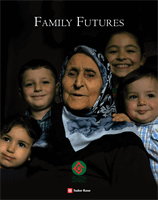
Social Development Minister Rosario Robles Berlanga with Doña María del
Socorro Cáceres y Gómez, a beneficiary of the +65 programme
Women working at one of the National Crusade Against Hunger
community kitchens
Image: SEDESOL
Image: SEDESOL