


 114 / 210

[
] 112
Social policy for families
Rosario Robles, Secretary of Social Development, SEDESOL, Mexico
C
onfronting
F
amily
P
overty
M
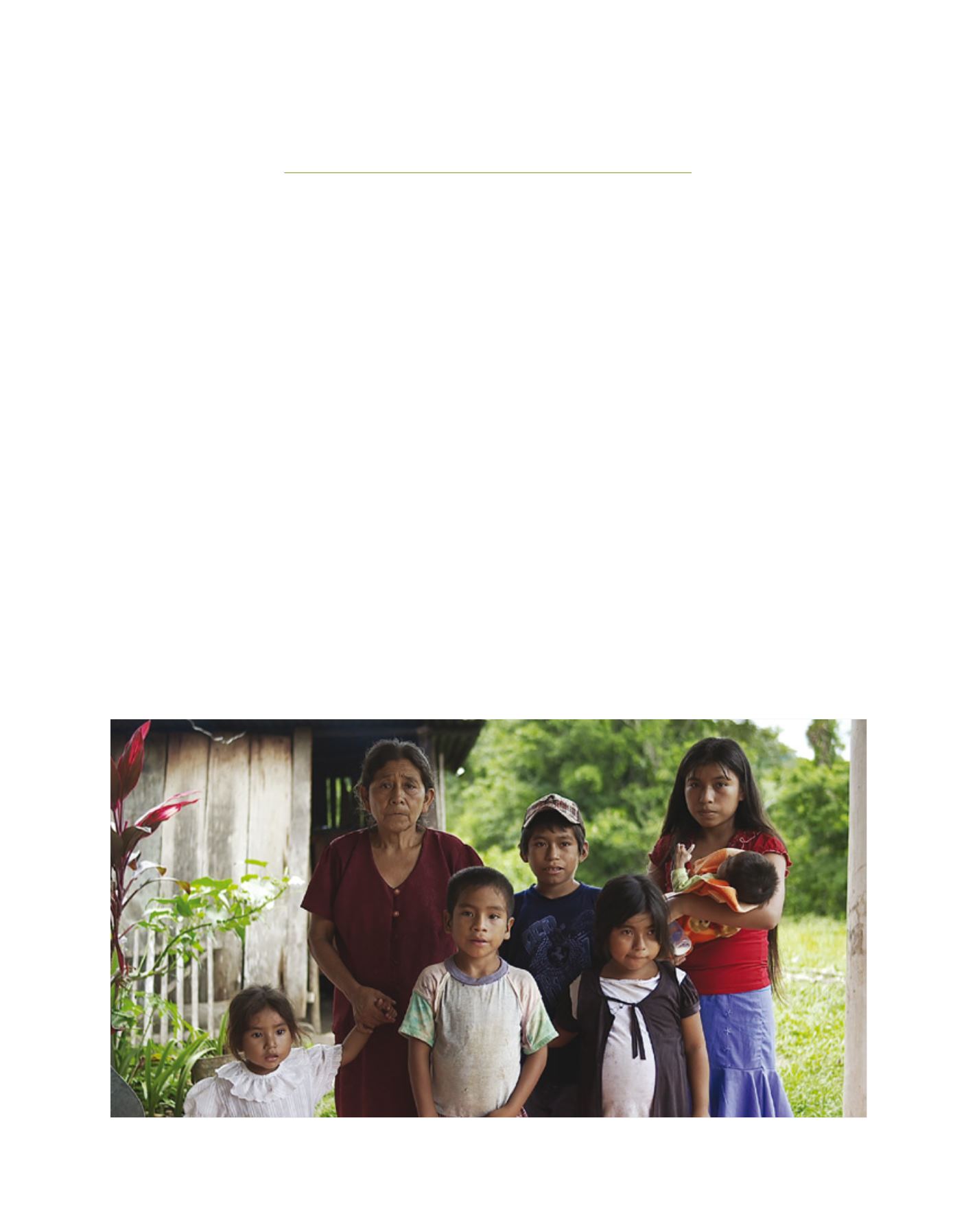
aría Antonia López López, from the municipality
of Las Margaritas in Chiapas, died while giving
birth to her sixth child. She was a single mother
and had few resources to sustain her children, to the point
that she had no money to buy shoes for any of the family
members. Her house lacked basic services such as piped
water, electricity or sewage. She left her children Leticia,
who is 13 years old; Magdaleno, 10 years old; Elizania,
nine years old; Armin, six years old; Guadalupe, two
years old; and her newborn baby. Luckily, they all have
their grandmother, Josefina López Gómez, and they also
have the benefit of the Life Insurance for Women Heads
of Household which was introduced at the beginning of
President Enrique Peña Nieto’s administration. Thanks
to the insurance, Josefina receives monetary support every
month for each of the children, to enable them to keep
attending school.
Life Insurance for Women Heads of Household is just one of
the programmes that form part of a new generation of social
policy. This policy has families and communities as its pillar
and adopts a life cycle vision to address families and their
members at different stages, from early childhood to late
adulthood. The social policy goal is to ensure effective social
rights for everyone, such as the right to food, the right to
health, the right to education and the right to decent dwell-
ing. The idea is to build a basic level of welfare for the whole
population, starting with the extreme poor.
The most recent poverty figures for Mexico (2012) report
53.3 million multidimensional poor people, 45.5 per cent
of the population. The poor are defined as those with at
least one out of six social deprivations and income below
approximately US$6 a day per person in urban areas or
US$4 a day per person in rural areas. Among the poor,
11.5 million are considered to be extreme poor, which
means that their income is below US$3 a day per person in
urban areas and US$2 a day per person in rural areas, and
they have three or more out of the six social deprivations.
The six social deprivations of the official multidimensional
poverty measure in Mexico are: education, access to health
services, social security, dwelling materials and space,
dwelling basic services and access to food.
The social deprivation that has the highest incidence is
social security, with 61.2 per cent of the population lacking
Image: SEDESOL
Life Insurance for Women Heads of Household supports families like Josefina López Gómez and her six grandchildren, whose mother died in 2013