


 113 / 210

[
] 111
C
onfronting
F
amily
P
overty
gies embraced. The department implements cash transfer
programmes for older persons and persons with severe disa-
bility, which started in 2005 and 2010 respectively, albeit on
a small scale. In the short period they have been in opera-
tion, evaluations have shown that these programmes are
starting to have a huge impact on addressing poverty and
vulnerability at the family level.
Cumulatively, the cash transfers (including transfers
to orphans and vulnerable children under the Children
Services) reach an estimated 500,000 households living in
extreme poverty and vulnerability. Given the poverty status,
this remains a small drop when compared to those in need.
Kenya, through promulgation of the new constitution (2010),
recognized the need for government to increasingly take care
of the vulnerable, in a progressive approach towards reali-
zation of a universal mechanism. The cash transfers, along
with other programmatic interventions, remain critical in
confronting poverty at the family level. Earlier evaluations
have shown clearly that families’ and households’ livelihoods
are being improved directly and through social investments
that have been made possible by the transfers.
The 2009 census identifies the households of PWDs
as constituting a high percentage of individuals living in
poverty. Although the disability movement in Kenya has
grown immensely, moving from a state of ‘don’t see, don’t
hear’ to embracing affirmative actions towards those that
live with disabilities, PWDs still live in extreme poverty
while experiencing much discrimination. The depart-
ment has walked this journey with the country through
programmes focused on mobilizing and supporting groups
of PWDs. These initiatives led to the development of the
Disability Act 2003, which has increasingly pushed for
realization of rights for PWDs, and opened space for their
participation in mainstream development. It has made
provision for institutional mechanisms to enforce imple-
mentation and created a national funding mechanism. The
disability movement has come a long way since the 1970s,
moving from a blind eye to matters of disability to full
recognition that disability concerns and interests must be
represented at all levels of national development through
disability mainstreaming.
Certainly, many challenges abound in the delivery of
these services that hamper the effectiveness and realization
of enhanced family well-being in Kenya. Many lessons have
been learned, and the room for improvement is immense.
Nonetheless, the efforts the department has put in place
towards confronting poverty at family level remain commend-
able and form an entry point for mitigating family poverty.
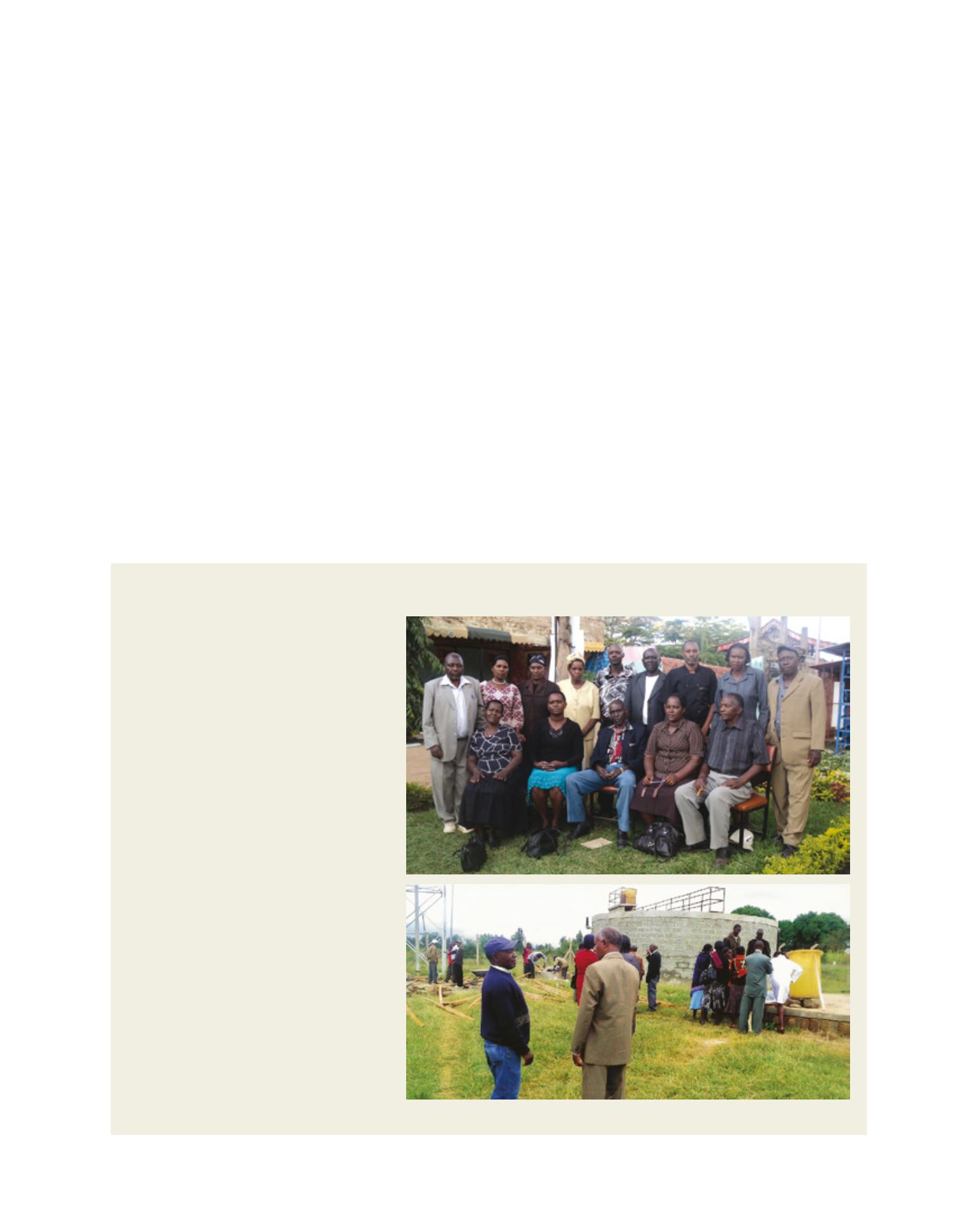
Rukanga Water and Sanitation Company
The journey in search of water began 20 years
ago for the Rukanga Water and Sanitation
Company (RuWaSCo). Their poor quality of life
necessitated a solution: women would walk 8
kilometres every day for water and development
activities took a back seat; farming was for
sustenance, and with livestock also using the
river, the spread of diseases was unchecked and
injuries on the banks were all too common.
Community members formed a self-help group
in 1989: the Rukanga water project. The initial
registration fee was Ksh 50 and the starting capital
share was Ksh 1,000 per household. Twenty years
later, IFAD began to engage with and support the
community. Share capital contribution increased
to Ksh 2,500. The community contribution was
25 per cent of the project, 5 per cent of which
was cash and 20 per cent labour – trenching
the 23 kilometres of main line and 60 kilometres
of branches that made up the 83-kilometre
distribution network.
The project was officially opened in March
2005. “We were overjoyed to see the first signs
of water in our homes,” recalled RuWaSCo
member Mrs Githure.
Without the daily trek for water, the women now
have more time for entrepreneurship activities. There
is a sense of dignity as the women no longer have to
bathe on river banks while fetching water. Incidents
of water borne diseases have been reduced; local
artisans have been trained and employed, while
attendants serve at communal water points to those
without direct access to water in their homes.
Members envision that all households, including
non-members, will be able to access water directly.
The Rukanga water committee is testament to the
realization of a dream.
Members of the RuWaSco outside their offices, and the water treatment unit built through IFAD
Images: Republic of Kenya, BFFS, IFAD, 2011