


 115 / 210

[
] 113
C
onfronting
F
amily
P
overty
this in 2012. Therefore, it is really important to use policies
to overcome this situation. Life Insurance for Women Heads
of Household is one of those policies, but other programmes
are also very important to families, such as the universal
pension for later adults, Oportunidades benefits and the
coordinated actions of the National Crusade Against Hunger.
The famous conditional cash transfer programme
Oportunidades has been replicated all over the world. The
programme started in Mexico in 1997 under the name
Progresa and since then millions of families have trans-
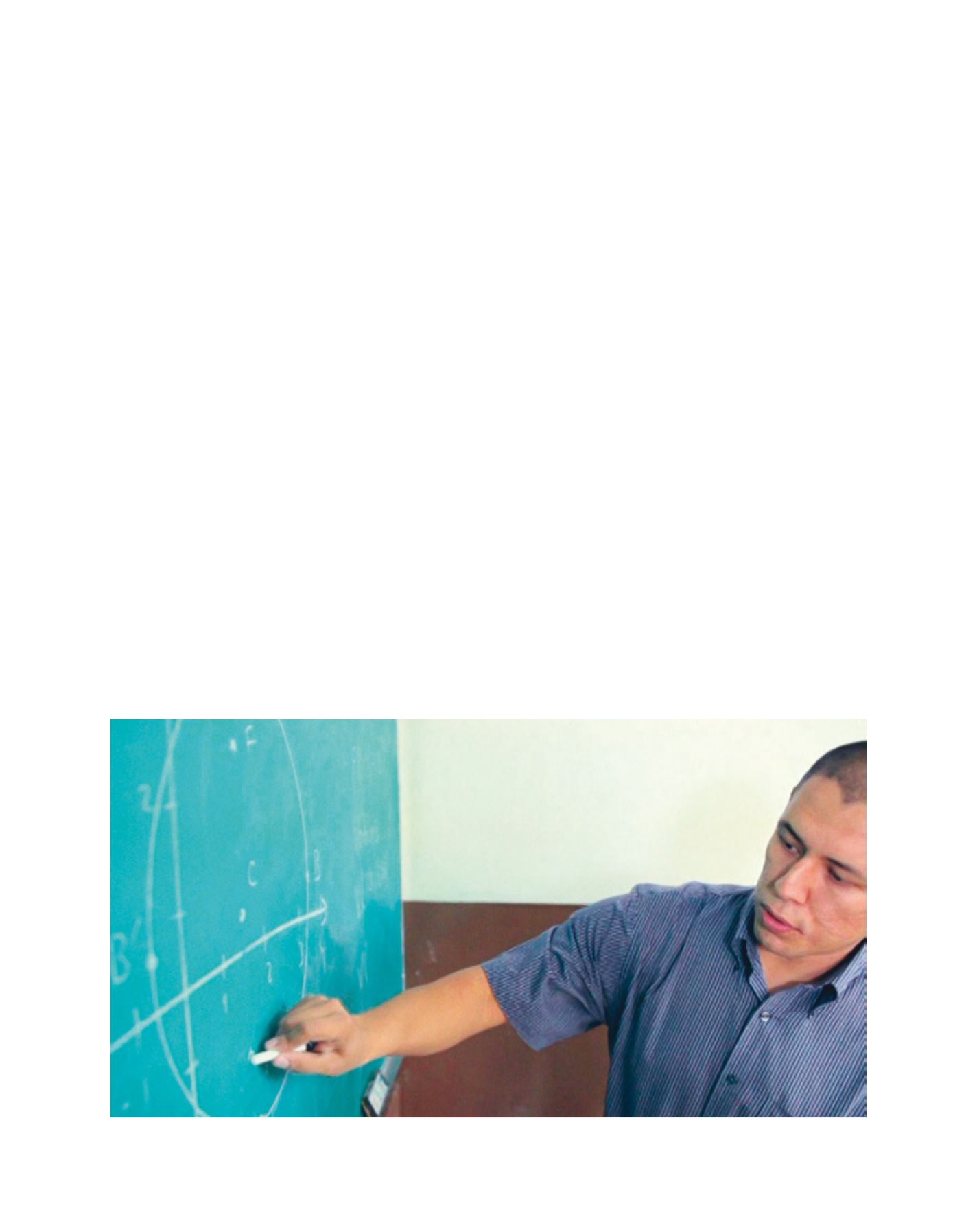
formed their lives. One of those cases is the family of
Rigoberto Chavira Quintero from San Luis Potosí. Rigoberto
in now a high school professor and a PhD candidate, but
his childhood years were hard. Raised in a peasant family
in a poor region, Rigoberto’s only chance to study was with
Oportunidades support. Encouraged by his parents, he
was able to finish high school and then take a degree in
mathematics, followed by a masters degree. He is currently
studying for a doctorate degree.
In order the get the cash transfer, beneficiaries of
Oportunidades have to attend school regularly and go to
the clinic for periodical medical supervision, and their
parents must attend lectures and workshops about health
self-care. There is no condition on how they spend the
money, but families usually spend it on food and school
supplies, although sometimes it is also spent on things like
household goods or dwelling repairs.
As a human development programme, Oportunidades has
been an effective way to increase poor people’s capabili-
ties and help them aspire to better futures, but it has not
been enough to decrease the poverty figures. That is why
Oportunidades is being redesigned, keeping the original
scheme but also including a link with productive life. That
way, when young people graduate from Oportunidades it
is easy for them to continue their education, find a job and
fulfil their dreams, just as Rigoberto did.
One more family-centred programme is the provision of
childcare facilities for working mothers and single fathers.
More than 9,000 childcare facilities support working
mothers like Cinthia Nieto Marín, who has a one-year-old
baby girl but, like her husband, needs to work. Without
the programme Cinthia would probably have to quit her
job to take care of the baby, a luxury that poor people can
hardly afford.
While these programmes benefit mostly children and
their parents, it is important not to leave the other end of
the life cycle unprotected. That is why there is a universal
non-contributory pension for people of 65 years and older
who do not have another form of pension. The programme,
called +65, helps later adults like Doña María del Socorro
Cáceres y Gómez, who is 70 years old, and her mother
Doña Aidé María Gómez y Ocampo who will be 107 this
year. They live in Merida City, in the southern state of
Yucatán. With the money from +65 María del Socorro buys
food and medicines, as well as nappies for her mother.
With +65, later adults without a contributory pension
have not only considerably increased their income. They
have also been empowered since they are no longer seen as
a burden for their families and they feel protected, cared
for and happier, just like María del Socorro and her mother.
As a matter of fact, +65 is currently one of the social
programmes with the biggest budget and the projection is
that, as new beneficiaries are incorporated, its budget will
be even higher in the coming years.
This new generation of social policy is prioritizing resources
to the poorest with the objective of making social rights
Image: SEDESOL
Oportunidades support enabled Rigoberto Chavira Quintero to go to university: he is now a high school professor and a PhD candidate