



 120 / 208

[
] 120
S
ustainable
agriculture
,
wildlife
,
food
security
,
consumption
and
production
patterns
to “promote public procurement policies that encour-
age development and diffusion of environmentally
sound goods and services”.
Public procurement has long been considered as one of
the key policies through which governments – as major
consumers – can demonstrate leadership and make a
major contribution to sustainable development by using
their purchasing power to drive markets towards the
supply of more environmentally and socially sustainable
products and services as well as to influence behaviour
of other socioeconomic actors by setting the example.
The European Commission, as well, has called on the
Member States to draw up publicly available action plans
for greening their public procurement
8
and proposed
that, by the year 2010, 50 per cent of all tendering proce-
dures should be green, whereby ‘green’ means compliant
with endorsed common ‘core’ GPP criteria.
9
Sustainable public procurement has been taken up in
the context of the two Sustainable Development Plans that
the Belgian Federal Government has endorsed to date. In
addition, a specific Federal Action Plan for Sustainable
Public Procurement (2009-2011), with a wide focus on
‘sustainable’ (rather than on ‘green’) public procurement,
entails an integrated approach of the three dimensions of
sustainable development.
This approach reflects the idea that public procure-
ment can also be used to encourage a variety of social
improvements: whether by guaranteeing good working
conditions for publicly contracted construction workers,
ensuring disabled access in public buildings, provid-
To address such problems, there is obviously a need for global solu-
tions. “Because significant impacts arise along supply chains through
globalized production systems, national actions need to be supple-
mented by global solutions”.
6
The adoption of a 10-year framework
of programmes on sustainable consumption and production patterns,
responding to the commitment of the WSSD, offers a way to integrate
this issue in a context of sustainable development at the global level in
cooperation with all relevant United Nations institutions.
But there is also a need for national responses. Several institutions
develop life cycle assessment tools of the social and environmental
impacts of products throughout their whole life cycle. The Belgian
Government took the opportunity of its Presidency of the Council of
the European Union in 2010 to promote such tools and in particu-
lar the social ones that are less developed than the environmental
ones, during a high-level EU event. A recent publication of the United
Nations Environment Programme, Guidelines for Social Life Cycle
Assessment of Products addresses the various social aspects that need
to be taken into account along the value chain.
Practical experience of sustainable public procurement
It its fourth chapter, which focuses on sustainable consumption and
production, Agenda 21 (1992) stipulates “governments themselves
also play a role in consumption, particularly in countries where
the public sector plays a large role in the economy, and can have
considerable influence on both corporate decisions and public
perceptions. They should therefore review the purchasing policies
of their agencies and departments so that they may improve, where
possible, the environmental content of government procurement
policies, without prejudice to international trade principles.
7
The
Johannesburg Plan of Implementation (2002; §19(c)), in turn, calls
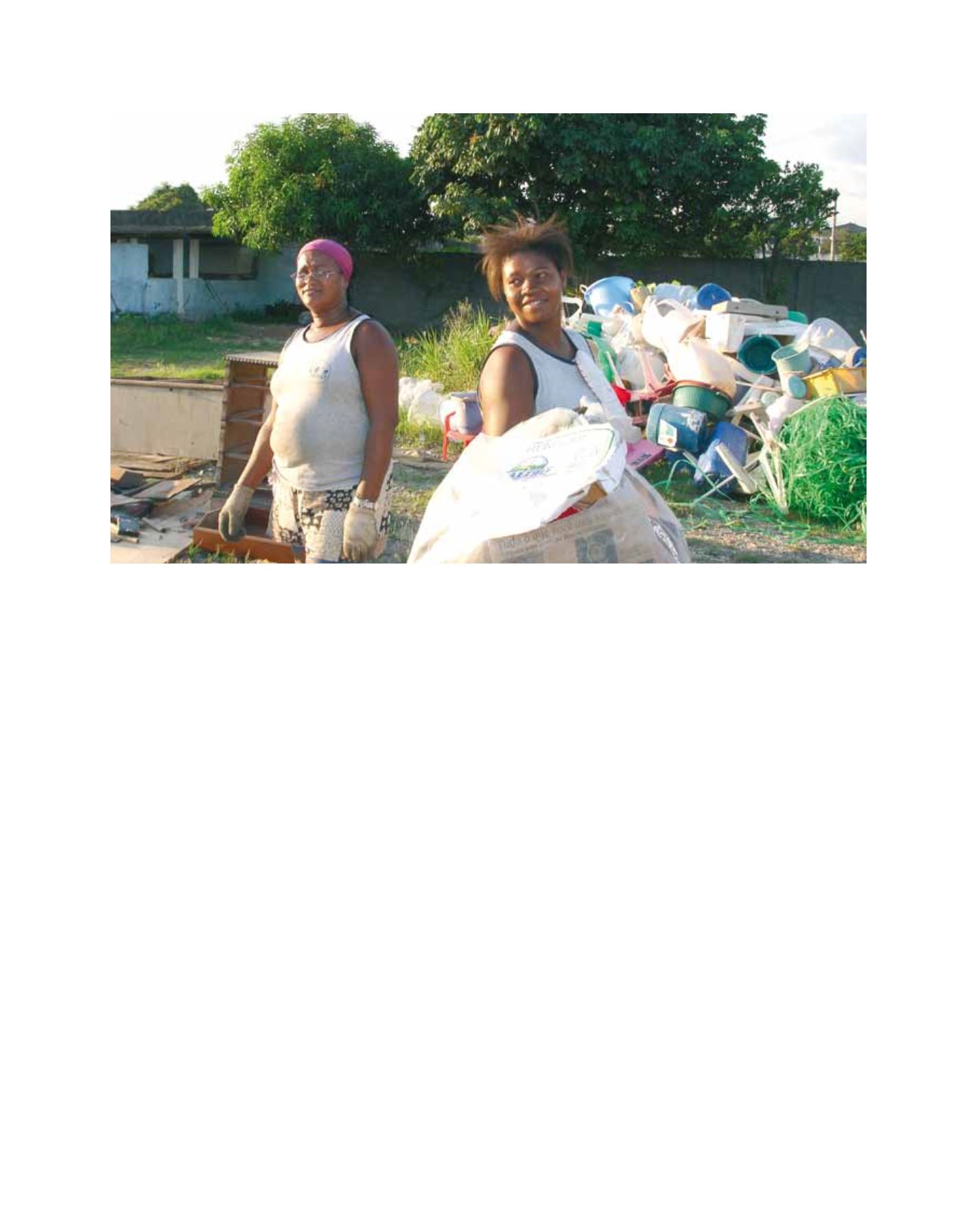
Production patterns have a host of impacts, both on the environment and on human resources
Image: ©Autre Terre