



 115 / 208

[
] 115
A fishing guide to sustainability:
local sustainable development in Serbia
Nebojša Pokimica, Assistant Minister; Sr
d
an Suši
ć
, Team Leader, Project: ‘Support to Implementation of the NSDS
of the Republic of Serbia’; Prof. An
d
elka Mihajlov, National Expert and Team Leader on Rio +20; Miroslav Tadi
ć
,
Head of the Department; Ministry of Environment, Mining and Spatial Planning, Republic of Serbia
A
n international commitment to environmental sustain-
ability generates and catalyses national commitments
and ratified international policy tools, such as the
multilateral environmental agreement (MEA) challenge to
‘keep families together’.
While MEAs would usually be considered as an international
means of enhancing sustainability in general, their implementation
catalyses certain processes at the local level of governance. When
efficiently implemented at sub-regional level, the basic concepts of
the MEAs help to shape the common future, security, peace and
sustainable development of the country. An example of this can be
found in Serbia.
So far, Serbia has ratified 75 international agreements
in the field of environment. Among them are some
sub-regional agreements, such as the Convention on
Cooperation for the Protection and Sustainable Use of
the River Danube, the Framework Agreement on the
Sava River Basin and the Carpathian Convention.
All Serbian national strategies – and particularly
those related to sustainable development and environ-
mental protection – are based on the implementation of
ratified MEAs and the outcomes of major international
processes. This helps us to transpose internation-
ally set targets and goals in the field of environment
and sustainable development into national and local
S
ustainable
agriculture
,
wildlife
,
food
security
,
consumption
and
production
patterns
Serbian national strategies are based on multilateral environmental agreements
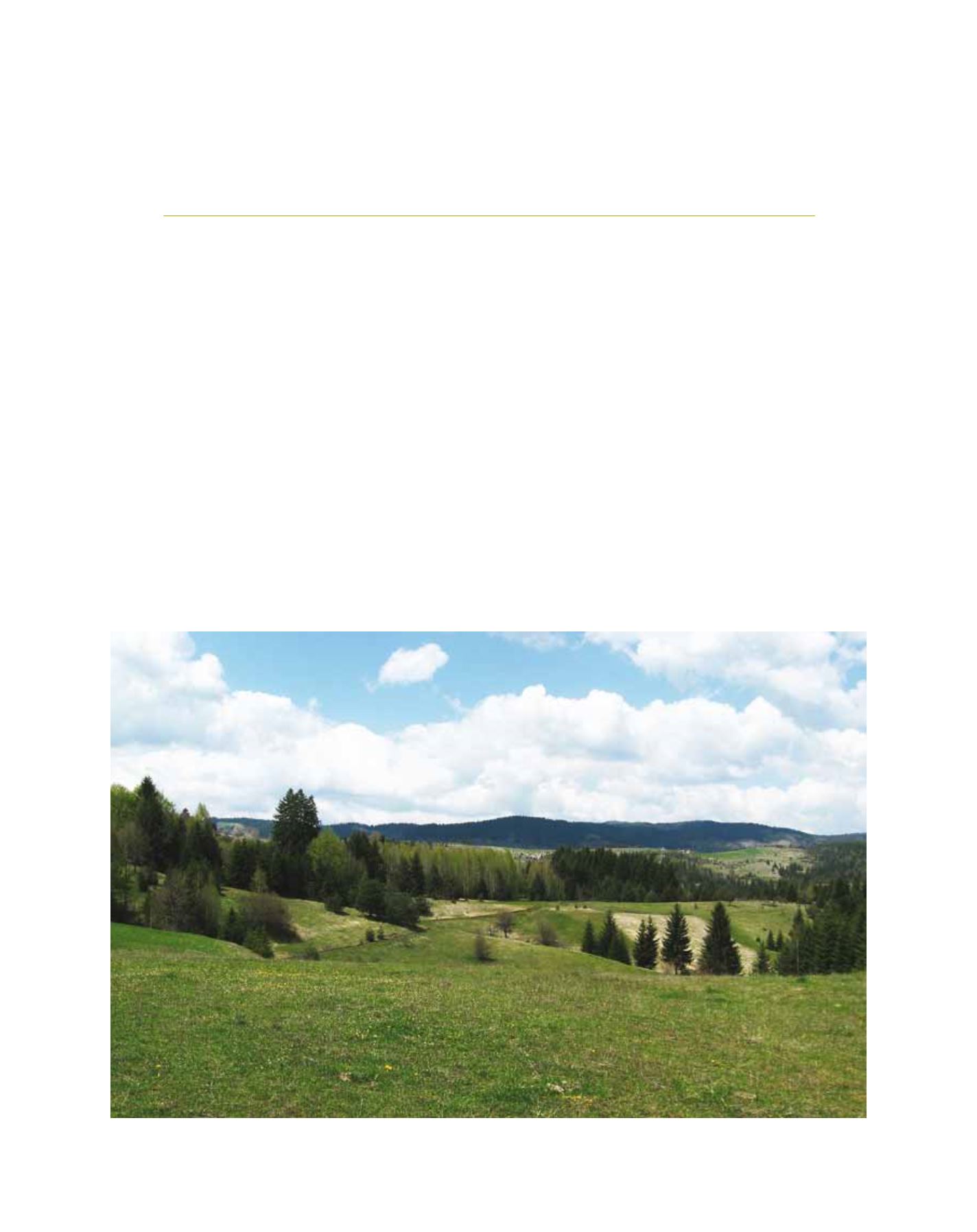
Image: Pavle Pavlovic, Serbia