



 122 / 208

[
] 122
S
ustainable
agriculture
,
wildlife
,
food
security
,
consumption
and
production
patterns
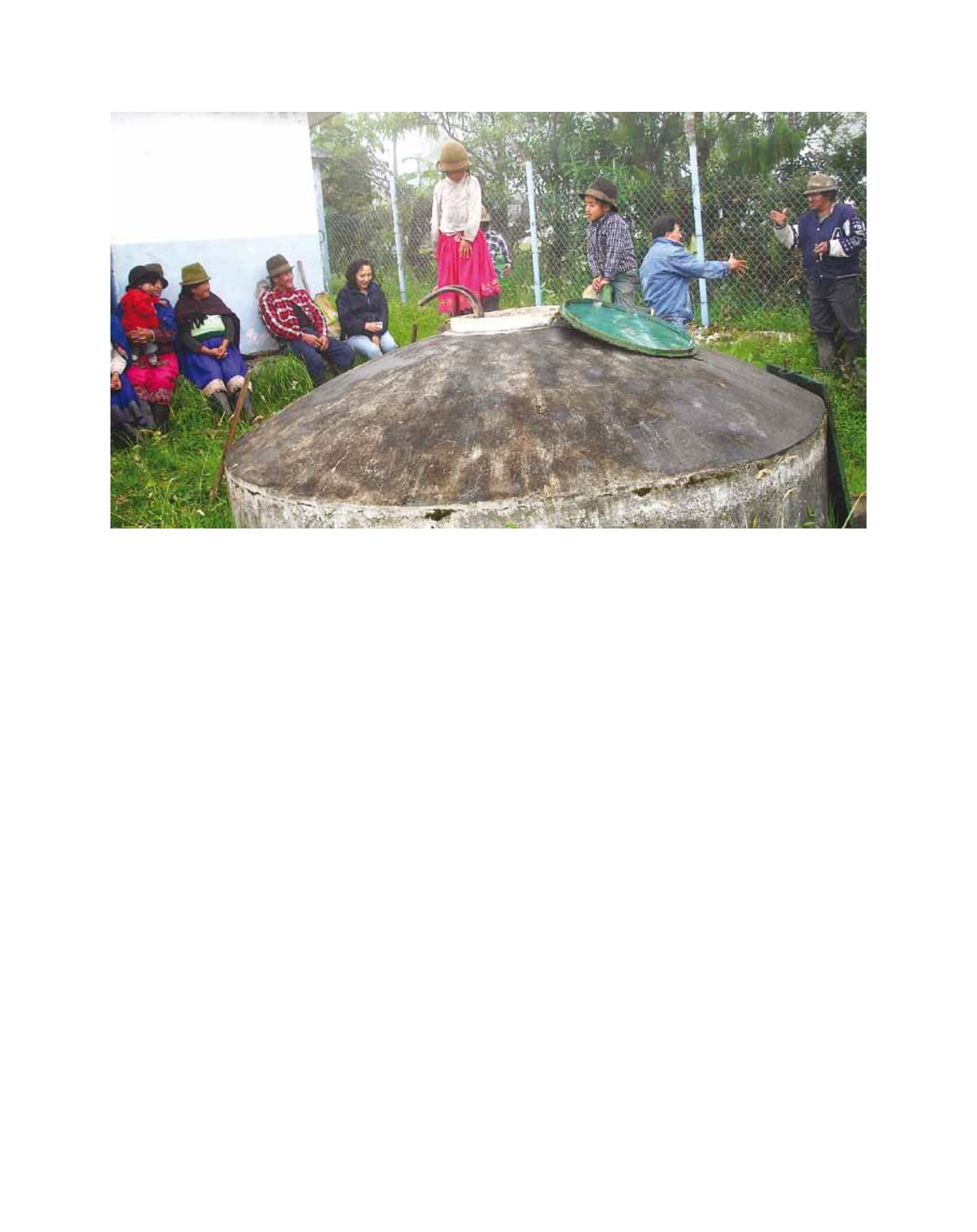
able without a strong economic model. This is why Protos opted
to fund rehabilitation, but to progressively withdraw from funding
daily activities. Since 2006, all costs have been borne by local actors:
30 per cent by Water Committees, 70 per cent through local authori-
ties. A total of 33,000 people have benefited from the project, which
turned into a model in Ecuador, as community management of
water was recognized by the 2008 Constitution.
Autre Terre and Coopcarmo
Meanwhile, Liege-based NGO Autre Terre (‘Another Earth’) has
specialized in waste management in developing countries, through
solidarity economy patterns. In Rio de Janeiro, Brazil, for instance,
Autre Terre supports the activities of locally based cooperative
Coopcarmo. In a country where systematic waste recuperation
and recycling did not exist, the project has been supporting the
organization of waste collectors to transform their environmentally
useful activity into an economic success and a great social victory.
By sensitizing the local population to waste sorting, Coopcarmo
progressively turned into a legitimate partner to the surrounding
municipalities. The cooperative contributes to limit local pollu-
tion and gas emissions, but also reinserts resources into the local
economy. The support of Autre Terre allowed the worker-owned
Coopcarmo to invest in compactors, which helped it to move up
the value chain and increased its revenues. There are now 800
collecting points in two municipalities and a decent wage is guar-
anteed to all workers of the cooperative. As their slogan says:
‘Waste is Life!’
Oxfam Solidarity and food sovereignty
For decades, many NGOs have worked in the agriculture sector,
supporting small farmers in the commercialization of their
products. But as the ‘green revolution’ shows its social and envi-
ronmental limits, the results of the International
Assessment of Agricultural Knowledge, Science and
Technology for Development (IAASTD), issued in
2008 and sponsored by many international organi-
zations, was considered an important victory for
those fighting for a more sustainable food production
pattern. Indeed, this report shows how agroecology,
supported by many NGOs, is able to feed the world
without depleting natural resources and worsening
global warming consequences.
The IAASTD has turned into a stepping stone for those
trying to re-establish a food production model that not
only feeds the world, but also the producers, as two-
thirds of people suffering from hunger are peasants and
their families. But for NGOs such as Oxfam Solidarity,
it was only a confirmation of the sustainability of their
working model. Oxfam has supported farmers’ organi-
zations in developing countries for decades, towards
food sovereignty. In Mali, Palestine, Vietnam and many
other regions, it helps farmers rehabilitate heritage seeds,
which are more adapted to local conditions. The conse-
quences for environment and health are immediate, as
those seeds require much less pesticides and fertilizers.
But they are also important in terms of revenue, as local,
richer seeds yield final products that can be sold at a
higher price on local markets.
Article coordination: Natacha Zuinen (Member of the
Federal Planning Bureau); Jo Versteven (Belgian Federal
Public Planning Service for Sustainable Development),
Nicolas Van-Huffel (National Centre of Development
Cooperation)
Community management of water resources has been successfully implemented in Ecuador
Image: ©Protos