



 153 / 208

[
] 153
S
ustainability
P
olicies
, P
rogrammes
and
their
E
conomic
I
mpact
proposed SDGs, promoting the sustainable exploitation of its
natural resources to expand access to clean energy. These projects
are already yielding positive impacts and contributing to achiev-
ing the aims that the Africa Consensus Statement hopes to see in
the proposed SDGs. For instance, AfDB is investing around US$6.4
billion over the next four years in the energy, transport, water and
agriculture sectors to support low-carbon and climate-resilient
development in Africa.
The programmes and projects shown on these pages are exam-
ples of building blocks that are contributing to Africa’s transition
to a green economy by creating living conditions wherein social,
environmental and development concerns are comprehensively and
sustainably addressed. Although they were initiated in the context
of climate change, the projects’ benefits encompass a wide range
of social, economic and development opportunities with broader
positive spillover effects for beneficiary communities and support
a green economy. For example, social benefits of the clean energy
projects have included the reduction of carbon emissions through
the generation of clean energy; increased agricultural productivity
and food production in the project area; the creation of employment
opportunities; and enhanced access to markets and social services
for the local population. The ecosystems restoration projects have
contributed to the preservation of natural ecosystems, preserv-
ing and enhancing the goods and resources they provide to local
communities.
The provision of innovative and adequate finance
is a major ingredient to ensure the implementation
of a green economy. In this regard, AfDB has created
innovative finance vehicles such as the African Water
Facility, the Sustainable Energy Fund for Africa, the
Congo Basin Forest Fund and the Rural Water and
Sanitation Initiative. The bank is also an implement-
ing entity for several global funds, helping to increase
Africa’s access to resources such as the Climate
Investment Funds, the Global Environment Facility
and the Adaptation Fund. As requested by Africa’s
Heads of State, AfDB is also designing the Africa Green
Fund to help channel resources to support Africa’s
transition to a green economy.
AfDB is capitalizing on its rich technical and insti-
tutional experience in implementing sustainable
development policies, investing in green projects
and actively participating in regional and global
policy processes under the Rio Conventions on
Biodiversity, Climate Change and Desertification.
It is at the forefront in mobilizing the financial
resources required to support a successful transi-
tion in Africa. In doing so, the bank plays a catalytic
role in helping African economies move towards a
greener pathway.
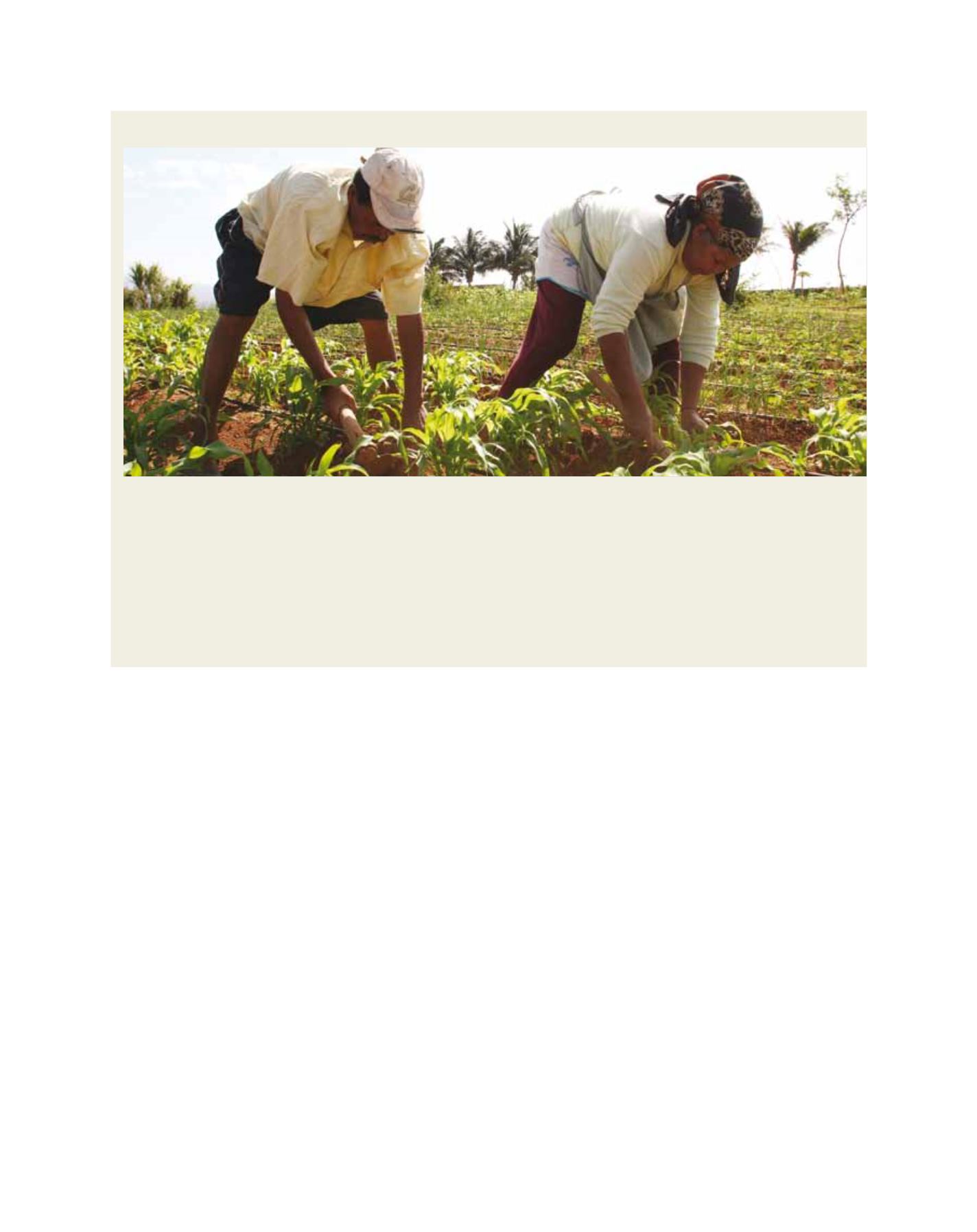
Mobilizing environmental finance for agricultural development
Global Environment Fund equity investment (
€
14.8 million)
The fund focuses on sustainable forestry as a private sector approach
to protecting global forest areas while delivering profit to its investors,
employees and surrounding communities. It is designed to invest in
forestry and forestry-related companies in sub-Saharan Africa, including
greenfield and existing plantations, in activities such as forest products
processing and manufacturing, biomass cogeneration facilities and
natural resource management.
African Agriculture Fund equity investments (
€
29.7 million)
The African Agriculture Fund invested in a private equity fund in response
to the food crisis that severely impacted the continent in 2008 due to
escalating food prices and staple export bans. The increased support to
the African Agriculture Fund, whose total target size is US$300 million,
is part of a coordinated response involving the French Development
Agency, the International Fund for Agricultural Development and the West
African Development Bank, to prevent the crisis from reversing decades
of progress, growth and investment in Africa. The fund’s main focus is
African agribusiness companies operating in food production, processing,
packaging, cold storage, distribution and marketing.
Source: AfDB, Energy, ONEC
Image: AfDB