



 31 / 208

[
] 31
E
nvironment
:
legal
and
ethical
issues
desired outcome in Rio+20. As a result of this outreach,
Brazil also supported the non-regression principle in
its formal submission. In addition, the European
Parliament adopted its Resolution of 20 September 2011
on a common European Union position for Rio+20,
calling for “the recognition of the principle of non-
regression in the context of environmental protection as
well as fundamental rights.” The CIDCE is continuing
its outreach and garnering the support of other groups
and associations.
Within the Rio+20 negotiations at the United Nations,
the CIDCE is an officially recognized civil society organ-
ization, participating as a member of the Major Group
for Non-Governmental Organizations (NGOs). In
December 2011, Member States of the United Nations
met to discuss the framework of the Rio+20 outcome
document, kicking off the negotiation of the actual
text to be adopted in June 2012. Each major group was
asked to make a three-minute statement to the United
Nations delegates. The CIDCE succeeded in convinc-
ing the other NGOs, each of them with their own sets
of positions and interests, to call for recognition of the
non-regression principle in this short statement. As
negotiations have continued, and civil society partici-
pants have become increasingly concerned that some
Member States may be calling into question long-stand-
ing international commitments to human rights and to
the Rio Principles, support for clear recognition of the
principle of environmental non-regression has grown –
not only within the Major Group for NGOs, but within
all of the Major Groups, representing Youth, Women,
Workers and Trade Unions, Indigenous Peoples, Local
Authorities, Business and Industry, Scientific and
Technological Communities, and Farmers and Small
Forest Landowners. It is increasingly clear that civil
society wants to see a strong commitment to the prin-
ciple that environmental protection, and sustainable
development in general, should continually advance,
and should not slide backwards. Adopting the principle
of non-regression at Rio+20 will set the groundwork
for further elaborating its application in environmental
law and implementing it at the national, regional and
international levels.
Convincing Member States to heed this call for
a commitment to environmental non-regression at
Rio+20 remains a challenge, although there have been
some steps in the right direction in the past. During
its 19th special session in 1997, the United Nations
General Assembly called for a commitment “to continue
the progressive development of international law related
to sustainable development.” As of this writing, the
outcome of Rio+20 is uncertain. Will the Member States
of the United Nations take stock of the urgent global
ecological crisis that has become crystal clear in the past
twenty years? Will they act on the need to make much
better progress on implementing the Rio Principles
with an ambitious set of commitments – including a
commitment to environmental non-regression? If they
are listening to civil society, they must.
non-regression in existing national, regional and international legal
systems. This book,
The Principle of Non-regression in International and
Comparative Law
, launched at Rio+20, shows that the non-regression
principle has a firm, but still tenuous, foundation in environmen-
tal law, even in countries or regions like the United States that do
not follow a rights-based approach. Some tribunals, particularly in
Europe and in South America, expressly recognize the non-regres-
sion principle to guarantee people the right to a healthy, continually
improving environment that promotes harmony between humans
and nature. In addition, many countries in the Americas, including
Canada, the United States, Mexico, the Central American countries,
the Dominican Republican and several South American countries,
have signed international agreements declaring that it is inappropriate
to weaken environmental, health or safety laws in order to promote
economic activities like trade and investment.
The book promises to increase the profile of the principle of
environmental non-regression in environmental law, but it is only
part of the story. The CIDCE has also promoted adoption of a
commitment to environmental non-regression within the Rio+20
negotiations. In September 2011, it hosted the Third World Meeting
of Environmental Lawyers and Environmental Law Associations in
Limoges, France, to develop recommendations to submit formally
to the Rio+20 process. Environmental lawyers from every conti-
nent participated in the conference. On the basis of presentations by
jurists who had studied non-regression as part of the book project,
the principle of environmental non-regression emerged as a leading
recommendation, strongly supported by the conference delegates.
The CIDCE submitted its recommendations to the United Nations in
October 2011, highlighting environmental non-regression as a key
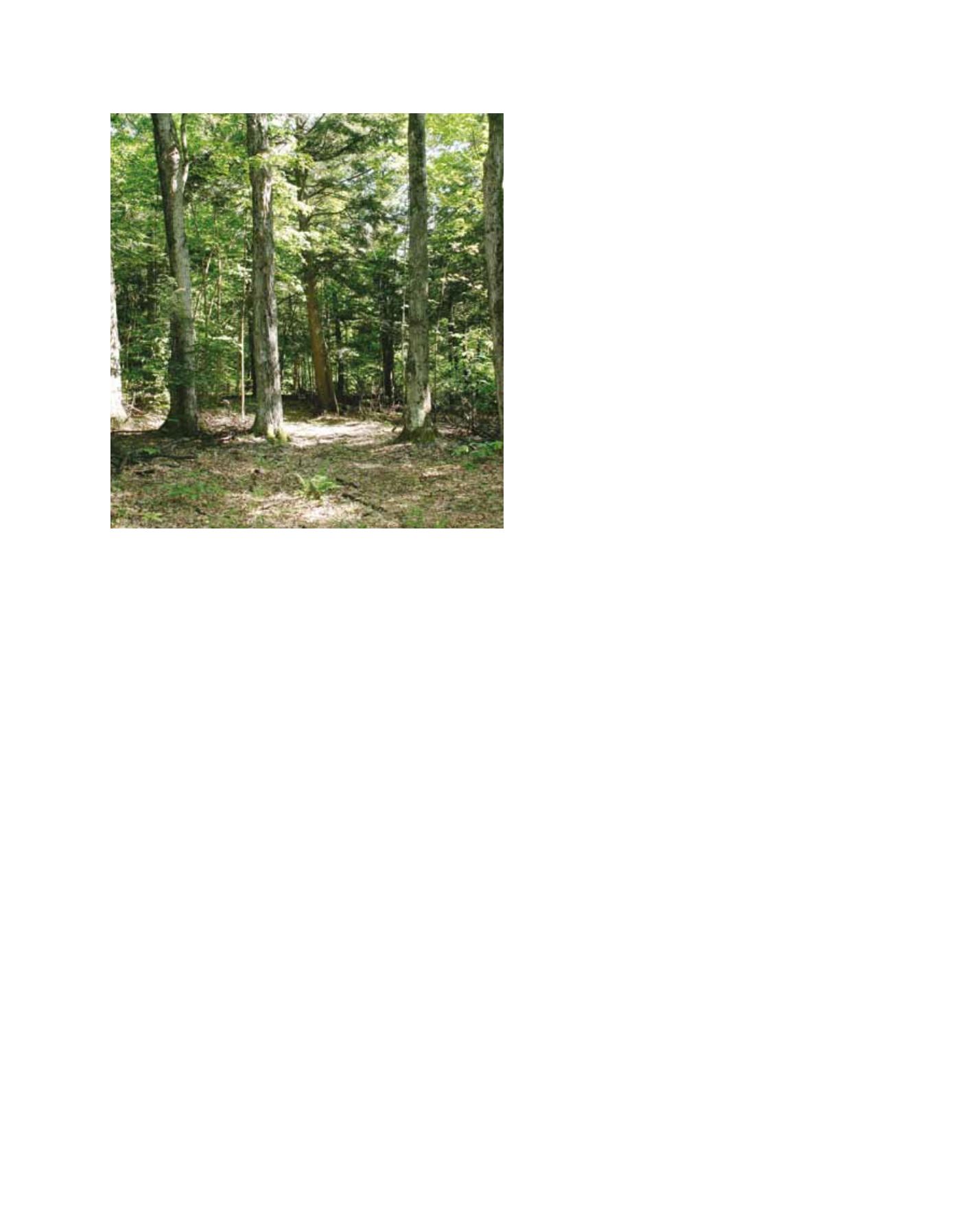
Sugar maple trees are an important part of both the natural ecosystem and the
economy in Quebec and nearby states and provinces in Canada and the United States.
But climate change threatens the survival of sugar maples in this region. The non-
regression principle would reinforce efforts to protect these regional treasures
Image: Geoff Garver