



 29 / 208

[
] 29
E
nvironment
:
legal
and
ethical
issues
Fundamental qualities such as honesty, moderation and compas-
sion lie at the heart of oriental wisdom, as achieved through mental
cultivation. It has proved successful in bringing about sustainable
development. More importantly, a successful environmental endeav-
our such as GHG mitigation can be harnessed to happiness. However,
it is essential to note that we would not want to neglect the need to
pursue mainstream solutions such as technology and institutional
re-arrangements; it is feasible and necessary for the human mind to
simultaneously curb its greed and reinvestigate the concept of collective
interests and morality.
Global environmental crises in the areas of food security, energy,
finance and climate reflect the neo-liberal economic system and
ensuing unsustainable development; a paradigm shift is therefore
needed. The important proposal for a ‘green economy’ has become
part of the world agenda for the United Nations Conference on
Sustainable Development (Rio+20).
Given the different socioeconomic and environmental contexts
worldwide, as well as differing levels of development, conceptually
it is appropriate that each country determines its own definition,
attributes and components of the green economy to be compat-
ible with its own local context. However, in the globalized era, all
countries are connected by a web of interactions, especially through
international trade. Therefore, it is necessary to build a common
understanding of the green economy as a new para-
digm of development that rearranges economic growth
as one of the key pillars in sustainable development and
supports the social system. This model must be pursued
along with human beings’ spiritual development, as
illustrated in the practical examples mentioned earlier.
This is an approach to ‘sustainable consumption’ in
both developed and developing countries, as requested
and indicated in a document entitled The Future We
Want for Rio+20.
With regard to building an institutional framework for
sustainable development, it is important to take into account
not only the international level under the United Nations
structure, but also the interconnections between interna-
tional, regional, national and sub-national levels, including
local communities and local administrative organizations,
which will lead to the establishment of a new institutional
framework which is not state-centred. The objective that
GSEI has emphasized in its research and experimentation is
the building of collaboration in the formof a public-private-
people partnership for social innovation. This includes
oriental wisdom and working towards climate change miti-
gation and a green economy for sustainable development.
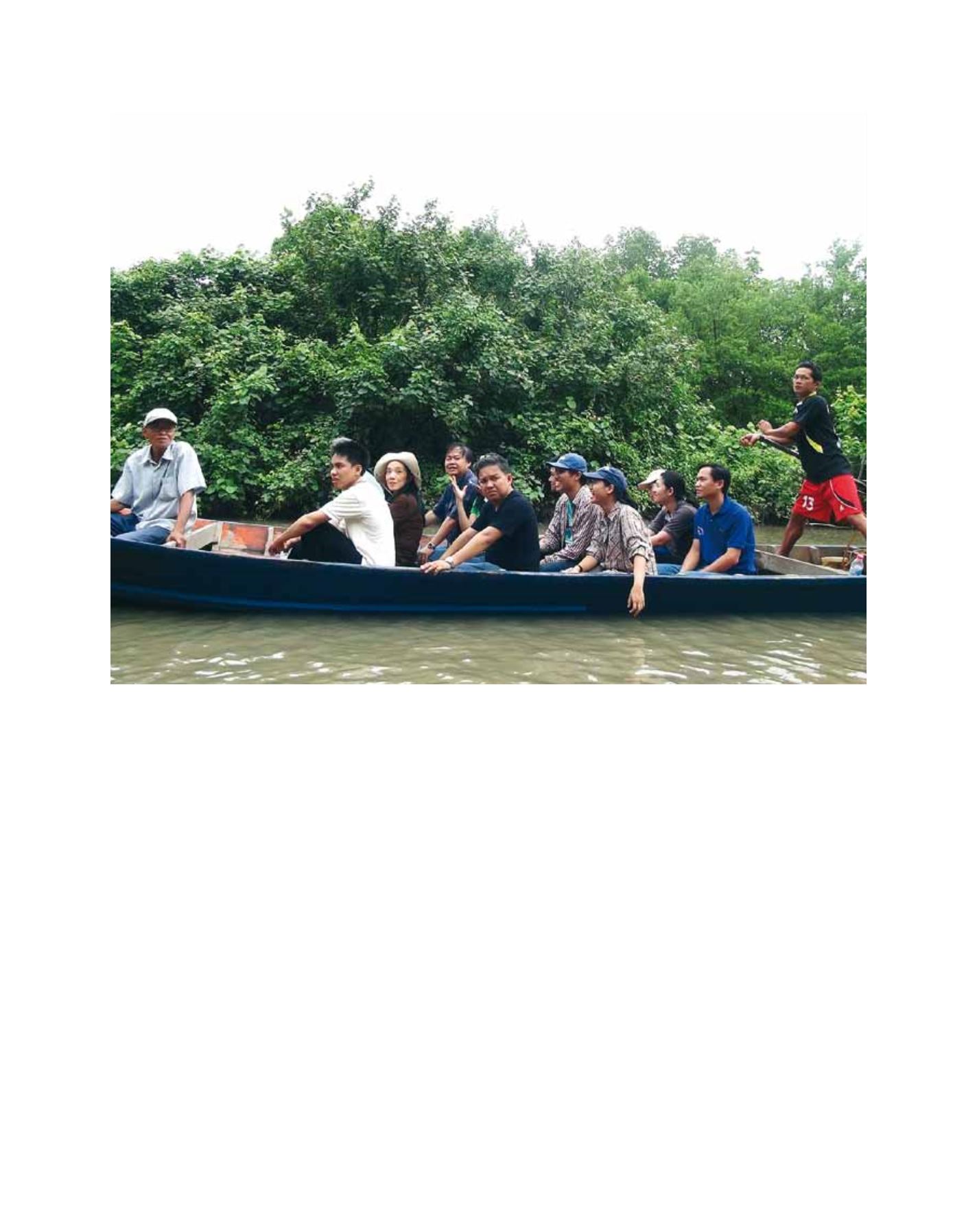
Buddhist teachings and oriental wisdom lead to a more balanced way of life
Image: GSEI