



 24 / 208

[
] 24
E
nvironment
:
legal
and
ethical
issues
will allow the development of new models of behav- iour, scales of
values, and objectives in life and, through these means, bind a new
spirit and meaning to specific regulations, treaties, and institutions.”
13
This understanding can come from openness to philosophical and
spiritual enlightenment, with new models of behaviour, and a sense
of responsibility and accountability to nature.
Appreciation of nature’s intrinsic value is enhanced by poetic think-
ing, or flights of fancy, inspiring sensitivity to the beauty and grandeur
of nature’s creations, according to Belgian playwright, poet and essayist
Maurice Maeterlinck, who is known for his powerful, symbolic writing,
presenting vital spiritual truths cloaked in rich imagery drawn from
nature. His play, The Bluebird, uses imagery to convey the realities of
celestial truth and absolute happiness. Such ideas are contagious, so it
is no wonder people built the houses and recreated the habitat for the
successful return of this bird to New England. Equally powerful is his
discourse in The Life of the Bee, in which philosophy, science and fancy
intermingle, generating for the swarm and the hive – as for the bluebird
– great affection and admiration. He writes: “to him who has known
them and loved them, a summer where there are no bees becomes as
sad and empty as one without flowers or birds.”
14
Similarly, fairy tales possess the power to incline the affections
of young and old to reverence for life and love of nature, as J.R.
Tolkien explains.
15
The fairy tale helps humanity to see afresh things
that familiarity and triteness have dulled. Good craftsmen of fantasy
enchant nature, touching the reader with the beauty and complexity
of its visible and invisible forms. Even the grass beneath one’s feet is
a wonder, the greensward that covers the earth making
life possible.
A sense of the beauty of nature, promoted by poets
and artists, is fundamental to the wellbeing of society,
as John Stuart Mill notes: “Left alone to meditate among
the trees and flowers, in meadows or beside placid lakes,
humankind would restore its soul and spirit… Solitude
in the presence of natural beauty and grandeur is the
cradle of noble thoughts and aspirations which are not
only good for the individual, but which society could
ill do without.”
16
Scientists also acknowledge the sublimity of nature.
Humbled by the uncertainties of existing scientific
theories of nature and the universe, physicist Richard
Feynman remarked:
“This universe has been described by many, but it
just goes on, with its edge as unknown as the bottom
of the bottomless sea of the other idea – just as myste-
rious, just as awe-inspiring, and just as incomplete as
the poetic pictures (of the ancients) that came before.
But they see that the imagination of nature is far greater
than the imagination of man. No one who did not have
some inkling of this through observations could ever
have imagined such a marvel as nature is.”
17
Although scientists have greater knowledge of the
mechanics of the universe than ordinary people, they
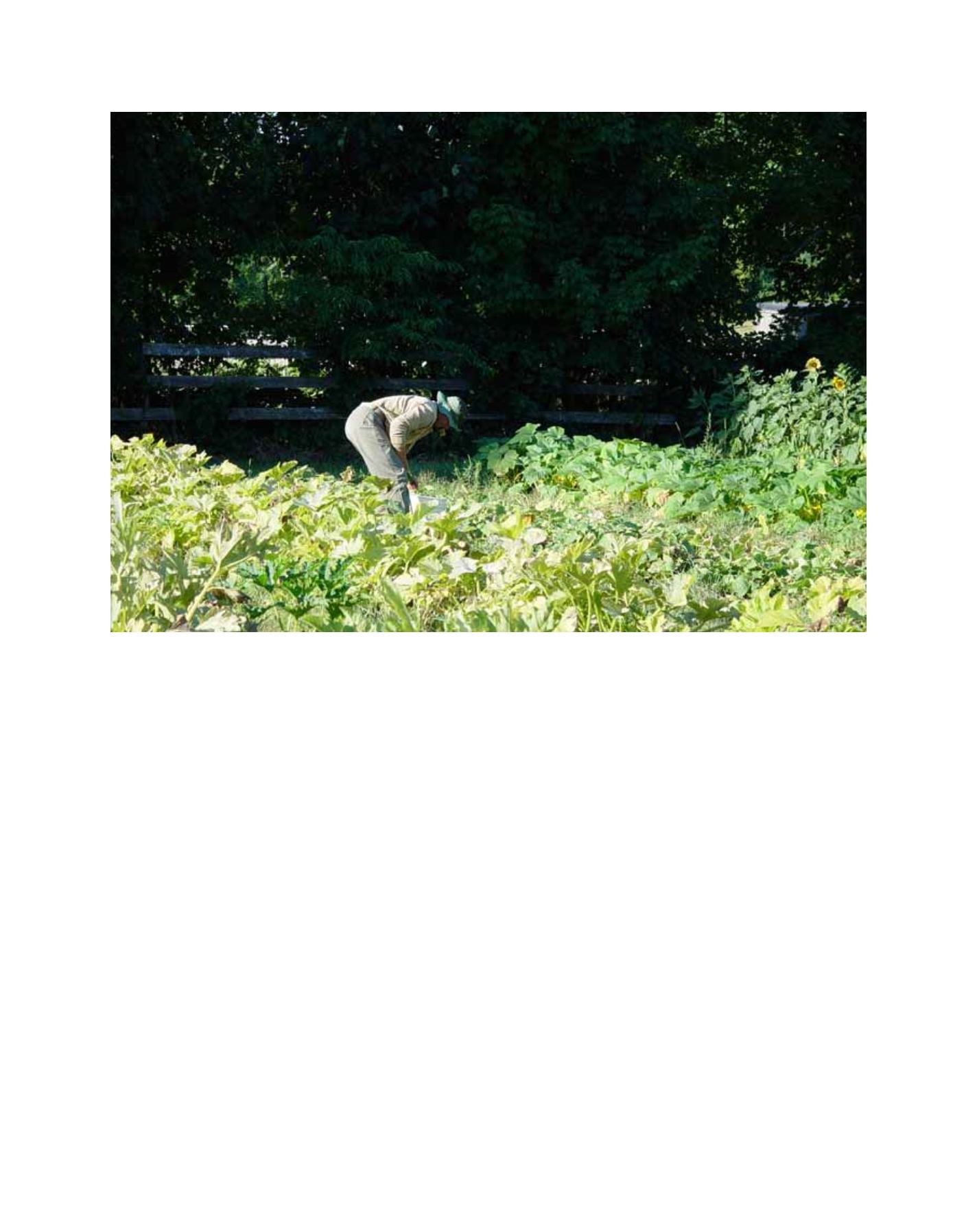
Community farms supply their inhabitants with local food
Image: Kevin Sullivan