


 127 / 168

[
] 127
One horn of the cow: an innovative GIS-based
surveillance and early warning system
in pastoral areas of Sahel
Frédéric Ham, Thierry Métais, Patricia Hoorelbeke, Erwann Fillol, Amador Gomez and Philippe Crahay,
Action Contre la Faim International
R
ain marks the beginning of the year for the pastoralists
in Sahel. This region is characterized by a short rainy
season taking place generally from July to October, and
a dry season the rest of the year. Pastoral livelihoods consist of
extensive breeding systems, in which mobility allows the best
use of available grazing and water sources and market oppor-
tunities. The rains determine the pasture and surface water
availability in pastoral areas throughout the year. These two
essential resources for pastoralists and their herds are replen-
ished during the rainy season and progressively depleted during
the dry season that follows. In Sahel, rainfall varies consider-
ably from one year to another and from one area to another, as
illustrated by the Touareg proverb:
‘In Sahel, rain falls on one
horn of the cow, but not the other’.
In such a context of high spatio-temporal rainfall and resources vari-
ability, the mobility of pastoralists is a crucial strategy. Mobility
is shaped too by others factors, such as markets, customary and
institutional access rules, diseases, security conditions
or conflicts.
1
Poor rainfall leads to pasture and water shortages
in Sahelian drylands, which negatively affect animal
production and can eventually result in the death of
livestock or entire herds. This in turn leads to dete-
rioration of the food and nutrition security of pastoral
populations, as they lose precious sources of nutritious
food, such as milk, and their main source of income.
The situation is particularly critical when large areas are
affected by droughts, when two successive low-quality
rainy seasons take place, or when mobility to areas with
more resources is restricted.
The Sahel region experienced large shifts in rainfall
patterns over recent decades, with severe consequences
for livelihoods. The droughts and famines during the
1970s and 1980s were associated with some of the
sharpest declines in rainfall in recorded history.
2
More
2045
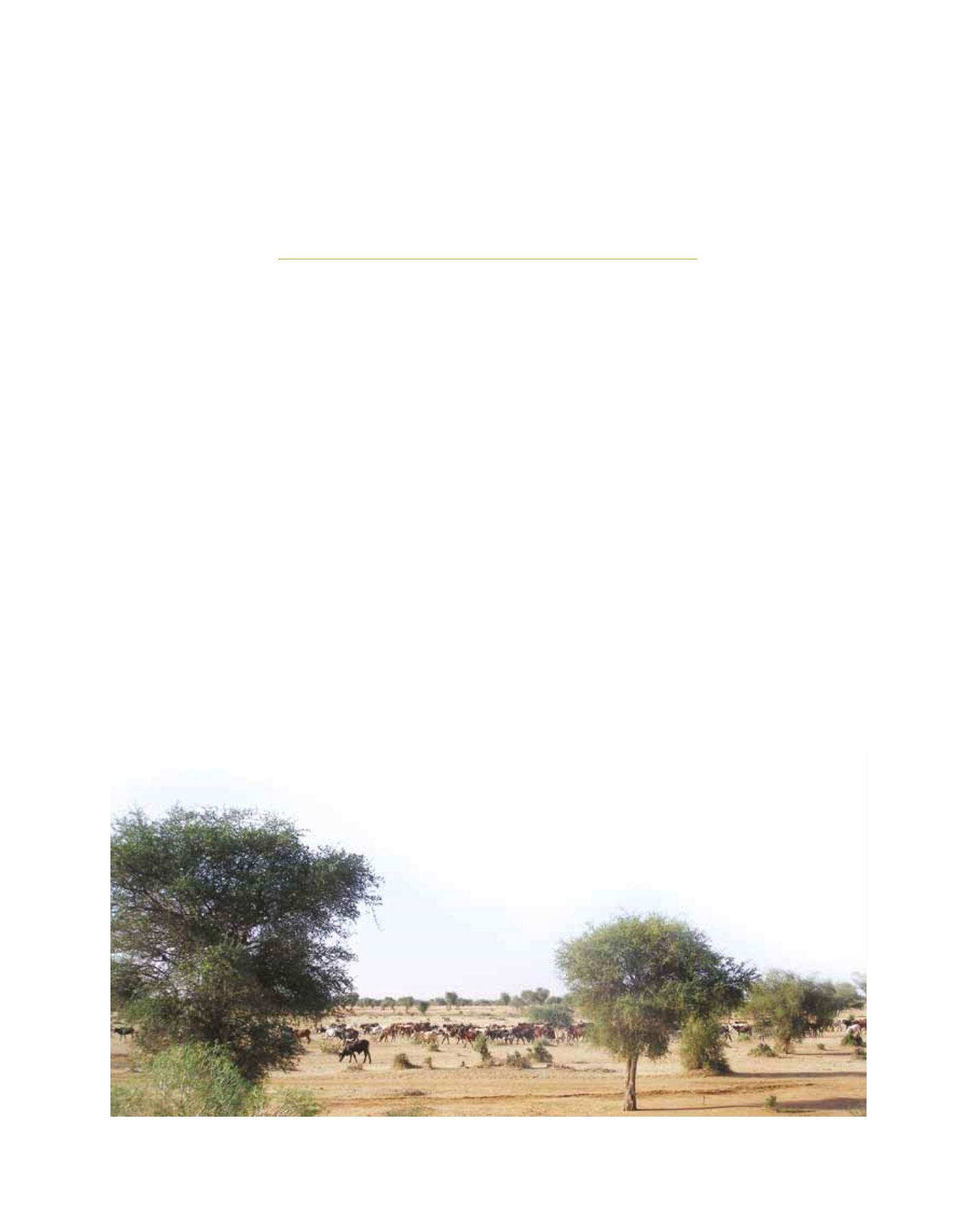
Mobility allows the best use of available grazing, water sources and market opportunities
Source: ACF Niger