


 16 / 196

[
] 14
Today’s education for tomorrow’s
disaster risk reduction
Sálvano Briceño, Director, Secretariat of the United Nations International Strategy for Disaster Reduction
A
s people around the world, political officials and prac-
ticing professionals all become increasingly aware of the
serious consequences that disaster risks pose for their
societies, there is a growing demand for education to spur the
better management and anticipated reduction of those risks.
A global movement to build communities and nations that are
resilient to disasters is being promoted through the United Nations
International Strategy for Disaster Reduction (ISDR). This move-
ment is represented internationally by the joint efforts of the
members of the Global Platform for Disaster Risk Reduction, which
includes UN agencies and programmers, the World Bank, regional
and international organizations, civil society organizations, acade-
mia and above all – governments.
The group is committed to increasing the wider awareness of disas-
ter risks and engaging the resources necessary to make people safer
from disasters. This can only happen when well-planned strategies
are guided by national authorities and local officials. It is also vital
that these plans can be implemented through the daily practice of
specialists, educators, businesses and local leaders in civil society. In
this way communities will become more resilient.
Efforts to increase learning opportunities at many
different levels, focused knowledge management, the
purposeful exchange of information and experience, and
the use of additional types of communication provide
the basis for shaping today’s education for tomorrow’s
disaster risk reduction. Education is universally recog-
nized as the basis of growth and development, but it is
also fundamental to sustaining understanding and
commitment across generations – including living with
and reducing risks.
By looking first at the opportunities provided by the
Global Platform for Disaster Risk Reduction, and then
at the characteristic attributes of education and joined
professional practice for improved disaster risk reduc-
tion, I hope to encourage even more dedication to
creating a safer world.
The ISDR Global Platform
for Disaster Risk Reduction
The Global Platform is a progression from the earlier
commitments made by 168 countries at the World
Conference of Disaster Reduction at Kobe, Japan in
January 2005. This collective dedication was most
astutely expressed in the adoption of the Hyogo
Framework for Action 2005-2015:
Building the Resilience
of Nations and Communities to Disasters
.
A call to action
We must act with renewed commitment to save lives and
livelihoods from the effects of natural hazards – particularly
in developing nations, where the world’s poorest are also the
most vulnerable. We must act with even greater urgency
given the impact of climate change. Scientists warn that
more extreme weather is on the way, with rising sea levels
and more intense storms and droughts. This could affect
millions of people.
Risk reduction is our front-line defence against these
threats. Risk reduction is also about common-sense
practices that help protect communities when earthquakes
strike or floods threaten. Practices that can save lives in
mega-cities tottering close to the edge of disasters as a
result of poor land usage, unsafe buildings, over-population
and environmental degradation.
Ban Ki-moon, Secretary-General of the United Nations in his
opening statement at the first session of the Global Platform
for Disaster Risk Reduction in Geneva, 5-7 June 2007.
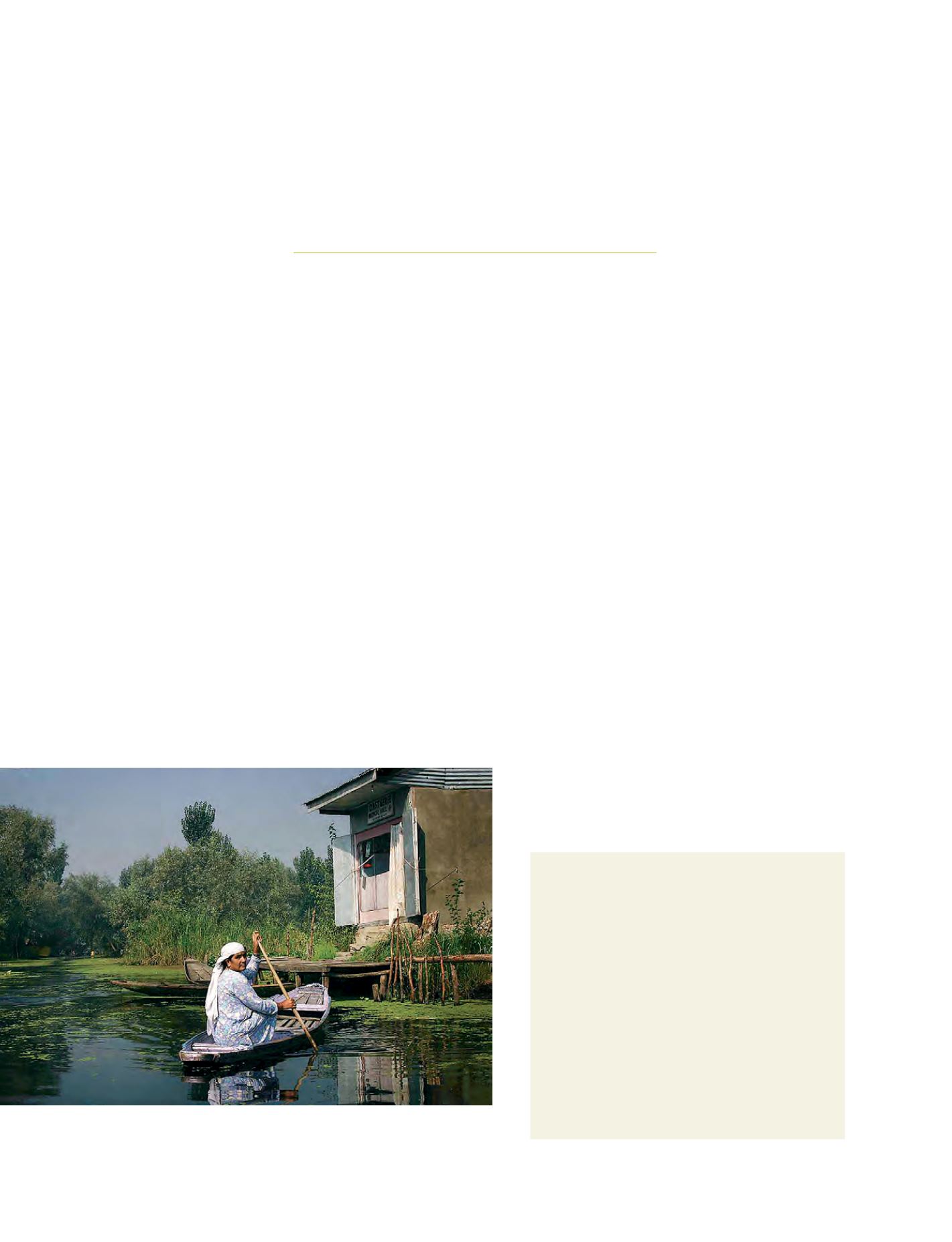
The Global Platform for Disaster Risk Reduction will help communities become
more resilient
Image: Steve Evans