


 19 / 196

[
] 17
debates about the seriousness of climate change and its causes, or
the unfortunately recurrent despair of children frequently being the
victims of collapsing schools during earthquakes.
Opportunities beckon through shared efforts
Fortunately, there are an increasing number of opportunities to
address such concerns. The necessary educational and technical
support for practical accomplishment of the objectives of the Global
Platform for Disaster Risk Reduction can only build upon existing
professional and academic networks, thematic or sector subject areas
and other similar mechanisms. While there are several key networks
and partnerships that have developed within the ISDR Global
Platform (such as those dedicated to education, health issues, early
warning, climate change, wildland fire, municipal and local author-
ities), there are many others that represent important academic
disciplines and professional practices for disaster reduction.
By fostering the growth of networks and otherwise stimulating
cross-disciplinary study, research and education, the ISDR Global
Platform progressively seeks to engage the entire range of academic
and professional interests. There is much to be gained from finding
effective means to apply their many resources, as well as to facilitate
the easier exchange of experience
beyond
individual practitioners.
The ISDR Global Platform is already committed to establishing a
Science and Technical Committee to guide and strengthen the scien-
tific and technical basis of the ISDR. It is envisaged that the
committee will advocate and guide the necessary actions related to
scientific and technical issues within the ISDR system, including the
promotion of innovation, setting future agendas and determining
priority questions. At a practical level, the committee will also be
influential in initiating studies and reports, proposing the establish-
ment of panels or working groups, as well as other means to advance
cross-sector activities.
Another example can be seen in the ISDR secretariat’s agreement
with the Global Risk Forum and the organizers of the International
Disaster Reduction Conference (IDRC), Davos 2008, which aims to
foster the development and focused management of professional and
academic networks. There are shared interests in stimulating useful
academic relationships for educating about disaster reduction subjects,
and also in finding cost effective means to manage practitioner or
professional networks that can link the many technical, scientific and
other specialist abilities necessary for disaster reduction.
There are obvious mutual benefits, in that the ISDR system can
draw upon IDRC conference events as leading forums for science
and technical knowledge exchange, as well as for communicating
successful accomplishments in disaster risk reduction. They have
the potential to be key international and regional professional forums
for advancing ISDR system and thematic partnerships, especially by
fostering scientific and technical professional networks for wider
professional dissemination of disaster and risk related information.
ISDR’s initiation of the PreventionWeb database system
2
is one such
instrument that can provide technical and academic practitioners
wider access and opportunities for engagement with the govern-
ments and other organizational members of the Global Platform for
Disaster Risk Reduction. Together, these activities can increase the
reporting on programme activities, and the access and utility of
collected records, listings, databases or professional resources of
shared interest. This can, for example, include information about
academic, disaster reduction-related training, capacity development,
or professional resource materials.
By seizing upon these professional opportunities of
collaboration and working together through the ISDR
Global Platform, we can use today’s education for tomor-
row’s disaster risk reduction and realize the objectives
of the Hyogo Framework for Action.
Hyogo Framework for Action 2005-2015: building the
resilience of nations and communities to disasters
Priorities for Action:
1.
Make disaster risk reduction a priority
– ensure that
disaster risk reduction is a national and a local priority
with a strong institutional basis for implementation
2.
Know the risks and take action
– identify, assess, and
monitor disaster risks, as well as enhance early warning
3.
Build understanding and awareness
– use knowledge,
innovation, and education to build a culture of safety and
resilience at all levels
4.
Reduce risk
– countries can build resilience to disasters
by investing in simple, well-known measures to reduce
risk and vulnerability
5.
Be prepared and ready to act
– strengthen disaster
preparedness for effective response at all levels.
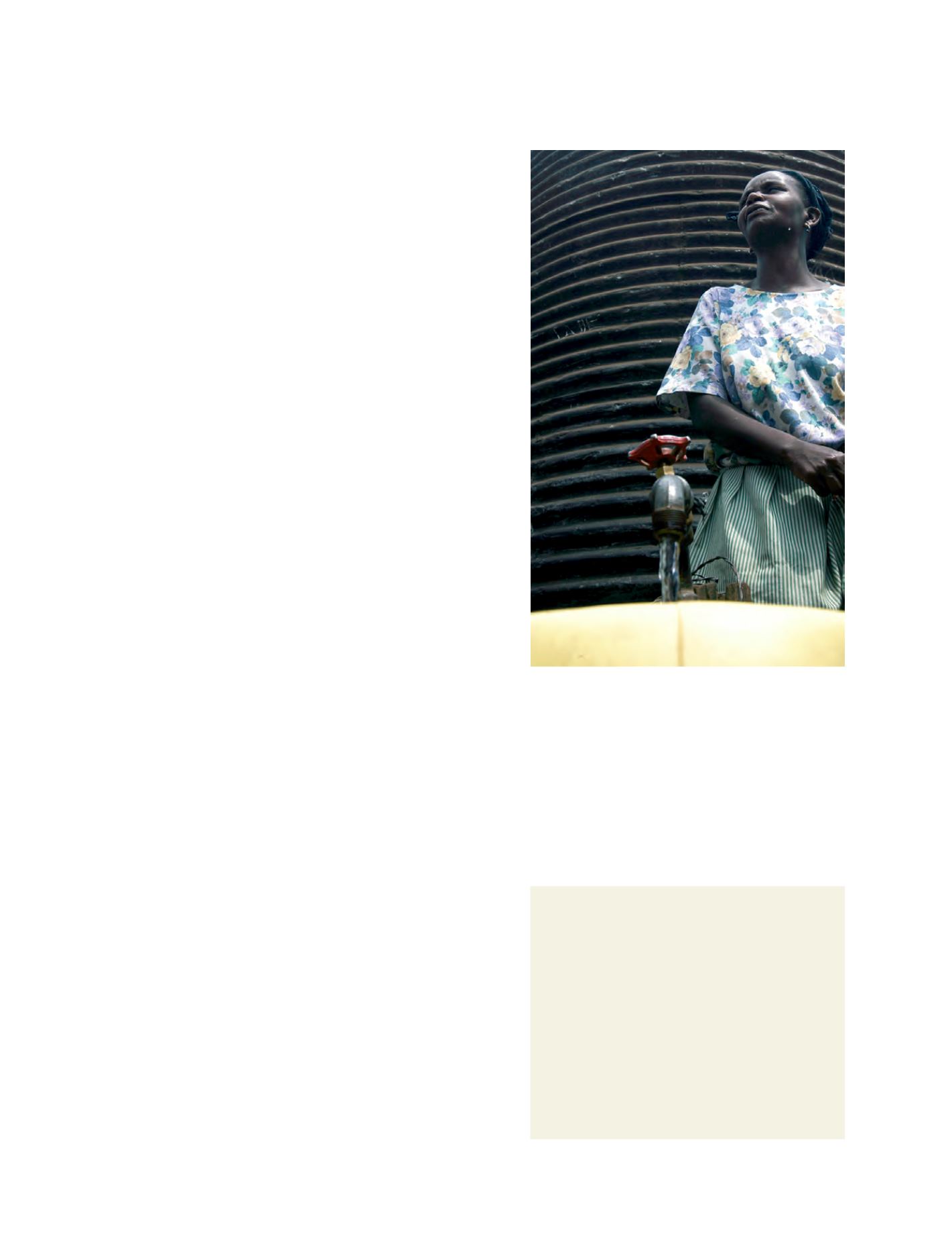
Kibera in Nairobi is the biggest slum in Africa with around 1 million
inhabitants. Potable water and waste management are not
government supported and are resolved by community based
organisations
Image: Sean Hawkey