


 23 / 196

[
] 21
actual dollar values are case-specific, mostly comparing to alternative
manmade structural measures to achieve somewhat definitive price
tags for a particular ecosystem service, it is conclusive that changes in
these services affect human well being in many ways.
8
Often the ecosys-
tem services are undervalued, particularly when considering the
disproportionate value to local and poorer communities.
Environment-sustainable development practitioners certainly
benefit from growing demand for maintaining the ecosystem services
that accompany efforts to promote community resilience in a chang-
ing climate; they also benefit from the refined instruments, methods
and field-based actions prompted by the disaster risk reduction and
climate change adaptation communities. But perhaps the greatest
benefit of disaster risk reduction and climate change adaptation to
the goals of environmental and sustainable development is the
increased likelihood that these development programmes will not
be derailed by costly diversions of human, natural and financial
resources that inevitably accompany disasters.
Climate change adaptation
Efforts to mitigate or reduce greenhouse gas emissions need to be
complemented by efforts to adapt to climate change. The IPCC
defines adaptation as ‘adjustment in natural or human systems in
response to actual or expected climatic stimuli or their effects, which
moderates harm or exploits beneficial opportunities.’
9
Other defin-
itions treat an adaptation as a process or the outcome of a process that
leads to a reduction in harm or risk of harm associated with climate
change and variability
10
or efforts to ‘moderate, cope with and take
advantage of the consequences of climatic events.’
11
Because the consequences of climate change, in some regions, will
include increased damages from sea-level rise, flooding, drought and
other climate-related hazards, the capacity to reduce disaster risk
provides governments with a first line of defence in adapting to a
changing climate. Similarly, efforts to protect ecosystems
services, particularly those efforts that anticipate the
impacts of climate change on ecosystems and design their
interventions accordingly, are a second cornerstone of
adaptation. Ecosystems are essential to human well being,
and the demand for these services will continue to grow
as communities around the world take steps to moder-
ate, cope with and take advantage of new conditions.
Concluding thoughts
The considerations presented in this chapter offer an
initial view of benefits derived from adopting an inte-
grated, partnership based approach. Ecosystems are our
lifeline; the changes that have been made to them have
contributed to overall improvements in human well
being and economic development, but these improve-
ments have been achieved at a cost. The degradation of
ecosystem services has not only exacerbated poverty for
some groups of people, it has also exacerbated their
vulnerability to natural hazards.
The target population for development assistance
often coincides with the population facing the most loss
in times of disaster; so partnering knowledge and capac-
ities and visibly integrating disaster risk reduction as
one distinct but increasingly important ecosystem
service adds significantly to the economic rationale for
the maintenance of healthy ecosystems. Disaster risk
reduction, environment, sustainable development and
climate change adaptation all need an inter-sectoral
approach. There are many co-benefits that can be
achieved through creating partnerships; there are many
collateral costs of not doing so.
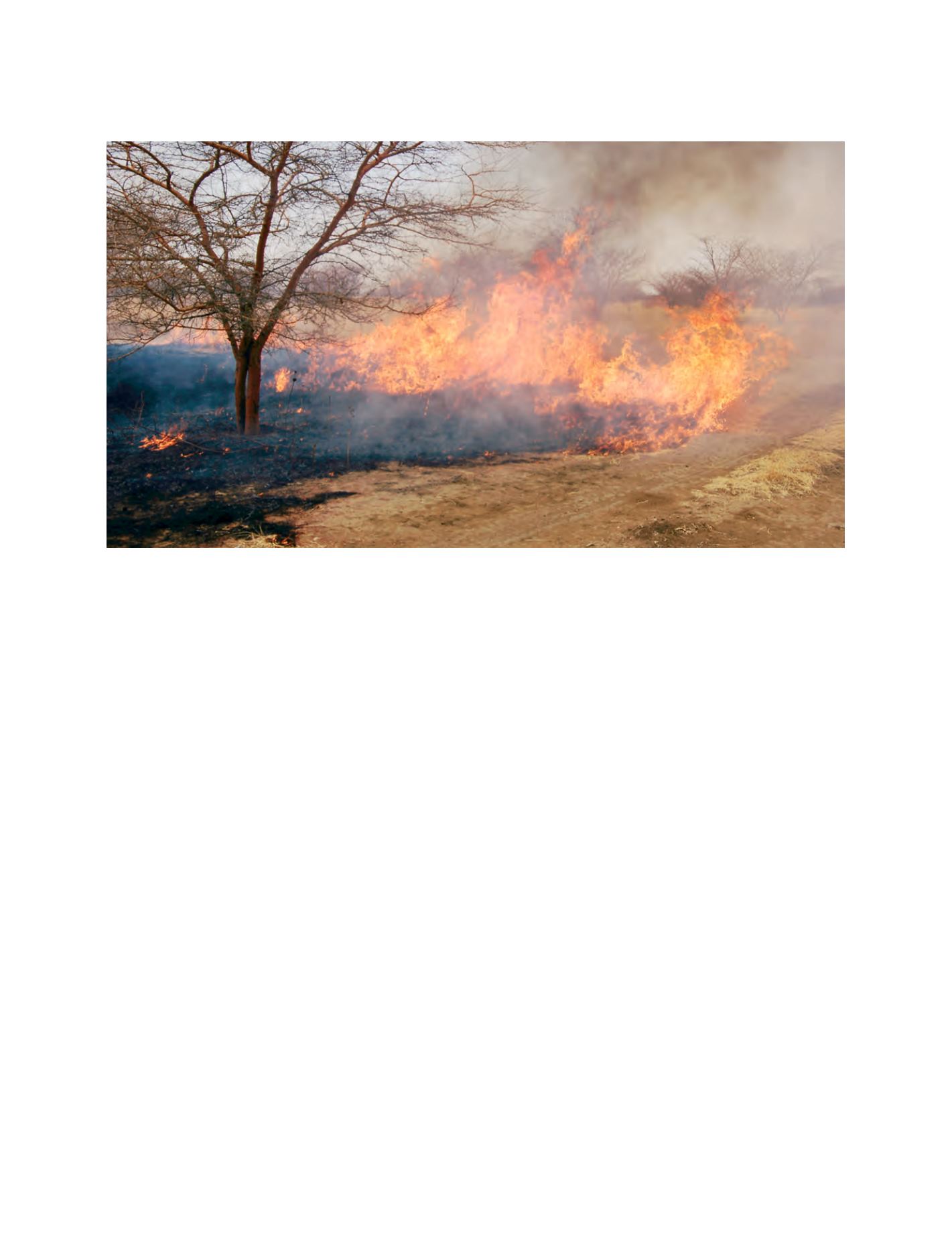
Climate change is expected to increase the frequency of extreme climate events, including prolonged dry periods and, in many areas, increased risk of wild land fires
Image: UNEP