


 22 / 196

[
] 20
Integrated programming in these fields has a solid economic basis.
While failure to adopt an integrated approach can be counter-produc-
tive to the goals of any of these areas of intervention, seeking
co-benefits is an efficient means of utilizing funds.
Disaster risk reduction
The goal of disaster risk reduction as described in the Hyogo
Framework for Action is “the substantial reduction of disaster losses,
in lives and in the social, economic and environmental assets of
communities and states.” Risk reduction involves a broad range of
interventions including such diverse measures as developing early
warning systems, ensuring safe building practices, public awareness
and spatial planning.
Maintaining the protective services of healthy ecosystems is an
important contribution to disaster risk reduction. A review carried
out by IUCN as part of the ‘Mangroves for the Future’ initiative points
to studies that have calculated these contributions. In Sri Lanka, for
example, each square kilometre of mangroves has been estimated to
provide USD8,000 in storm protection.
4
In Indonesia, mangroves
provide USD600 per household in coastal erosion control,
5
and in
Southern Thailand mangroves offer USD3,000 per hectare in coast-
line protection and stabilization.
6
The work of the climate change
adaptation community enables us to characterize future risk and
helps to revitalize commitment to integrated planning and field level
action.
Disaster risk reduction is inherently multi-sectoral, but also
requires actions at various scales. Efforts to build national level capac-
ities and political commitment need to be complemented by work to
extend the capacity of field-level practitioners who are capable of
designing and delivering risk reduction measures at the community
level. The disaster risk reduction community will benefit from an
integrated approach since it provides access to and leverages the
efforts of the very large and well-established global envi-
ronmental-sustainable development community, which
has been working on the ground in most of the world’s
poorest and vulnerable countries for several decades.
Environment and sustainable development
Over 30 years ago in Stockholm, world leaders agreed on
the urgent need to respond to the problem of environ-
mental deterioration. Twenty years later, in 1992, at the
United Nations Conference on Environment and
Development in Rio de Janeiro, world leaders agreed
that the protection of the environment and social and
economic development are fundamental to sustainable
development and adopted a global programme entitled
‘Agenda 21’. In 2002, world leaders met again and laid
out a plan for implementing the agenda and again recog-
nized that poverty eradication, changing consumption
and production patterns and protecting and managing
the natural resource base for economic and social devel-
opment are overarching objectives of and essential
requirements for sustainable development.
7
Environmental managers employ a wide range of
approaches and instruments in their efforts. Economic
valuation of ecosystem services is one approach that can
assist planners to better understand the costs and trade-offs
of proposed development interventions. Every loss of
ecosystem services has a livelihood cost for local commu-
nities, neighbouring communities and future generations.
The cost falls disproportionately upon the poorest commu-
nities who rely heavily on primary resources for their
livelihoods, and who often have less access to government-
sponsored protection from natural hazards. While the
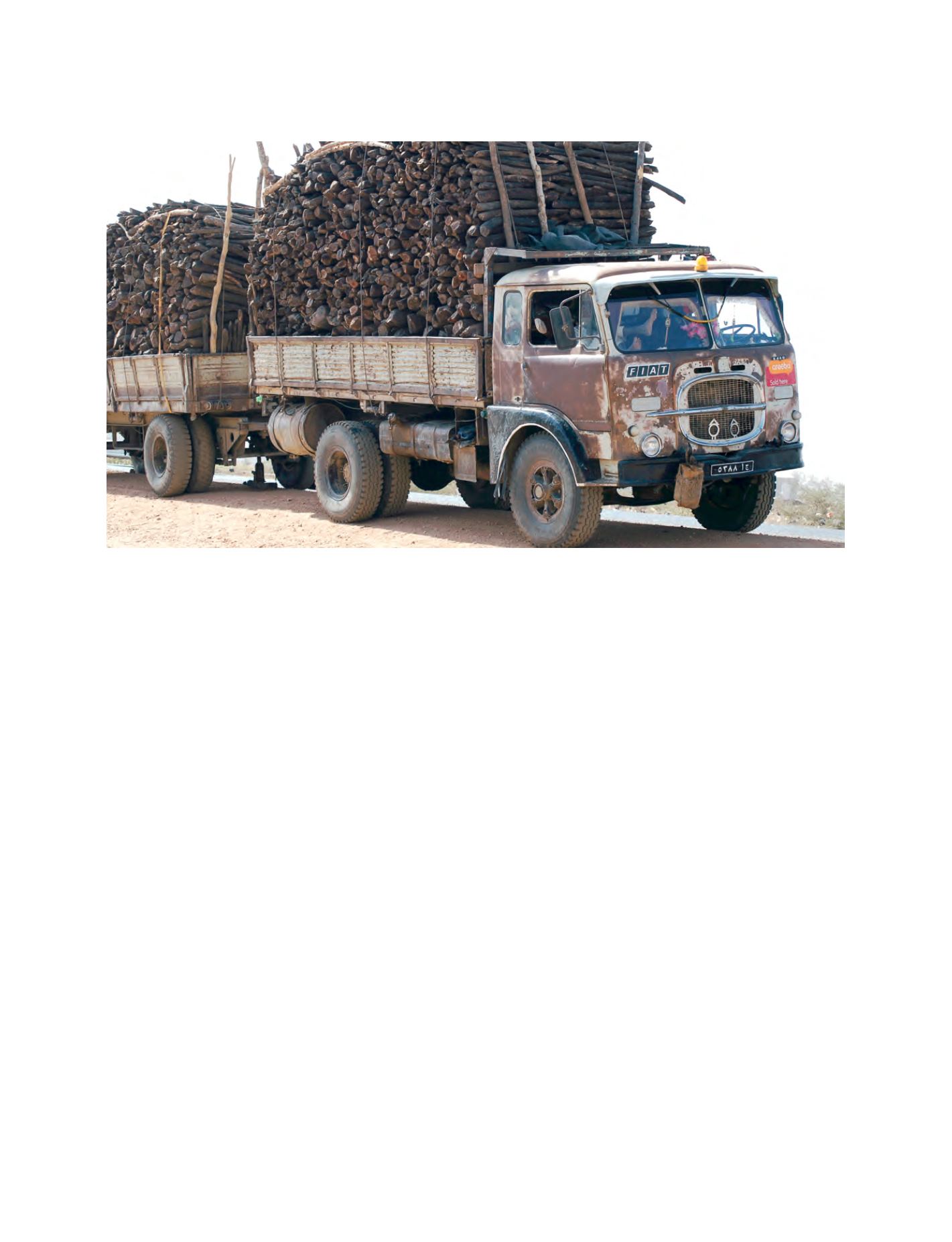
Uninhibited deforestation makes development unsustainable and has a large price for both present and future generations
Image: UNEP