



 21 / 196

[
] 19
Co-benefits and the efficiency
of an integrated approach
Patterns of disaster risk are already changing and the criti-
cal ecosystems that support community resilience are being
lost at an alarming rate due to human mismanagement as
well as changes in climate. An integrated approach to climate
change adaptation, disaster risk reduction and ecosystem
services must be adopted if development programmes and
theMDGs are to be achieved. Evaluating the effects of inter-
ventions in one field of development programming on others
can lead to mutually beneficial outcomes.
The idea of co-benefits has been used widely in discus-
sions of climate change, referring specifically to ‘joint
primary benefits resulting from the selection of one instru-
ment aimed at reaching several targets’, and is used as a
means to weigh options through benefit-cost analyses in
the policy selection process.
3
This approach is equally
useful when looking at community vulnerability and
resilience. In this sense, ‘co-benefits’ refer simply to multi-
ple benefits in different fields resulting from one policy,
strategy or action plan. Achieving co-benefits requires inte-
gration or the overt design of development programmes to
meet multiple needs: poverty alleviation, protection of
ecosystem services and biodiversity conservation, disas-
ter risk reduction and climate change adaptation.
Climate change
Designing development interventions without consideration of how
climate change will affect programme outcomes is no longer an
option. The Intergovernmental Panel on Climate Change (IPCC)
Fourth Assessment Report
affirms that “since the IPCC Third
Assessment, confidence has increased that some weather events and
extremes will become more frequent, more widespread and/or more
intense during the 21st century; and more is known about the poten-
tial effects of such changes.” Climate change will also affect the
underlying vulnerabilities of communities worldwide. The report,
for instance, indicates that “for increases in global average temper-
ature exceeding 1.5-2.5
O
C and in concomitant atmospheric carbon
dioxide concentrations, there are projected to be major changes in
ecosystem structure and function, species’ ecological interactions,
and species’ geographical ranges, with predominantly negative conse-
quences for biodiversity, and ecosystem goods and services.”
2
As the governments of the world work toward a new international
climate change agreement to follow the Kyoto Protocol, they have
drafted the ‘Bali Action Plan’ which was adopted at the United
Nations Climate Change Conference in Bali in December 2007. The
Bali Action Plan calls for enhanced action on adaptation, including
consideration of “disaster reduction strategies and means to address
loss and damage associated with climate change impacts in devel-
oping countries that are particularly vulnerable to the adverse effects
of climate change.”
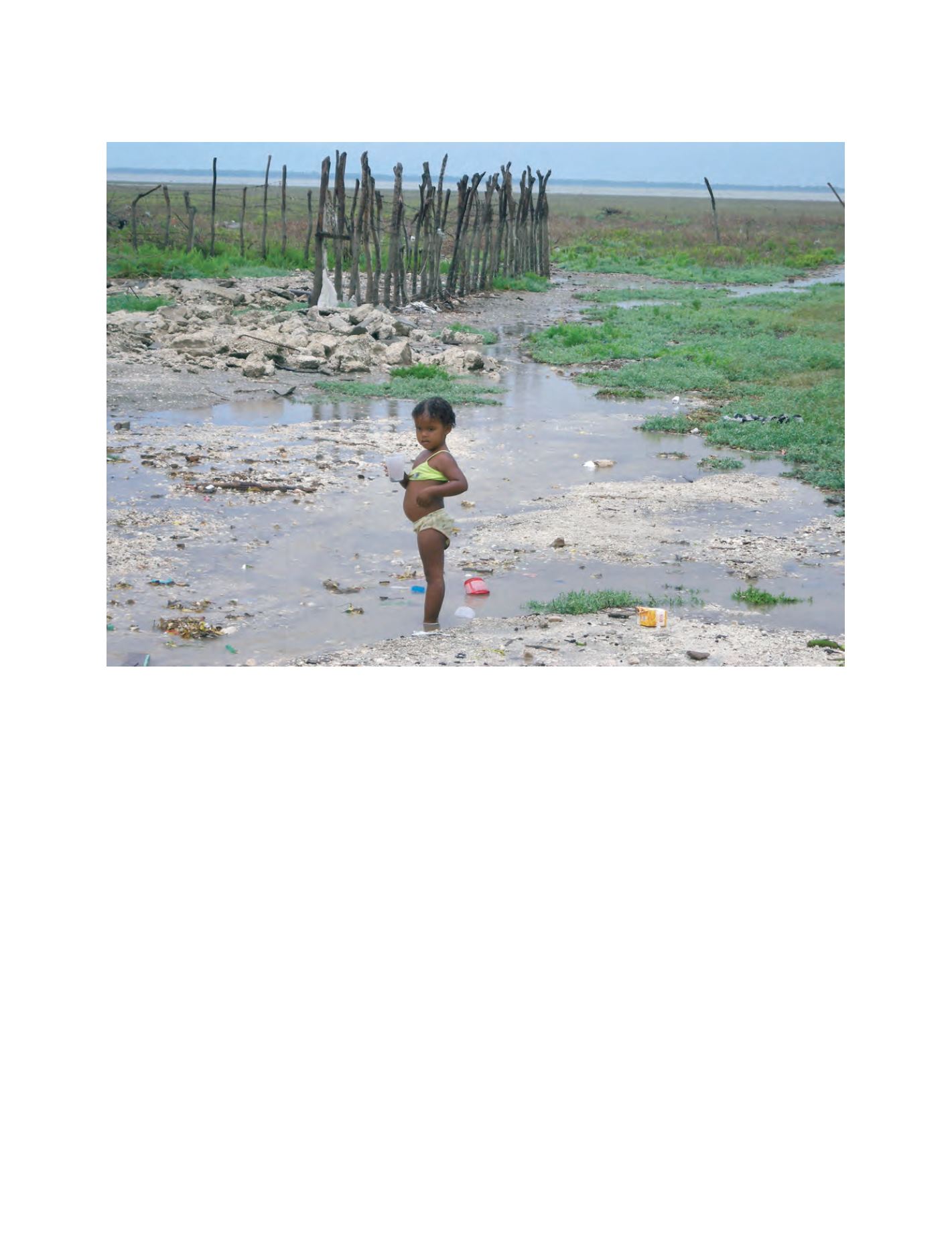
The condition of ecosystem services has direct effects on livelihoods
Image: UNEP