


 53 / 196

[
] 51
economies in fishing vessel maintenance equipment and manpower;
fatigue, recklessness; fisheries management measures that do not
take sufficient account of the human element or take fishers’ safety
into consideration, and diversified fishing operations
unaccompanied by training, traditional experience and
skills. A summary of factors affecting sea safety of small-
scale fishers in the BOBP-IGO countries is given in a
separate table.
The global initiative on safety at sea
Building on the Chennai Declaration and the Third
International Conference on Fishing Industry Safety
and Health (IFISH-3) held at Chennai from 1-4
February 2006, the FAO has designed a global Safety at
Sea Programme, aimed at improving the livelihood of
small-scale fishing communities by decreasing the
number of accidents at sea and the effects of such acci-
dents. The programme is funded by the Swedish
International Development Agency (Sida) and
addresses the issues of safety at sea for small-scale
fishers in two sub-regions: West Africa and South Asia.
The programme commenced in May 2007 and is
expected to be completed by December 2008. In South
Asia, the programme is being implemented by the
BOBP-IGO in close coordination with FAO and other
concerned agencies.
The intended outputs of the Project in South Asia are:
• An enhanced awareness of sea safety within the fishing
community operating in the small-scale sector
• An improved system of reporting and analysis of
incidents at sea causing loss of life or serious acci-
dents to fishers and fishing craft
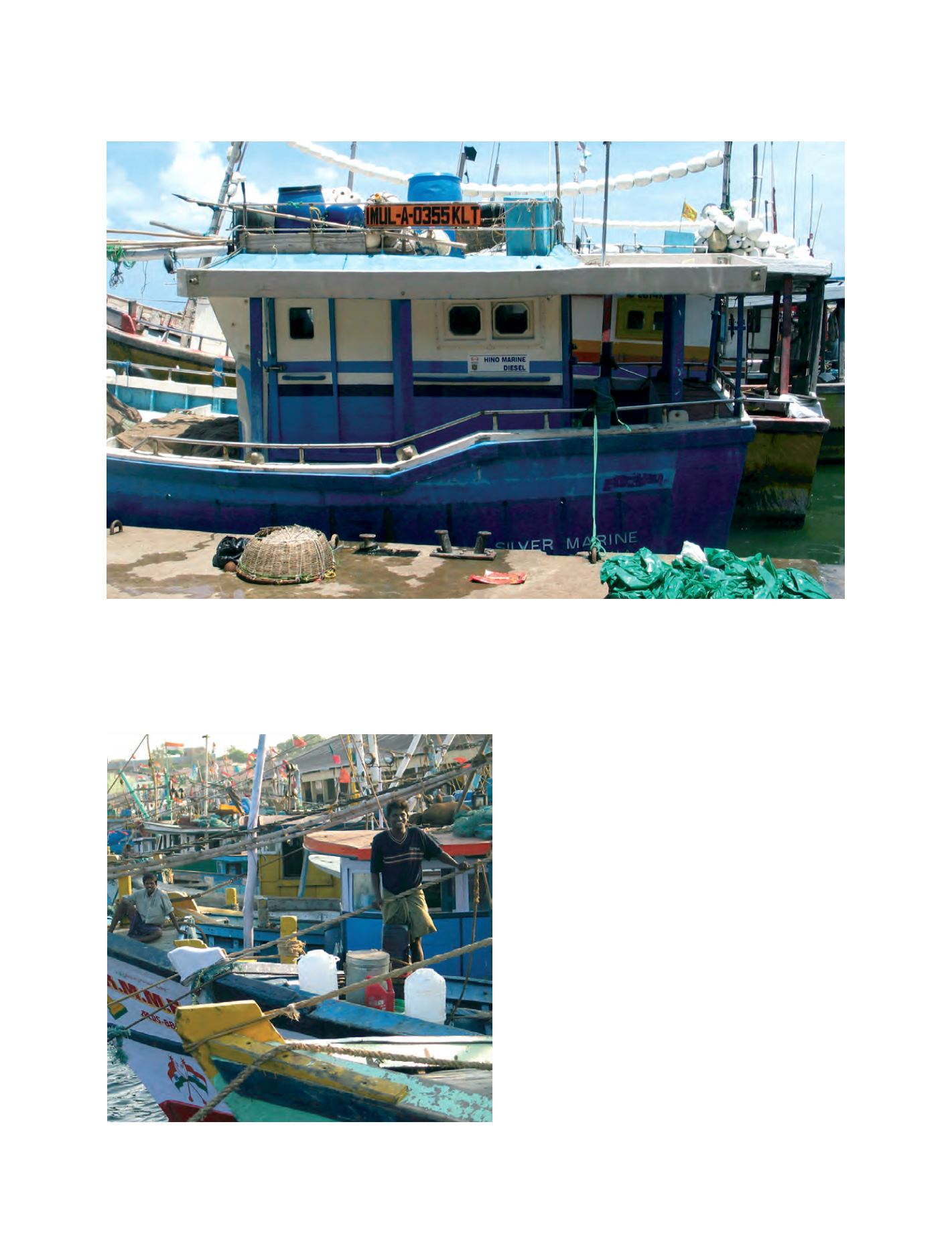
A multi-day fishing boat (gill-netter), Beruwala, Sri Lanka
Image: Yugraj Yadava
Wooden trawlers back from a fishing trip, Roypuram Fishing Harbour, Chennai, India
Image: Yugraj Yadava