


 58 / 196

[
] 56
Quantitative and qualitative research undertaken prior to the
programme launch indicates that despite an apparent high level of
awareness of the nature of disasters that may affect New Zealanders,
many individuals and communities are not as prepared as they need
to be to deal with, and recover from these disasters when they
happen.
The challenge for the ministry and the various agencies involved in
CDEM is to shift New Zealanders from apathetic awareness to total
preparedness, resilience, self-responsibility and community respon-
sibility. Achievement is not defined by complete and permanent
success, but by significant progress towards moving people along the
continuum of being aware of our hazards and taking action to be
prepared.
The key strategy behind the national public education programme
is to empower individuals and communities by providing clear infor-
mation on what they need to do to look after themselves and their
loved ones in the event of a disaster. The consistent key underlying
message is this: ‘The CDEM agencies and emergency services will
be doing their job to respond and support people in a disaster, but
help can’t get to everyone as quickly as they may need it. It is your
responsibility to look after your loved ones, and to plan to cope for
at least three days until help can get to you’.
The television, print and radio campaign sets out to illustrate
how having an emergency survival plan and the necessary emer-
gency items helps people get through a disaster. Qualitative research
undertaken in the development stages gave us a better under-
standing of the barriers to action, and identified what
the motivators were to get people to take action. We
also needed to address misconceptions about how
quickly help could get to everyone in need and that
individuals had a personal responsibility to take action
to be prepared. The key insight from the research was
that we needed to make the message personally rele-
vant and build understanding and awareness through
the positive outcome of a disaster: ‘My loved ones
survived and are safe because we took some simple
steps to get ready’.
Since the launch of the campaign, annual benchmark
research has been undertaken to monitor its effective-
ness and identify issues that need to be addressed in the
ongoing development of the programme. Early indica-
tors are that the key messages are getting through with
heightened levels of awareness of the need to take action
to be prepared. The ministry also works collaboratively
with the CDEM Groups around the country to reinforce
the national public education programme, and support
regional activities aimed at raising awareness and
preparedness at a community level.
While we still have a long way to go to ensure every-
one takes action to be prepared, we are hugely
encouraged by the impact that the programme is having,
and have made an ongoing commitment to work with
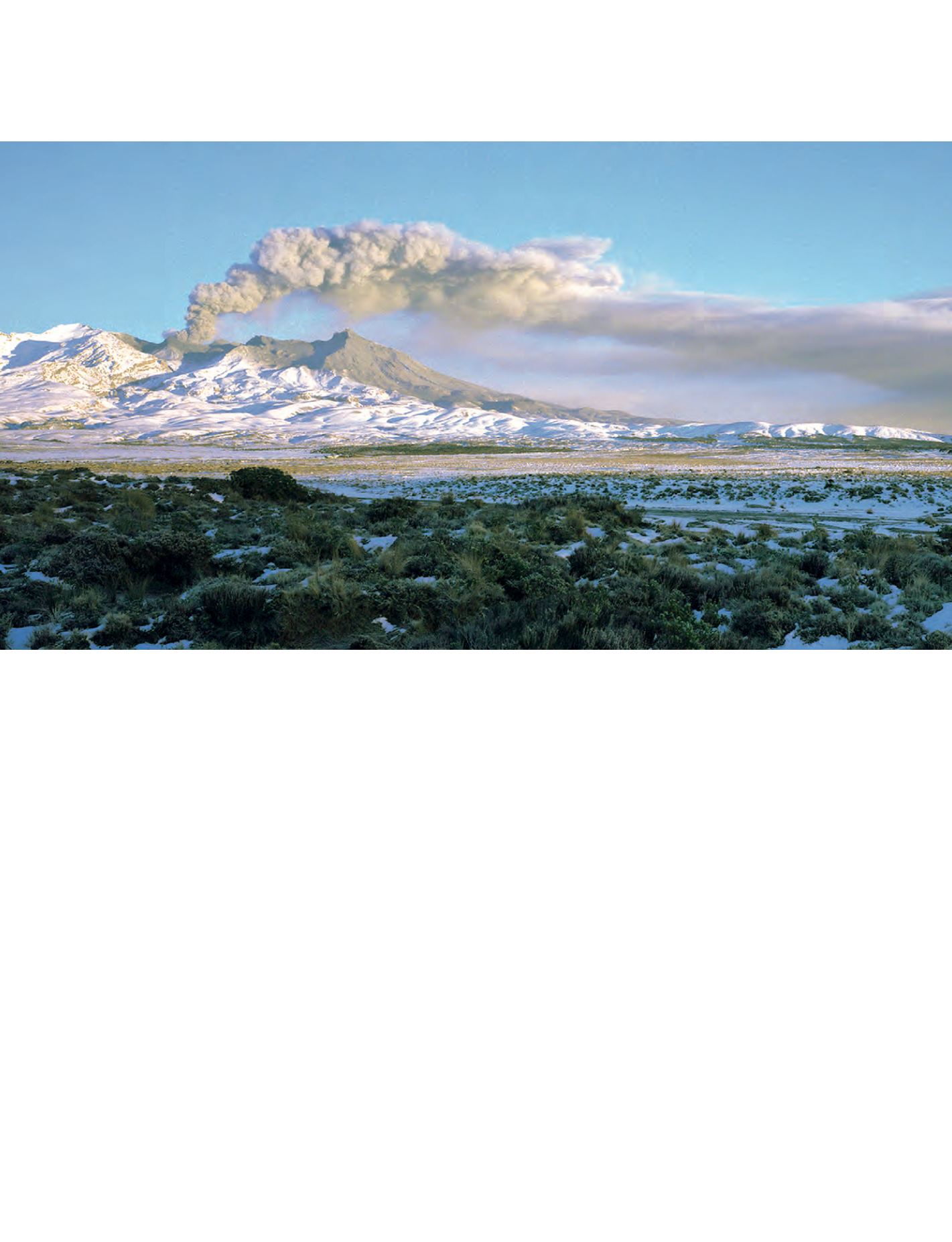
Spectacular image of the 1995 Mt Ruapehu eruption. The same volcano created a stir in April 2007 when the collapse of the crater-lake caused a lahar