


 64 / 196

[
] 62
New forms of private-public risk transfer:
making societies more resilient
Reto Schnarwiler, Head, Business Development Governments, Swiss Re
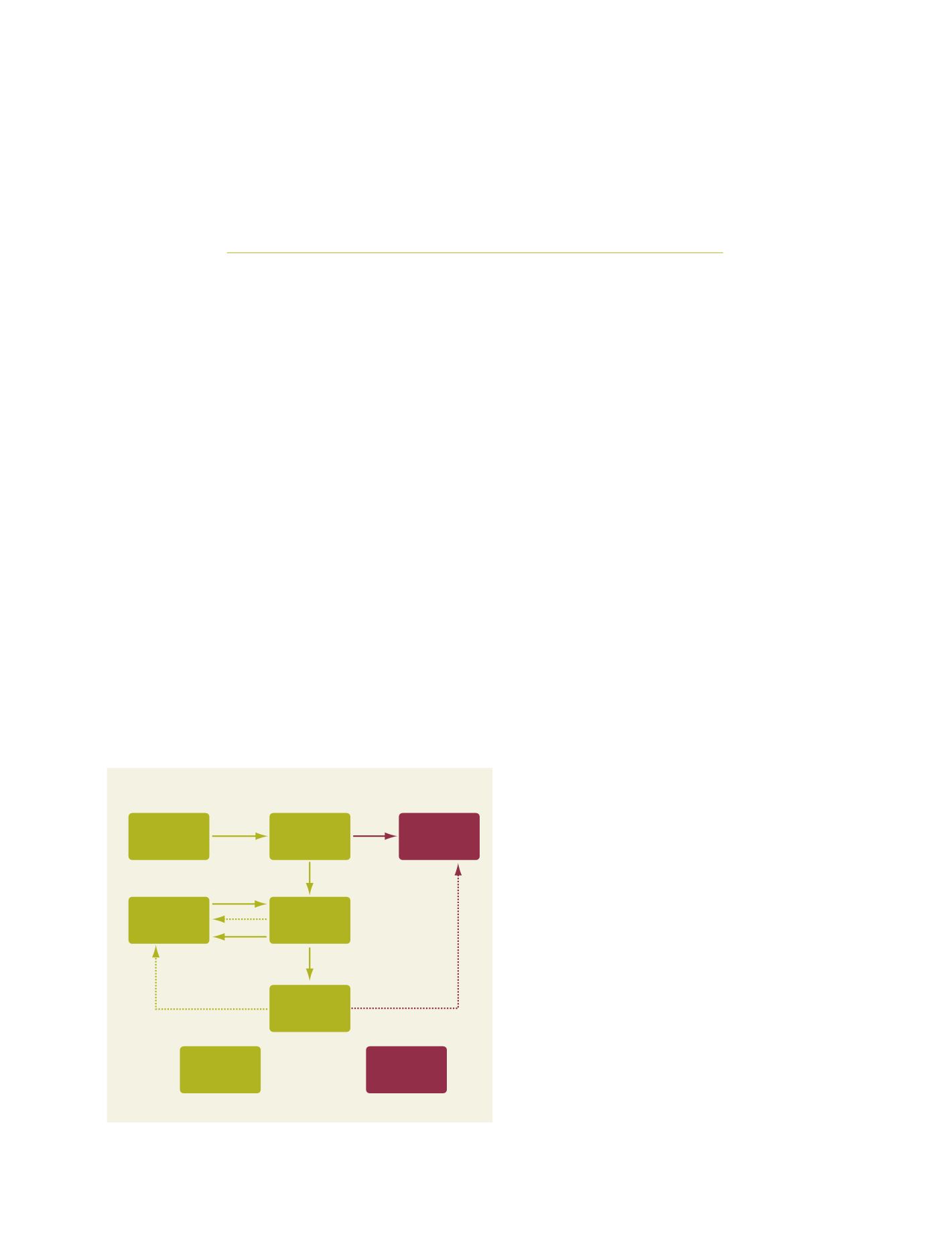
Taxpayers/
donors
Government/
charity
Government/
charity
Investors
GlobeCat Ltd
Trust
Public funds/
donations
Proceeds
Interest
Notes
Proceeds
(SPV)
Principal
repayment
at maturity
Principal
paid as
disaster funds
No catastrophe
event
Catastrophe
event
How the GlobeCat platform works
Source: Swiss Re
T
he rising impact of natural catastrophes is driving up the
cost of disaster relief and reconstruction for the public
sector. New forms of private-public partnership can make
societies more resilient by absorbing the financial impact of large
catastrophes. Such partnerships allow governments, semi-
governmental agencies, aid organizations and non-governmental
organizations (NGOs) to manage disaster expenses more effi-
ciently by funding them before – instead of after – a catastrophe
occurs. One recent example of this approach is the GlobeCat
securitization structured by Swiss Re.
GlobeCat: a new transaction model
In December 2007, Swiss Re used new financial instruments to trans-
fer Central American earthquake risks to the capital markets, using a
very innovative trigger mechanism. The GlobeCat securitization
provides a payout based on the size of population exposed to a speci-
fied earthquake. The transaction provides a newmodel for governments
and relief organizations to access pre-event financing, in order to fund
the growing impact of natural disasters in developing countries.
The GlobeCat transaction is an example of how governments and
NGOs can efficiently secure funding through capital market securiti-
zations. It uses an innovative trigger to determine coverage based on
an index of the population exposed to specified levels of
ground-shaking intensity, as measured by the Modified
Mercalli Intensity scale.
Parametric triggers based on independent factors such
as affected population, crop levels, wind speeds or earth-
quake intensity are ideal for public sector entities, which
typically carry broad relief and infrastructure rebuild-
ing expenses that are not linked to a particular damaged
property. As they avoid the need for damage assessment,
such triggers allow for the swift payment of funds. Due
to their independent – and typically scientific – nature,
they are also preferred by investors.
The goal of the GlobeCat transaction is to create a
platform and model by which charitable foundations,
governmental relief organizations and corporations can
leverage donations, government funds or international
aid in order to reduce the burden of future natural disas-
ters. Such a programme will help public sector
organizations become more proactive in planning and
anticipating relief needs in areas of the world affected
by severe catastrophes. If a triggering event happens, the
funds will be quickly available for relief efforts rather
than being raised after the event.
GlobeCat has shown that this concept is viable, and
that the leverage of own funds to coverage can be as high
as 45 times. For example, USD1 million of donations or
government funds can be used to secure contingent
disaster relief funds of USD45 million. Structures such
as GlobeCat provide swift access to relief funding, and
offer a means to increase contingent funding for cata-
strophic events by using public funds and donations to
purchase coverage on the capital markets.
Natural catastrophes: a rising burden for society
The impact of natural catastrophes on societies and
economies has increased considerably over the last two
decades and is likely to grow further as a result of two
complementary trends. Firstly, climate change is
expected to increase the scale and frequency of major
weather-related events. Secondly, the economic severity
of natural catastrophes is growing due to a rise in both
population and economic activity in areas with a high
risk exposure. In addition, the nature of the risk is
changing, for a variety of reasons. Buildings have
become more expensive to build and repair, and higher
interdependencies in the production process have