



 69 / 196

• Ensure continuation of the programme beyond 2009 by
securing funding from government departments and other
institutions
• Ensure internationalization of the programme in two ways: by
securing the inclusion of international students; and securing
opportunities for students to obtain international experience in
other African and least developed countries with serious disas-
ter risk reduction challenges.
Lessons learned and recommendations
The real impact of the success of the programme can only be
measured once the students deliver results in the communities or
institutions they serve. It is only when their input as professionals
has contributed toward the objective of disaster risk reduction that
we can praise ourselves. Not everything in the project is perfect yet
and a number of lessons were learned during the first few years.
Others can learn from the experience gained from this innovative
programme. Amongst the most prominent lessons are the following:
Individual cooperation and sharing in a common vision amongst
participating institutions is paramount for success.
Flexibility in organizational structures and planning contributed
to successful implementation of the programme especially during
the initial stages.
Personal and continuous communication, transparent and joint
decision making and personal involvement by the steering commit-
tee members ensured clear guidelines for the implementing agent, as
well as the University responsible for the academic education of
learners.
Thorough selection of prospective students according to specific
guidelines is necessary to ensure an acceptable pass rate. The course
requires exceptional self discipline and a high level of comprehen-
sion for inter-disciplinary thinking. Students have the opportunity
to specialize in the course but the inter-disciplinary chal-
lenge for disaster risk reduction requires students to
think and argue outside their field of speciality. One of
the shortcomings of the current set of selection criteria
is that these characteristics are not evaluated properly.
Host departments/institutions should dedicate a
specific person to mentor students during their stay at
that specific institution. This is probably the biggest
challenge for the future. Not all departments/institutions
have the luxury of a dedicated mentor to look after the
students under their jurisdiction. Although the
University takes responsibility for the academic mentor-
ing of students, practical exposure remains the
responsibility of the host department/institution. The
danger here is that students might ‘idle’ during their stay
at a specific institution and use their academic respon-
sibilities as an excuse not to gain much needed practical
experience. Clear communication between the host
department/institution and the programme manager at
the University is therefore essential to monitor students.
The programme manager is key to its success. The
CSIR as implementing agency has also managed the
programme successfully to date. The University has been
appointed as implementing agency for the 2008 and
2009 intakes with the responsibility to manage the total
programme. The tasks of the programme manager are
now extended to include that of academic mentor.
3
This
required the appointment of a suitable qualified person
with at least a masters degree who is solely dedicated to
the programme. This is implemented from 2008 and the
success of this arrangement has not been evaluated yet.
Finally, practical exposure of students to activities in
host departments/institutions in South Africa alone
might not be sufficient to educate them to the realities
of Africa and developing countries. Well-developed
disaster management institutional arrangements and
policies in South Africa give its students a false repre-
sentation of Africa. This deficiency became evident
during class discussions and interaction with interna-
tional students from other African countries. Young
South African students struggle to grasp the real
meaning of vulnerability, resilience and disaster risks
faced by the poor in most African countries. The
students themselves expressed their desire to obtain
some hands-on experience with experts working in
other developing countries. A programme of this nature
should provide students with the opportunity to work
as volunteers with NGOs and other organizations in
various African or least developed countries in order to
really understand vulnerability.
The Learnership programme serves as an effective
model to build much needed capacity by recruiting and
developing graduate students in preparation for techni-
cal and managerial roles. The recent appointments of
the Learnership graduates by several institutions with a
focus on disaster risk reduction bears testimony to the
success of this model. Given the dire need in this sector
this is something that should be pursued aggressively
by other study programmes.
[
] 67
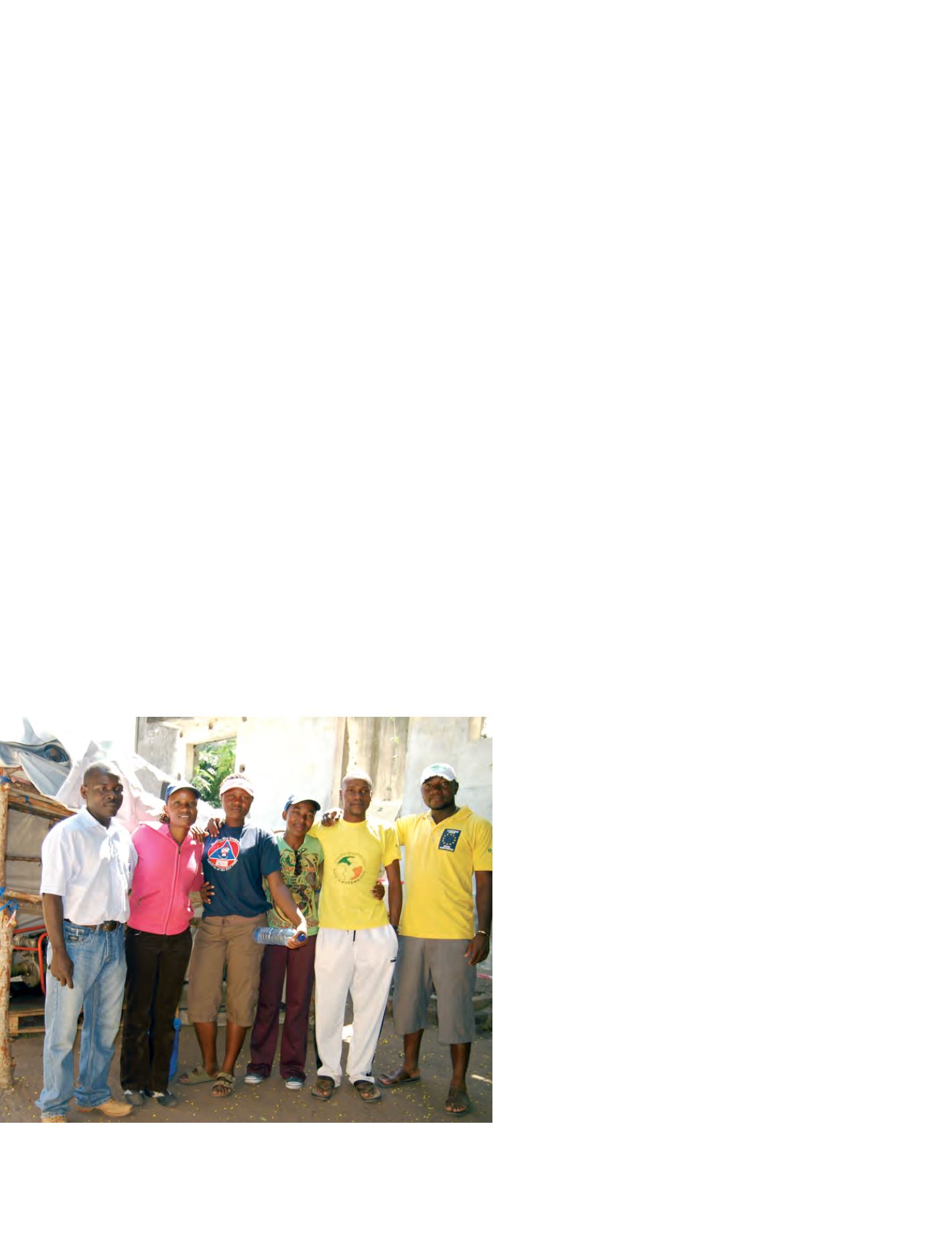
Students in the flood-affected area with personnel from Oxfam in Mozambique
Image: DiMTEC