


 75 / 196

[
] 73
Respiratory health
Combustion of fossil fuel and biomass is the dominant
source for energy worldwide, driving national economies
and development. The combustion of these fuels results
in the emission of gaseous species like carbon dioxide,
carbon monoxide, oxides of nitrogen, sulphur dioxide
and hydrocarbons, besides suspended particulate matter.
It is well established that exposure to these pollutants
can have a range of adverse health effects, especially if
serious pollution episodes occur. Air pollution, both
outdoor and indoor poses a great risk to human health.
The impacts of ozone levels and benzene emissions,
which have not been studied sufficiently in most of the
developing countries where ambient concentrations of
these species are generally increasing, would probably
add more to the total loss in national productivity due
to increased morbidity.
Extensive studies correlating indoor pollution and its
impacts such as acute respiratory infections, chronic
obstructive pulmonary diseases (e.g. chronic bronchi-
tis), lung cancer, tuberculosis and prenatal effects are
well documented. Long-term exposure to low levels of
pollution may result in or aggravate chronic bronchitis,
pulmonary emphysema, bronchial asthma, chronic
cough, lung cancer and decreased resistance to infec-
tions. Excessive secretion of bronchial mucous is the
hallmark of chronic air pollution effects. Dust allergens
including pollen of size 1-90 μm in diameter can induce
or trigger allergic reactions in susceptible people.
In view of the adverse effects of air pollution, some
studies have been carried out in South Asian countries
which provided inputs for evolving technologies, policies,
laws and regulatory mechanisms to control the problem of
poor air quality. While the developed countries have been
able to improve their ambient air quality significantly, the
developing countries are still facing a major challenge in
tackling this problem in spite of several measures taken
so far. This is because economic development and associ-
ated lifestyle changes in the region are resulting in an
increasing rate of air pollutant emissions, which might
need additional policy measures to prevent human health
risks and boost overall national productivity.
an occupational hazard for both outdoor and indoor workers. This
could lead to death or chronic ill health from the after-effects of heat-
stroke.
5
Large areas in the South Asian region that experience high
temperatures for a significant time in the summer seasons are highly
vulnerable to heat stress, which affects poor people more as evidenced
by the occurrence of heatstroke in metal workers in Bangladesh
6
and
rickshaw pullers in South Asia.
7
In India, mortality due to heat waves
shows an increasing trend. For example, in 1981 there were seven
heat wave days with 63 deaths, which rose to 27 events and 1,658
deaths in 1998 and 70 events with 1,539 deaths in 2003.
8
Clearly,
this shows the need for appropriate intervention such as augment-
ing forecasting measures, creating shelters and gearing up health care
facilities to cope with this kind of human health risk.
Malaria
Malaria is a public health problem in 90 countries in the world, cover-
ing 40 per cent of the human population. South Asia is especially
vulnerable to malaria risks. About 1.8 million malaria cases have been
reported causing about 1,000 deaths annually in India. It is highly
prevalent in the forest areas and tribal belts of the South Asian region.
Malaria is one of the vector-borne diseases that is affected by a large
number of factors related to human population, the parasite, vector
bionomics and the environment; including temperature, precipitation,
humidity and wind conditions of a region, which also have a role in
determining transmission dynamics of the area. Additionally, it is
expected to be most sensitive to long-term climate and environment
change. Malaria has been on the increase due to a growth in urban-
ization and the migration of people searching for a better livelihood.
For example, only sporadic cases of malaria were reported from states
in north-east India before 1980. However, a widespread malaria
outbreak occurred in Assam in 1995 and many deaths were reported
from several primary health centres in the region. This increase in
endemicity was traced to a large-scale migration of labour to the forests
of Assam from areas with a higher prevalence of the disease.
Malaria is mostly endemic in the South and Southeast Asian coun-
tries. Attempts to eradicate malaria globally have been seriously
hampered due to the fact that malaria vectors have become more resis-
tant to insecticides, and the parasites that cause the disease have also
become resistant to chloroquine and possibly other anti-malarial drugs.
This is making prevention and treatment increasingly difficult and costly.
India has also spent a considerable amount of money on malaria
control operations through its National Malaria Eradication
Programme (NMEP), but due to the increasing resistance of mosqui-
toes to pesticides and of parasites to anti-malarial drugs, the
effectiveness of malaria control attempts could not be fully success-
ful. Therefore there is a need to develop new region-specific coping
strategies to reduce human health vulnerability to malaria. For
example, during 2000-2001 under the Roll Back Malaria initiative of
the World Health Organization, a malaria situation analysis was
undertaken in the West Aizawl district of Mizoram in India. This
revealed that although there were negligible vacant positions in the
anti-malaria department, an availability of 100 per cent of the required
financial assistance from the Government of India, a vector fully
susceptible to Dichloro-Diphenyl-Trichloroethane (DDT), coverage of
indoor residual spray to the tune of 85 per cent and a more than 95
per cent literacy rate, there were still deaths due to malaria. This indi-
cates that the intervention measures were inadequate in handling the
situation, thus warranting investigation and development of region-
specific intervention measures.
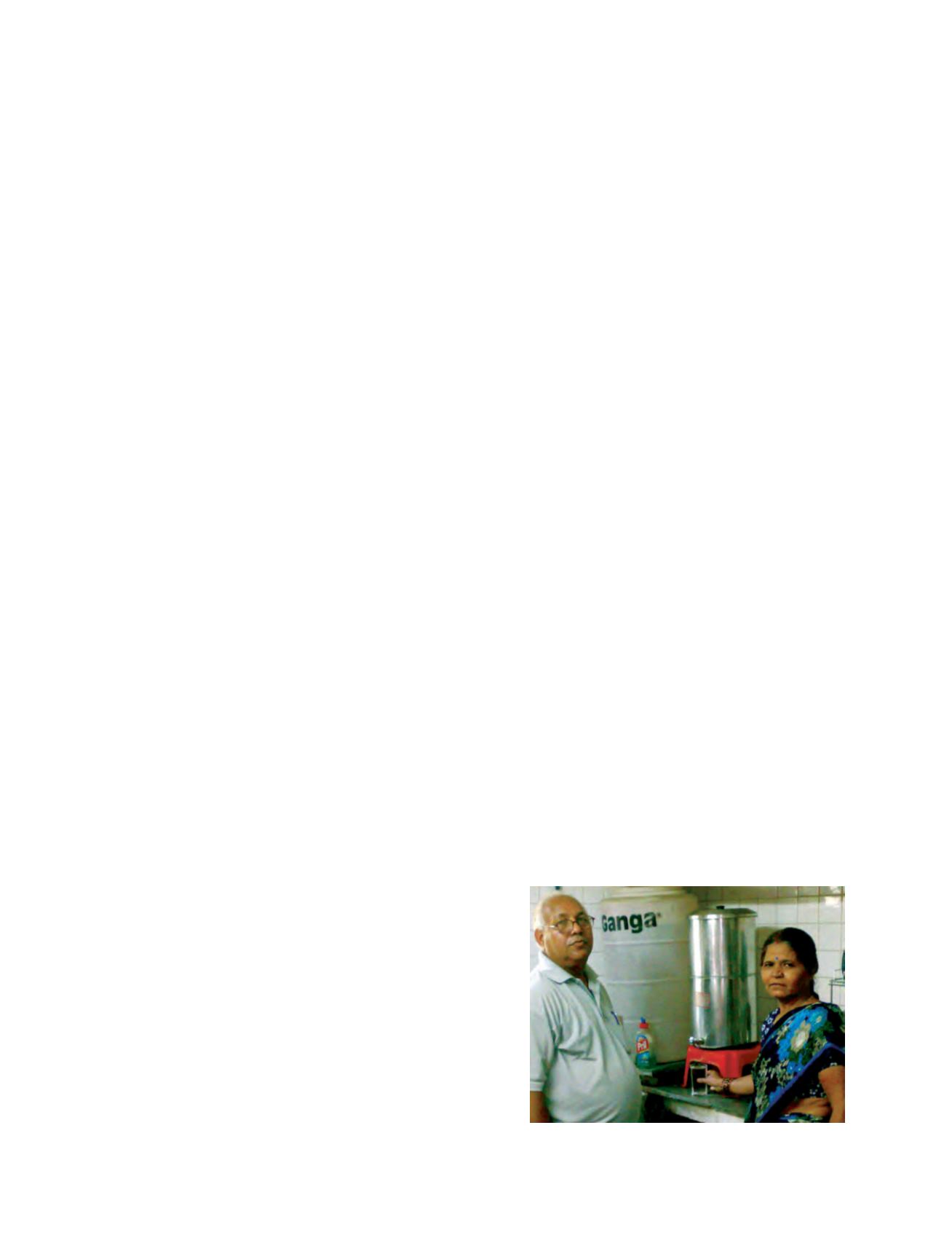
Use of a ceramic water filter in an Indian kitchen
Image: C. Sharma