


 72 / 196

[
] 70
achieving the goals of these development actions includes ensur-
ing that they are not seriously affected by risk factors among which
must be included the risk of disasters destroying or severely
disrupting development gains. On the other hand, mistakes can be
made in the name of development, leading to the creation of new
risk factors that may not have been identified in the initial assess-
ment and may not have been foreseen. In the face of the new risks
of the 21st century, especially those posed by climate change, there
is a new urgency for disaster risk identification and subsequent
reduction.
Of all the actions contributing to disaster risk reduction objectives,
perhaps it is in the area of disaster preparedness that the National
Societies find their most comfortable niche. Preparedness is closely
linked to effective response, but it is also a way of developing commu-
nity capacities and laying the foundations for addressing disaster risk
more comprehensively. In Bangladesh, the Red Crescent together with
the Government and the International Federation established a
cyclone preparedness programme after five cyclones devastated the
country during the 1990s. Each preparedness shelter can house 1,500
people while warning systems established alongside the shelters can
alert millions of people. In Nepal, community-based disaster prepared-
ness focuses on raising awareness of preparedness measures against
flooding. Women play an important role in this programme which is
centred around people rather than technology and
features a revolving fund overseen by community
committees.
Red Cross Red Crescent disaster risk reduction can go
much further than preparedness, however. In Vietnam
the Red Cross Society has been centrally involved in a
mangrove planting programme to protect the fragile coast-
line. In Ethiopia, the Red Cross Society has been involved
in an innovative cash-for-work programme as a means to
address food insecurity. The cash was paid for
programmes of road construction or environmental
protection and benefited 62,000 people and their fami-
lies. In El Salvador, the Red Cross Society has been
working to reduce vulnerabilities to a range of hazards
including earthquakes and floods. Although response
capacity was also targeted, around 90 micro-disaster risk
reduction projects were created to assist people in reduc-
ing their vulnerability. Throughout Central Asia the Red
Cross and Red Crescent Societies have been working on
a range of disaster risk reduction projects from dam-build-
ing and riverbank reinforcement to help prevent
landslides, to preparedness and awareness-raising. As part
of their comprehensive programme to support commu-
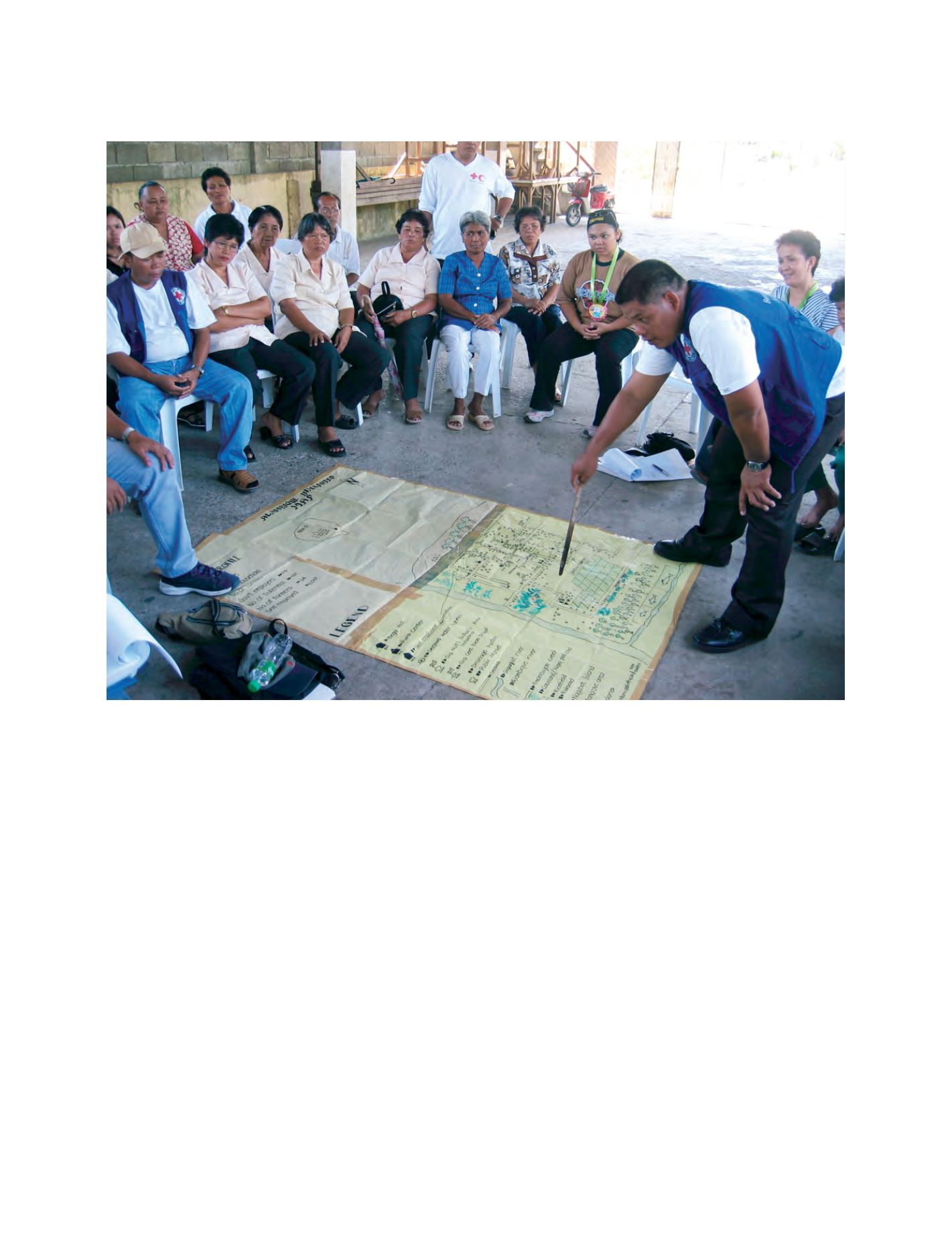
Community-based disaster preparedness programme, 2005
Image: ©
Knud Falk/Danish Red Cross