


 136 / 210

[
] 134
C
onfronting
F
amily
P
overty
Global warming is likely to increase the sea level, threat-
ening fisher settlements along the coastline. Already there
are reports of severe coastal erosion from India, Bangladesh
and Sri Lanka. Maldives also faces a high risk from global
warming as many areas of this low-lying country may be
flooded in the next 50 years if the sea level continues to
rise. The WBOB countries, especially Bangladesh and India,
are highly prone to cyclones and storm surges. In the past
decade the region has witnessed many devastating cyclones,
including the December 2004 tsunami that caused unprec-
edented damage to lives and livelihoods in India and Sri
Lanka. Fishing communities on the coast are directly
affected by such extreme weather incidences, making fami-
lies vulnerable to loss of livelihoods and poverty.
Apart from climate change, versatile uses of coastline and
marine waters from industry to tourism to exploration are
also threatening the fisheries sector. Since these activities
are economically more remunerative than fisheries, they
are often favoured in national developmental approaches.
In addition, growing industrialization and urbanization is
increasing the chances of pollution further threatening fish-
eries biodiversity and livelihoods.
With the setting up of the Marine Protected Areas and
declaration of many coastal stretches as protected grounds
for iconic marine species such as turtles, the livelihoods
of fisher families have been badly affected. The collision
between marine biodiversity conservation and livelihoods
is becoming a matter of grave concern as these fisher
families have little option outside the sector. While steps
are being taken now to involve local communities in the
conservation process, a thorough participatory approach
will be needed before parts of the coastline are designated
as protected areas.
Regional initiatives for vulnerability reduction
The Government of India, in association with provincial
governments, runs a fully subsidized insurance programme
for fishers, providing compensation in case of accidental
death, permanent disability or loss of limb up to INR 100,000
(approximately US$1,666). Around 4 million fishers are
currently covered by the scheme.
5
Recently the Government of Bangladesh, through its nation-
alized insurance agency, Jiban Bima Corporation, introduced
a group insurance scheme whereby fishers form a group of at
least 50 people and pay the premium. The scheme has filled a
void in the social security space for fishers in Bangladesh and
has achieved fast penetration since it was launched in October
2012. The annual per capita premium is Tk 1,240 (approxi-
mately US$16) for an assured sum of Tk 200,000 (around
US$2,500). The scheme covers natural death, accidental death
and permanent disability. Partial disability is not yet covered
under the scheme. The term of the plan is for three years.
6
Self-help groups (SHGs) in the region, promoted mostly
by non-governmental organizations since the late 1990s,
have become a major tool of organizing fisherwomen and
creating opportunities for additional or alternative liveli-
hoods. Fisherwomen were initially apprehensive of joining
such groups, but a host of institutional features such as
microfinance, which preferred such groups over individu-
als, created space for the development of SHGs. Although
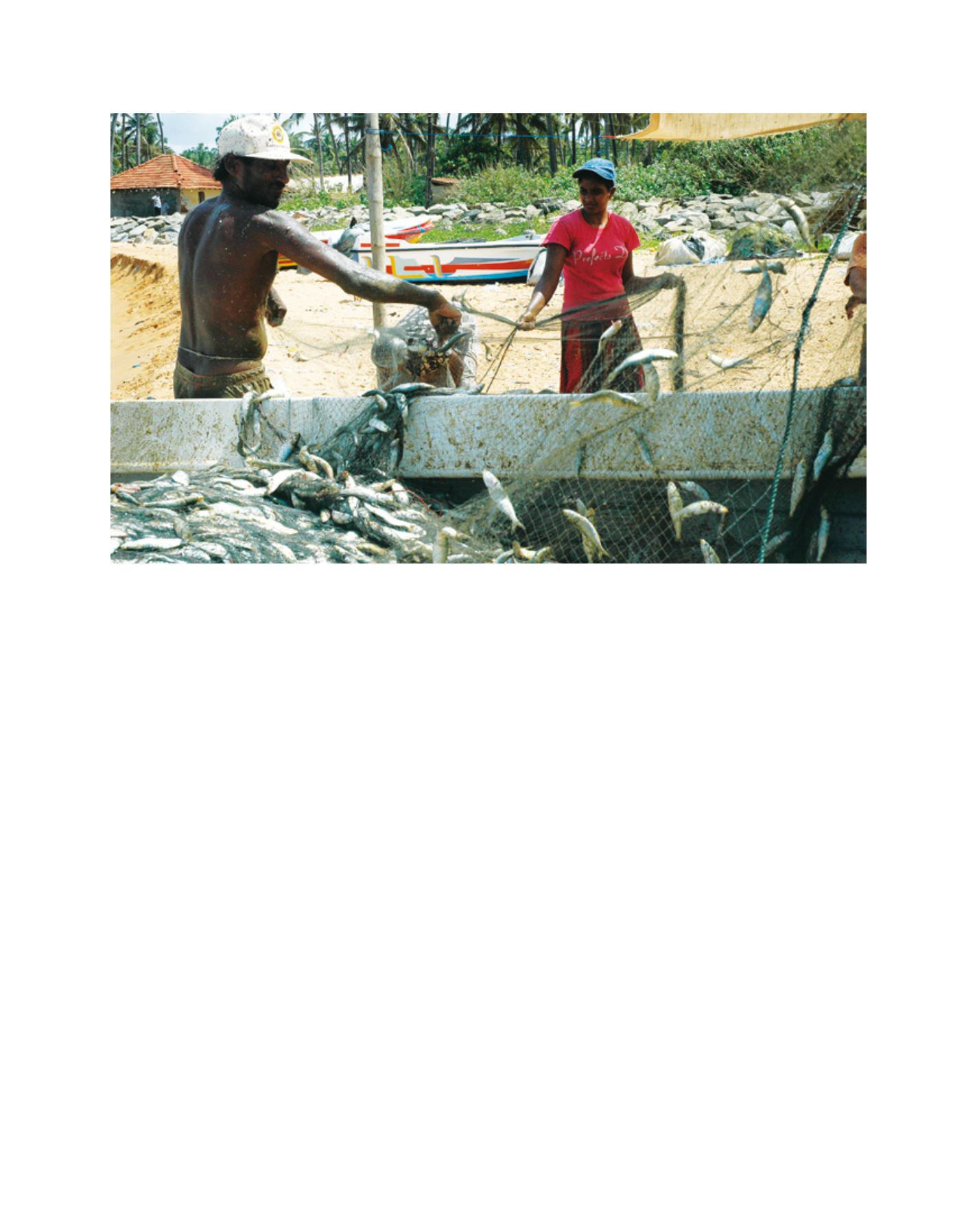
A fisher couple removing a bumper catch from gill net, Negombo, Sri Lanka
Image: S. Jayaraj