


 131 / 210

[
] 129
C
onfronting
F
amily
P
overty
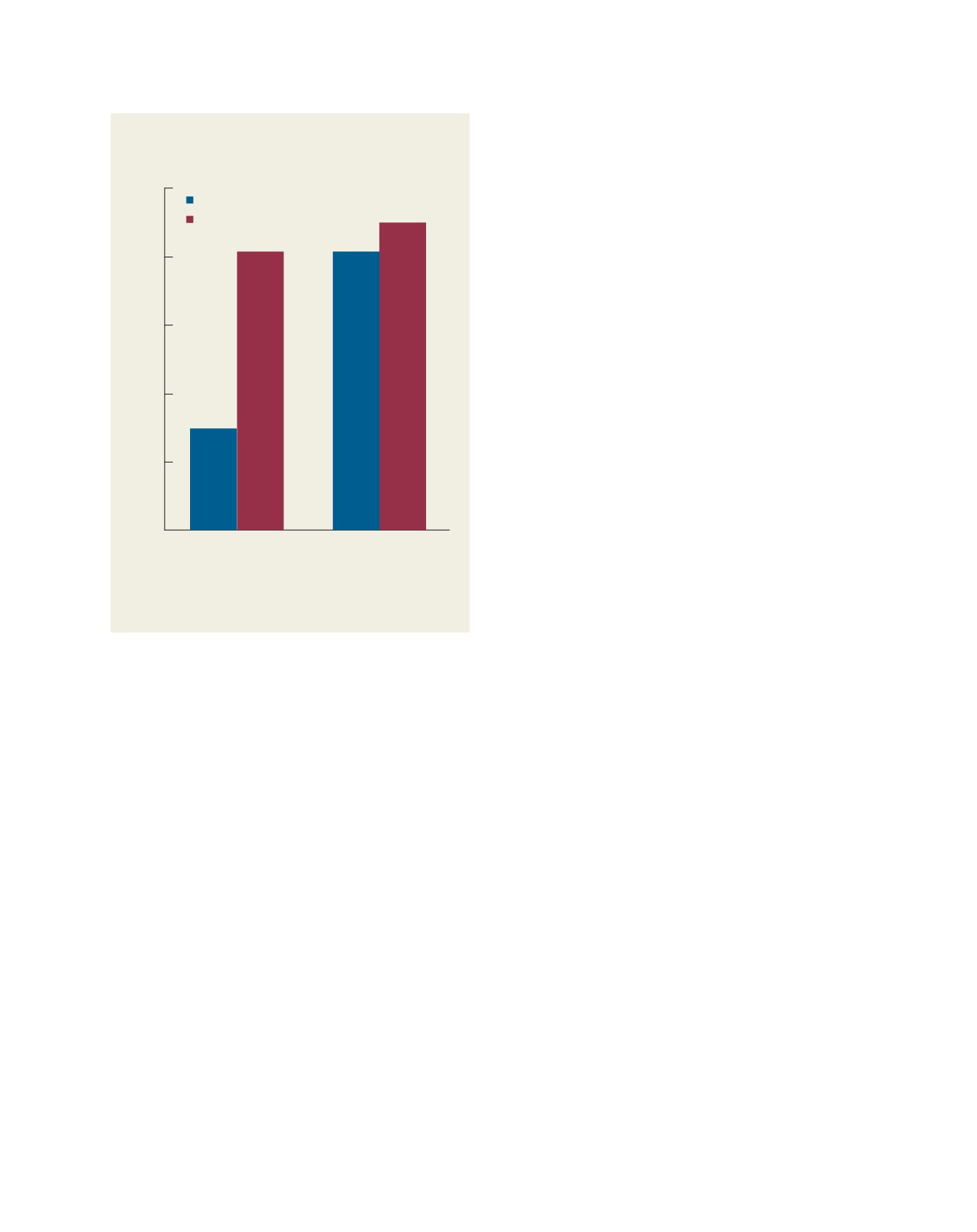
tion, as Arab women with a university degree (a relatively
small share of this population) have employment rates that are
much more aligned with those of educated Jewish women.
24
The low employment shares for lower-educated Arab-
Israeli women in practice means that most Arab families
only have one wage earner. Such families are much more
likely to be poor than the one-earner Jewish household.
25
This differential effect is partly due to family structure,
wherein Arab single-earner families are younger and likely
to have more children than their Jewish counterparts. More
importantly, however, there are vast differences between
the employment patterns of Arab-Israeli and Jewish men.
Arab-Israeli employment is characterized by lower-skilled,
lower-paying labour which is often physically demand-
ing. In turn, employment benefits are more limited, steady
work more difficult to find, and retirement ages much
younger for male Arab-Israelis. The work pattern differ-
ences among Arab-Israelis and Jews are influenced by the
educational gaps that emerge at an early age. A study by the
Israeli National Authority for Measurement and Evaluation
shows that Arab-Israeli youth score 17 per cent below the
Israeli national average on the Programme for International
Student Assessment (PISA) exam testing reading, mathe-
matics and science.
26
Israel already performs poorly on the
PISA exam when compared to other OECD countries; as
such, Arab-Israeli test results are below those of developing
countries such as Jordan, Colombia and Indonesia.
Looking beyond poverty rates, it is important to under-
stand how lower income actually affects households, and
what coping mechanisms exist for families to withstand
economic pressure. While material hardship often depends
on income and social policies such as food and housing
subsidies, it is also contingent upon communities, friends
and family practices. In this regard, Israeli families differ
with respect to the impact of material hardship.
27
While many Israelis go without basic needs such as food,
utilities or medical care, these problems are more severe at
the bottom half of the income distribution. Nonetheless,
there are noticeable differences even among the poor. Even
though income levels are similar among Haredim and Arab-
Israelis in the lowest income quartile, Arab-Israelis are more
likely to forgo material or health-care needs across the board.
One hypothesis is that fundamental characteristics under-
lying the family and community structure are responsible for
these differences in material hardship. Specifically, while 22
per cent of Arab-Israelis in the lowest income quartile have
experienced poverty often since age 15, only 15 per cent
of the lowest-income Haredim have. As such, the poorest
Haredim do not suffer as much from the hardships of inter-
generational poverty as Arab-Israelis do. Furthermore, the
community nature of the Haredim, which entails a culture
of social support, may mitigate specific financial difficul-
ties faced by an individual family. A 2009 Central Bureau of
Statistics survey asked respondents if and from whom they
could receive support if they needed to quickly raise a sum of
about US$1,400. Arab-Israelis expressed reliance on parents
or children for such assistance, with limited other options.
In contrast, Haredim showed a broader support network,
with 37 per cent, 40 per cent and 53 per cent comfortable
asking friends, relatives or parents for support, respectively.
The combination of perpetuating poverty, poorer support
networks and greater financial obligations to one’s parents
may lead to the greater levels of material hardship expressed
by poor Arab-Israelis.
Considering Israel in the global context, important lessons
can be drawn with regard to strengthening the role of fami-
lies while developing a modern economy with economically
empowered women. Culture and geopolitical factors are
likely contributors to the strong family orientation in Israel,
which is reinforced through government policy. Workplace
practices as well as legislation around maternity leave and
childcare have created a supportive environment for employ-
ment of Israeli women with children.
Part of developing a family-friendly society is to ensure
the well-being of children and their parents. In this regard,
Israel’s biggest challenge is its very high poverty rates rela-
tive to other developed countries. Poverty affects a wide
range of families in the country, with traditionally large
Haredi and Arab-Israeli households particularly hard-
hit. There is a worrying trend of declining education
levels and correspondingly low employment rates among
younger Haredi men, who are instead choosing a lifestyle
of prolonged religious study. Among Arab-Israelis, low
– but growing – rates of female employment combined
with lower-skilled, less stable work among males contrib-
utes to entrenched poverty. Furthermore, Arab-Israelis
Employment rates for women aged 35-54 by sector
and education level, 2011
Source: Kyrill Shraberman, Taub Center
Data: Data: Central Bureau of Statistics,
Labor Force Survey
Academic degree
All
Arab Israelis
Non Haredi* Jews
*Haredi/m are ultra-Orthodox Jews
30
81
81
89
0
20
40
60
80
100
Per cent