


 144 / 210

[
] 142
Workplace policies and protections: a family matter
Jody Heymann, Dean, University of California, Los Angeles Fielding School of Public Health and Founding Director,
WORLD Policy Analysis Center; and Kristen McNeill, Research and Policy Analyst, WORLD Policy Analysis Center
E
nsuring
W
ork
-F
amily
B
alance
B
y the International Year of the Family in 1994,
families were experiencing dramatic transfor-
mations. More and more men and women were
working away from their homes in factories, agribusi-
ness and service roles instead of working on their lands
or operating home businesses, where the children they
cared for were nearby. Women were increasingly enter-
ing the wage and salary labour force, with employers
determining their hours of work and many of their
working conditions. Children required as much care as
they ever had – and parents had less access to tradi-
tional sources of support for this care, as urbanization
trends around the world brought young families to cities
away from their extended family members. At the same
time, the world was beginning to reap the benefits of
life-extending public health and medical interventions,
which meant that caring for older family members
would soon be as central a part of family care-giving as
caring for children.
Despite these important changes affecting work and family
lives, in 1994 we knew far too little as a global community
about the lived realities of working families, the challenges
they faced and the resources available to them. No one
knew how many men and women around the world were
simultaneously working for pay and caring for young chil-
dren, older parents or disabled family members. No one
knew how many children and youth received adequate care
when parents were at work, and for how many there was
no other choice but to leave them alone.
This lack of information was costly. While individual
parents were painfully aware of the untenable choices they
had to make between earning enough to sustain their family
and providing essential care, decision makers often weren’t
aware of the prevalence and severity of these difficulties.
They were also often unaware of the feasibility of solutions
to these problems. Global efforts had begun to examine
the availability of paid maternity leave, but there was no
straightforward, comprehensive way for policymakers and
civil society to learn what approaches to other challenges
had been taken around the world, or what measures had
been taken by countries with similar social and economic
constraints and opportunities. How many countries
provided paternity leave? For how long? Was this policy
affordable in lower-income countries? How were coun-
tries regulating night work – through premiums, general
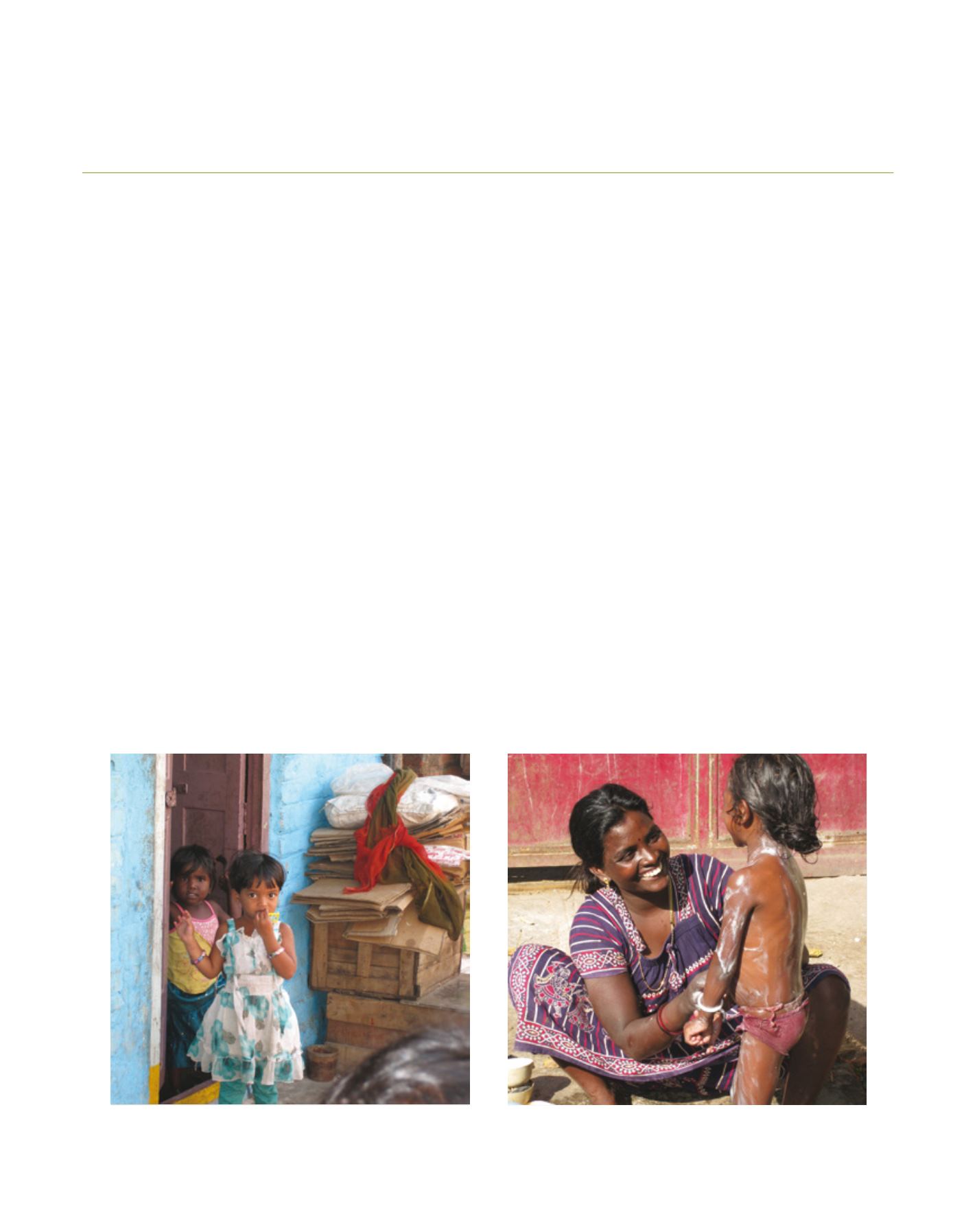
More than one in three working parents interviewed by the Project on Global
Working Families had been forced to leave a young child home alone
Countries at every income level have made significant change in supporting
work and family, but there is still a long way to go
Image: Jody Heymann , 2011
Image: Jody Heymann , 2011