


 146 / 210

[
] 144
E
nsuring
W
ork
-F
amily
B
alance
whelmingly guarantee paid maternal leave, paid paternal
leave, and leave to care for children’s health needs, for
example. Countries with limited resources can also make
progress – 34 low-income countries provide paid mater-
nal leave, 11 provide paid paternal leave, and 24 guarantee
breastfeeding breaks once new mothers return to work.
But there is still a long way to go. We need to ensure that
men and women have an opportunity to play equal roles in
care-giving and at work. Maternity leave alone is not sufficient
– leave for new fathers is also key. Men need the right to
spend early time with their children just as women do – this
right is critical for gender equity within the home and in the
workplace, as well as for the health and well-being of infants
and mothers. Leave entitlements for new fathers, however,
are lagging far behind. Only 83 United Nations member states
provide leave that fathers can take to care for a new child.
This figure includes parental leave available to either parent,
which tends to be used predominantly by women. Father-
specific paid paternity leave is provided by just 65 countries,
and the duration of leave is often extremely short: 56 of these
countries provide three weeks or less.
Moreover, there has been far too little focus on family
needs across the life course. Beyond infancy, children need
care when they are sick and access to preventive and curative
medical services. Nationally guaranteed access to leave from
work to meet children’s health needs remains rare: 55 coun-
tries provide paid leave for this purpose, and 16 countries
provide unpaid leave. Parents are not the only working adults
who must balance jobs and care-giving; at a time when men
and women are living much longer lives, care for older adults
is of increasing concern, and workplace policies must adapt to
reflect this. Leave from work to care for adult family members
is ensured in a minority of countries, with paid leave provided
by just 37 countries and unpaid by 20 countries.
Before we began to track these policies, it was possible to
stonewall change by arguing that feasible solutions were
not available. Today, this is no longer the case. As a global
community, we know much more about what needs to be done
and what is possible. The growth of the Internet has made it
possible to easily place knowledge in the hands of individual
citizens and civil society. With greater transparency, we also
ensure greater accountability of decision makers. Policymakers
themselves can see where their country stands in comparative
context and understand the feasibility of action given what
similar nations have managed to accomplish. Together, we can
ensure that the next generation of parents caring for young
children, and adult children caring for ageing parents, find
themselves facing far better odds than many families do today.
Humberto and Julia’s story
Humberto and his wife Julia were thrilled when their son
Humbertocito was born. They both worked in factories; Humberto
had no right to paternity or parental leave, and so returned to work
straight after his son was born. The law guaranteed Julia only six
weeks of maternity leave, so she too returned to work quickly, and
without the right to breastfeeding breaks at work, Humbertocito
was weaned very young. At just six months old, Humbertocito
became seriously ill with pneumonia. During his two-week long
hospitalization, his parents were needed to help care for him, but
neither had the right to take leave from work for a child’s illness. At
first, they lost income, which made meeting their basic needs and
their infant son’s health care expenses even more difficult. Then,
Humberto was fired for taking too much time off. He did not regret
prioritizing his son’s health, but as he searched without success for
another job, their daily struggles became greater.
Could Humberto and Julia’s story have been different?
• 174 countries provide paid maternal leave for eight weeks or more
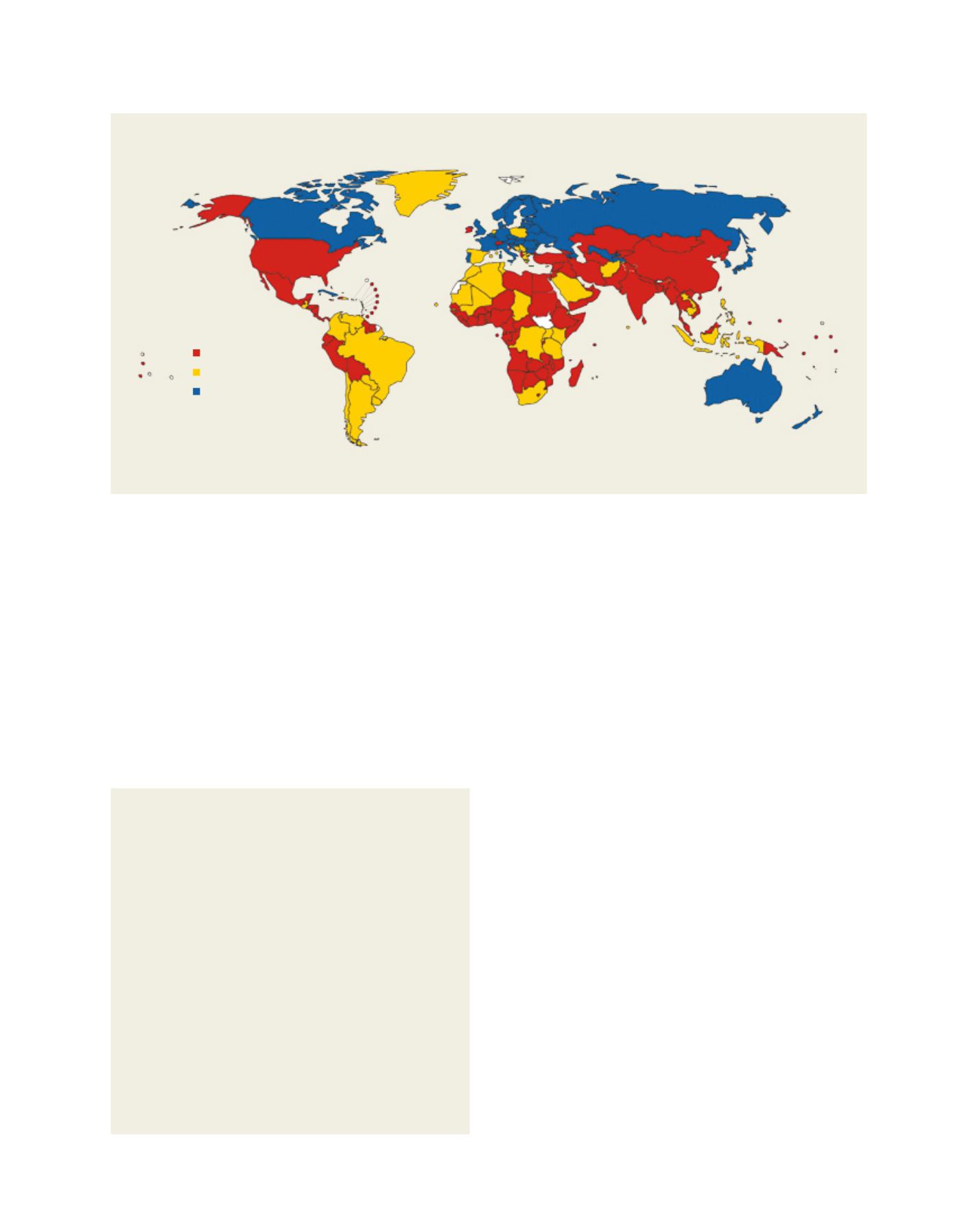
• 83 countries provide paid leave for new fathers
• 136 countries provide breastfeeding breaks
• 55 countries provide paid leave for children’s health needs.
Is paid leave available for fathers of infants?
Source: WORLD Policy Analysis Center, Adult Labour Database
Yes, 14 weeks or more
Yes, less than 14 weeks
No paid leave