



 136 / 208

[
] 136
S
ustainability
P
olicies
, P
rogrammes
and
their
E
conomic
I
mpact
adapting to climate change, KEI has hosted the
Korea Adaptation Centre for Climate Change
(KACCC) since July 2009. KACCC seeks to
maximize national adaptation capacity and ensure
successful implementation of appropriate strategies
by developing tools and methodologies on climate
change adaptation.
• With a growing recognition of the need for
enhanced collaboration and coordination beyond
national level, KEI launched the Global Strategy
Center in June 2010, to extend its body of work
towards regional and global levels. The centre
operates as the main implementing arm of
KEI’s global partnership and outreach activities,
particularly on technical cooperation and knowledge
sharing with developing countries. It also leads KEI’s
research on the green growth strategy for developing
countries and reviews Korea’s Official Development
Assistance (ODA) on the environment.
Building on its 20-year experience at national level,
KEI has taken its work to a new level through regional
and global partnerships, and now collaborates with 23
research institutes from 12 countries and four inter-
national organizations, including the United Nations
Environment Programme (UNEP) and the Organisation
for Economic Co-operation and Development. KEI
experts in various disciplines, KEI’s current work is organized
around four priority areas:
• The Environmental Policy Research Group leads extensive
research and analysis of KEI on a wide range of topics, including
air quality, water, resource conservation and circulation, and
environmental health. In particular, the Group is dedicated to
developing an integrated approach to environmental strategy by
implementing green growth for sustainable development.
• KEI is mandated to review major development projects in
Korea and conduct environmental impact assessments. The
Environmental Assessment Group is mainly responsible for
this area of work within KEI. Sound environmental assessment
is critical in minimizing environmental pressure and avoiding
potential adverse impacts from development projects, in either
planning or implementation. KEI plays an important role in
implementing the country’s Environmental Impact Assessment
Act by carrying out a prior environmental review and
assessment. Alongside the Ministry of Environment, it operates
an online database designed to enhance knowledge management
in this area. The database was upgraded to the Environmental
Impact Assessment Support System (EIASS) in 2009.
• Although the Korean Government is strongly committed to
taking robust action against climate change, the fight remains a
formidable challenge. From 1912-2008, average temperatures
across six of the nation’s major cities increased by 1.7° C,
which is more than double the global average. In an effort
to support the national Government’s strategy in proactively
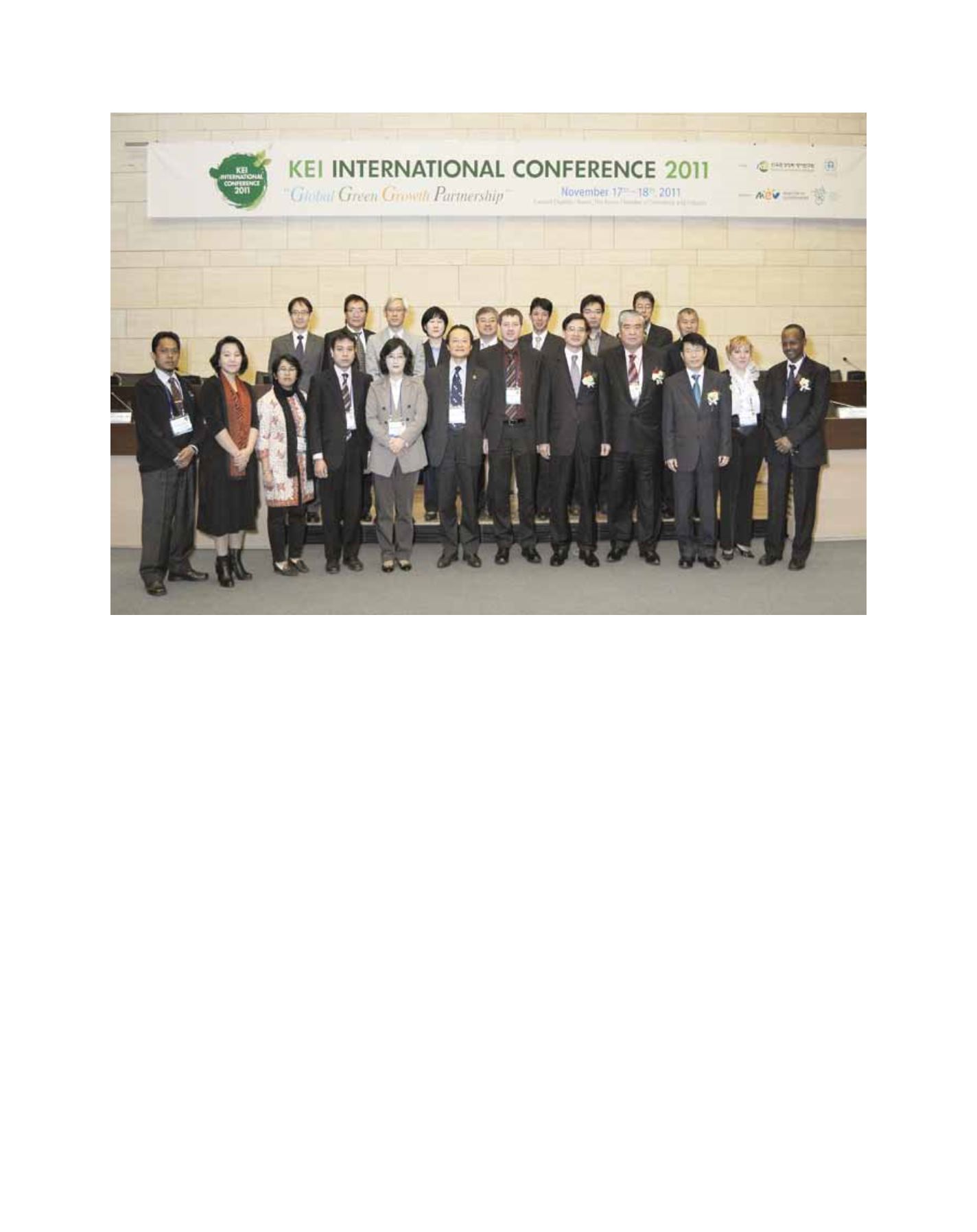
KEI International Conference 2011 on ‘Global Green Growth Partnership’, 17-18 November 2011 in Seoul, Korea
Image: Korea Environment Institute