



 142 / 208

[
] 142
S
ustainability
P
olicies
, P
rogrammes
and
their
E
conomic
I
mpact
risk management mechanisms and diversifying economies will be
important ingredients for strengthening the robustness of growth
and development in Africa.
Enabling green growth
OECD has spearheaded the conceptual thinking on green growth,
providing frameworks and indicators to track progress. Other
global institutions such as the World Bank have also taken on green
growth as a key development concept for the twenty-first century.
Complementary to this, UNEP has championed conceptual and
analytical work to identify the building blocks of a green economy,
which is framed as a mechanism for achieving sustainable develop-
ment pathways.
While both the scope of green growth and a green economy are
comprehensive and it is generally acknowledged that concepts need
to be adjusted to particular development contexts, there is still a
widespread perception that the main emphasis is on low-carbon
development and that other environmental issues are secondary
concerns. Hence, it is important that developing countries take
ownership in defining green growth.
Regional development banks such as AfDB can play an important
role in ensuring that green growth becomes a practical concept for
Africa, meeting the specific development needs of its people and
economic sectors while ensuring that the continent is also better
prepared to address current and future environmental challenges.
Ultimately, practical green growth concepts need to build a bridge
between global, regional and local concerns.
Consequently, AfDB is functioning as a catalyst for ideas and
practical concepts, technical assistance and financial support for
its regional member countries (RMCs). The bank is developing its
long-term strategy, which promotes inclusive green
growth to guide its interventions in RMCs. AfDB will
assist the transition of African countries towards a green
economy in a manner that responds to Africa’s needs.
AfDB can build on its financial and operational expe-
rience in implementing a range of programmes and
activities related to the Rio Conventions. In particular,
as Africa’s premier regional development bank, it can
build on experiences with innovative finance instru-
ments and funding mechanisms such as the African
Water Facility, Climate Investment Funds and the
Global Environmental Facility, with the aim of promot-
ing integrative solutions that allow African countries to
obtain support for addressing upfront financing issues
in the transition towards green growth.
A necessity and an opportunity
Green growth should not be seen as a constraint but as
both a necessity and an opportunity for Africa. With
the need to develop much of the continent’s infrastruc-
ture and economy, African countries hold the key to
a more sustainable future. The decisions taken today
will in many ways determine the energy and resource
efficiency of African economies in the future, as well as
their resilience to cope with and adapt to the environ-
mental and socioeconomic challenges of the twenty-first
century. Hence, African stakeholders need to define and
implement a green growth concept that meets their
development needs while also allowing Africa to adapt
to a changing world.
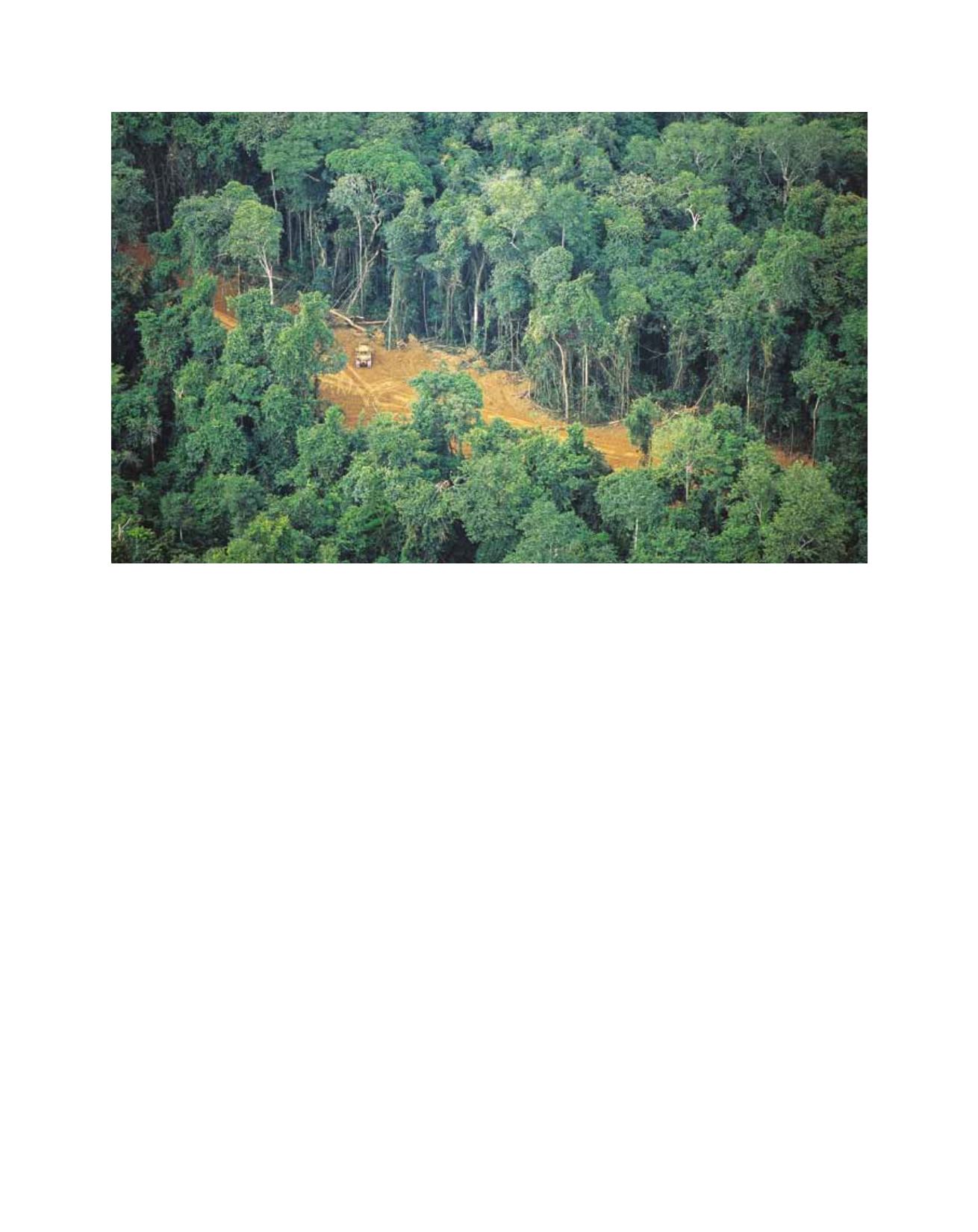
Tropical forest rehabilitation programme in Congo
Image: AfDB