



 186 / 208

[
] 186
E
nergy
access
,
efficiency
and
sustainability
Cascading use in energy quality management
The energy quality, or ability of a certain amount of energy to gener-
ate electricity, increases with temperature and pressure. Harvesting
significantly deeper geothermal energy at higher temperature and
pressure levels – even in a supercritical state – conserves energy
quality compared to letting it dissipate closer to the surface with
lower pressure and lower boiling point. In the Iceland Deep Drilling
Project (IDDP) the aim is to drill closer and deeper to magma reser-
voirs to obtain supercritical fluids at 500-600°C. Many difficult
challenges must be overcome, such as the need for more precise
mapping of magma intrusions in the crust, and technical equip-
ment and components that can operate at high temperatures while
withstanding highly aggressive chemistry. If this technique proves
successful, an average borehole could yield enough power to gener-
ate about 50 MW of electricity compared with 5 MW from an
average borehole today. The first IDDP hole drilled in north-east
Iceland hit a magma intrusion at only two kilometres deep, with the
highest water temperature at 450°C and although promising, plans
are to connect with magma at a deeper level in order that the desired
supercritical pressure is also reached.
The Blue Lagoon, a large geothermal spa and health centre in
Iceland, is an example of how high-temperature electricity generation
and recreational thermal facilities can coexist in a cascading geother-
mal operation. Today, the power generating industry
is producing more low-temperature heat than it used
to. Research on, and development of, new low-end use
activities is important in the sustainable use of geother-
mal resources.
Fuel generation within the transport energy sector
The greatest challenge remains implementing renew-
able energy sources within the transport and remote
energy sector.
Small population densities, vast distances from other
countries and the importance of high-seas fisheries for
the economy depend on transport that until now has
run mostly on fossil fuels. With renewable electricity it
makes sense for the transport sector to adapt to using
the hydrogen cycle, batteries for storing electricity,
or liquid fuels such as methanol and dimethyl ether
(DME). Methanol is produced from the hydrolysis of
hydrogen, with a relatively small amount of CO
2
sepa-
rated from borehole geothermal fluids at the plant site.
Methanol is then blended into fuel for use in standard
petrol cars. Other commercially viable options include
using methane gas from landfill as a fuel alternative in
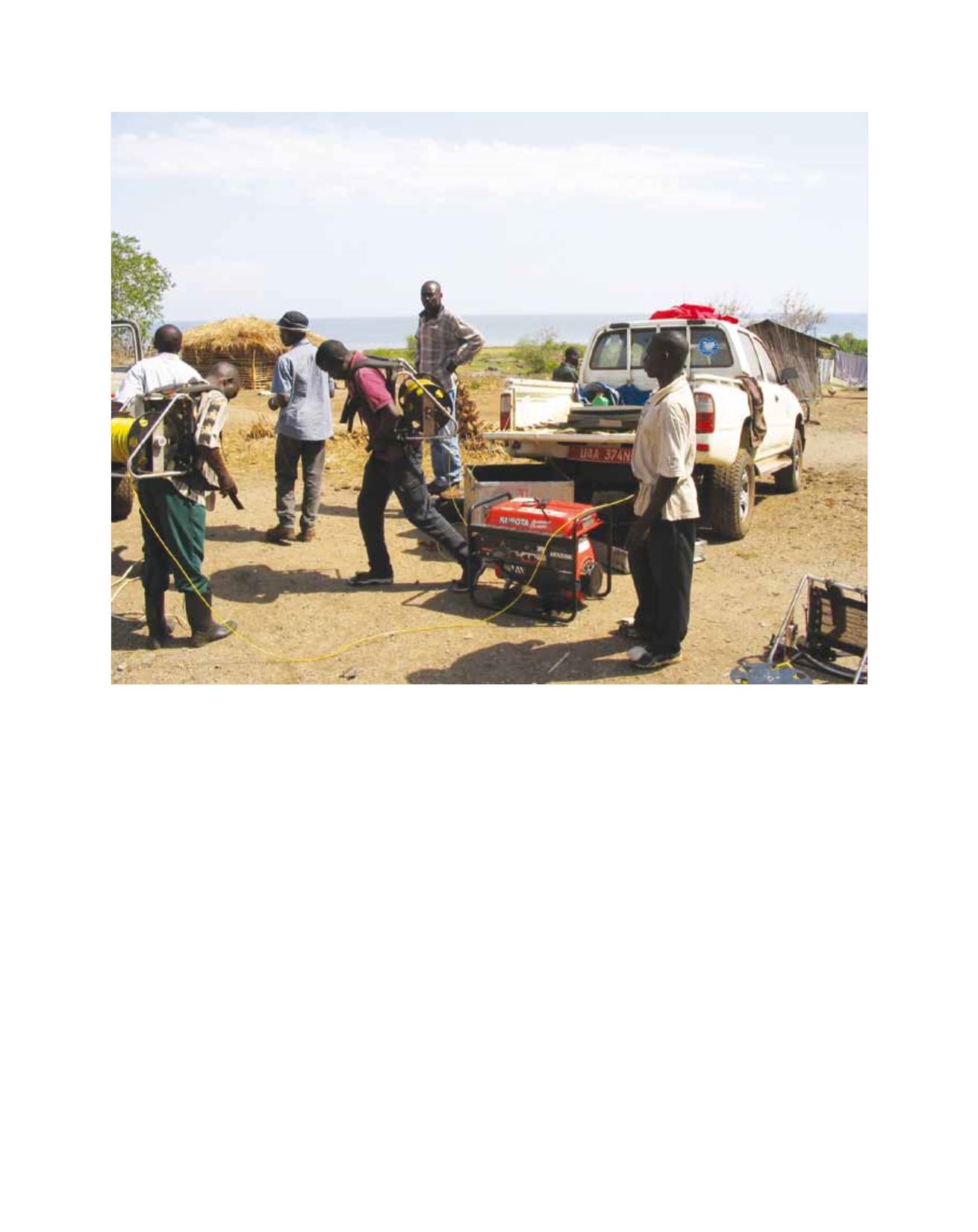
Training local experts in geophysical surveys
Image: Oddur Sigurdsson