



 185 / 208

[
] 185
E
nergy
access
,
efficiency
and
sustainability
Geothermal direct use
Early in the twentieth century attempts were made to
heat Icelandic houses by piping water in from natural
hot springs and later, from shallow boreholes. The first
district heating system in Iceland came into use in 1928.
A kilometres-long pipeline extended from hot springs
in Reykjavik to a swimming hall and nearby houses.
The largest increase in the use of geothermal heat took
place as a result of large investments in exploration
and district heating developments, a result of the rising
price of oil and the energy crisis of the 1970s.
District heating has been extended to cover 90
per cent of all house heating in Iceland, a country of
103,000 km
2
with 333,000 inhabitants. The longest
distance between source and customer is 63 km.
Environmental gain through building up infrastructure
for district-wide heating and cooling can be as great as
70 per cent due to the flexibility associated with using
various sources for heating, such as that from industrial
processes waste, low-grade fuels such as garbage and
waste from forestry and heat pumps. Geothermal heat
accounts for the remaining 30 per cent. In many coun-
tries the general attitude is that introduction of such
an infrastructure is beyond reason in established, well-
populated areas. However, examples from Iceland and
Scandinavia may prove the opposite.
– paralleled the economic growth of the country. Although growth
in energy used from fossil fuels has developed more slowly, the
increase in consumption coincides with improved living stand-
ards, higher mobility and a bigger fishing fleet, which has more
than compensated for the reduction in fossil fuel-based heating.
Relatively big steps in electricity generation during 1970, 2000 and
2007 were due to major industrial investments, mostly in smelters.
Today the nation’s electricity production is almost entirely
from renewable sources – 74 per cent from hydropower and 26
per cent from geothermal power – with less than 20 per cent
of total electricity production being sold to small and medium-
sized customers. As 90 per cent of space heating is sourced from
geothermal origins and 10 per cent mostly electricity from renew-
able sources, the positive effect on the country’s economy and
trading balance is extremely significant, irrespective of any envi-
ronmental benefits. With increasing oil prices it is becoming very
clear that living standards are affected.
But there are many challenges to be overcome. Some are common
to many projects where renewable and sustainable energy is being
implemented, including Government strategies for basic research
and development, a strong and sustainable base for building up
knowledge and skill, the need for long-term capital and economic
risk mitigation, legal and regulatory framework and market issues.
Others are more specific, such as the long-term management and
ownership of geothermal resources, and concessions and special
environmental concerns in barren volcanic landscapes.
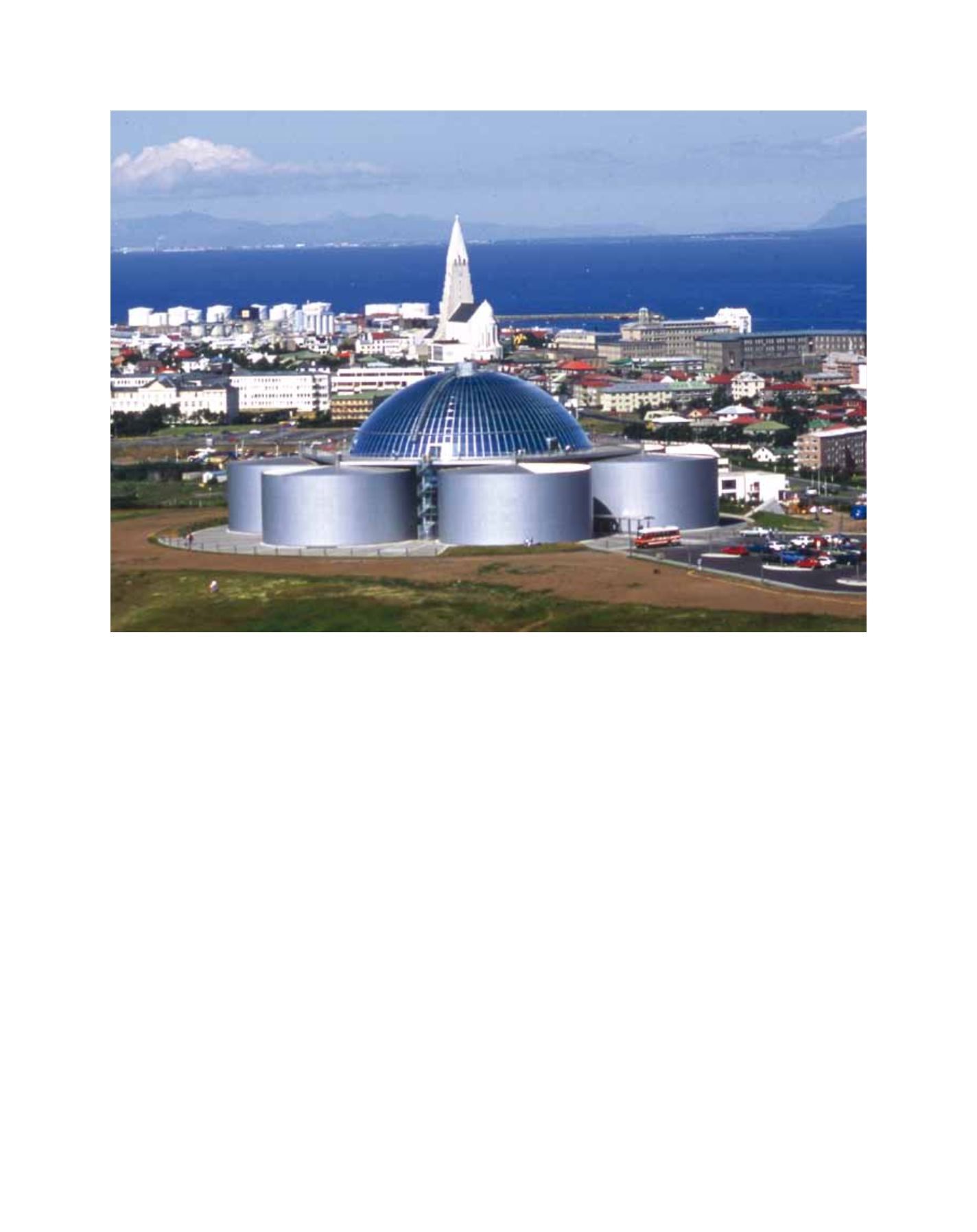
Geothermal wells piping in hot water to reservoir tanks above Reykjavik
Image: Oddur Sigurdsson