



 184 / 208

[
] 184
Renewable energy as a driver for economic and
sustainable growth – the Icelandic perspective
Gudni A. Jóhannesson, Director General at Orkustofnun, the National Energy Authority of Iceland
I
celand is a country with its most northerly parts touching
the Arctic Circle, but although it is surrounded by the Gulf
Stream, temperatures are moderate. Winter averages about
0°C, while in summer the highest monthly average is about
14°C. However, these temperatures, together with the fact that
the number of daylight hours in the capital Reykjavik during
the winter solstice is less than seven hours, mean that heating
is required all year round. About 70 per cent of the population
lives in the area south-west of Reykjavík, with the remainder
mostly distributed along the 1,400 km Road 1, which follows
the coastline around the island. Icelandic geology is distinctive,
possessing volcanoes, high inland glaciers and abundant water
resources both above and below the ground. Energy consists
mainly of hydropower and geothermal sources at various
temperature levels up to 350°C and beyond. Wind, sun, waves
and tides are potential sources of energy, but the high cost of
accessing these means they are unable to compete with hydro-
power and geothermal energy as a renewable resource.
Renewable energy driving economic growth
Economic growth and development of the nation into
a modern community with a relatively high stand-
ard of living goes hand in hand with its exploitation
of sustainable natural energy resources. The develop-
ment of small-scale hydropower, along with local use
of geothermal resources, began in the early twentieth
century. During the 1960s, major development of
hydropower projects for larger energy-intensive indus-
tries began and during the 1970s – in the wake of the
energy crisis – considerable national effort was initi-
ated to identify geothermal sources and distribute their
energy to more remote communities. In the late 1980s
extensive development of geothermal power from high
temperature sources became a competitive alternative
to large-scale hydropower.
Growth in the use of electricity from hydropower –
and both electricity and heat from geothermal sources
E
nergy
access
,
efficiency
and
sustainability
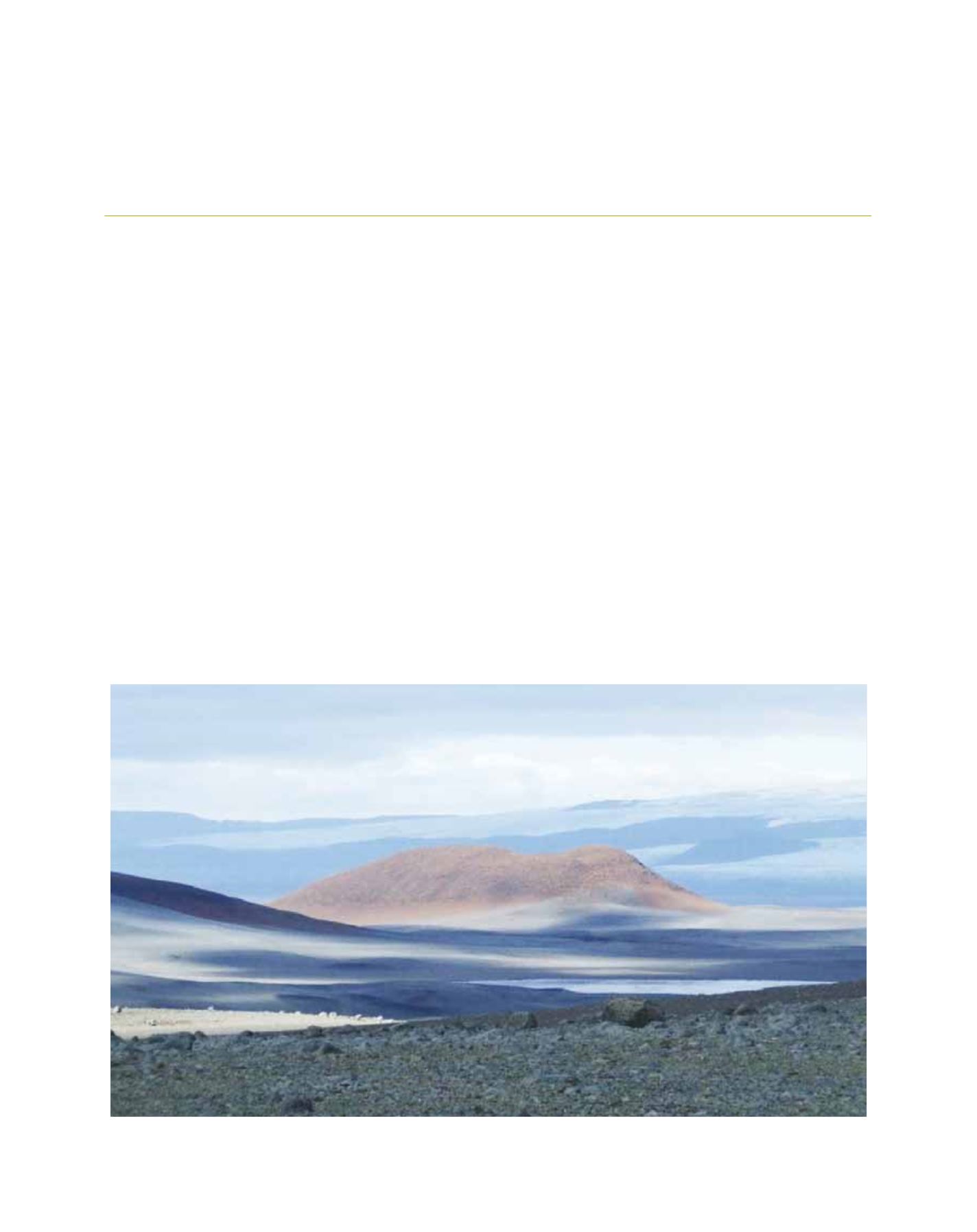
Placing power plants sensitively is difficult in barren landscapes
Image: Gudni A. Jóhannesson