


 195 / 208

[
] 195
S
ustainable
cities
with natural areas both outside the city and in the
surrounding countryside
• Part of the urban structure
• Started in the core of the city or its immediate vicinity.
The urban park concept not only works as a strategic
instrument, but also opens up discussion and a learning
forum between municipalities, environmentalists and
citizens, to analyse and determine whether sufficiently
large areas remain within the city structure with high
mixed cultural and natural values worth preserving
and managing as national urban parks. Applications for
developing these spaces are submitted to the Ministry of
the Environment by local authorities after discussions
between the municipality, citizens, environmentalists
and other stakeholders.
The goal is to create a network of national urban
parks, with each having a special role in it. At present,
the Finnish network of national urban parks consists
of parklands in five cities: Hämeenlinna, Heinola,
Pori, Hanko and Porvoo. With regard to their cultural
heritage and urban biodiversity, these cities are very
different from one another. Turku, the former capital
of Finland, submitted its application last year and its
new national urban park, which includes the north-
ernmost oak forests in the world, will be added in this
year of the United Nations Conference on Sustainable
Development (Rio+20).
Finland, infill housing within sparsely built parts of many urban
areas has grown dramatically since the 1990s. This process of
creating more compact settlements has raised a common concern
in Finland about the need to preserve biodiversity and cultural
heritage, both within and in proximity to urban settlements.
The Finnish national urban park concept, which is part of the
Land Use and Building Act, has proved to be a successful tool for
solving this problem. A national park may be established to protect
and maintain the beauty of the cultural and natural landscape, biodi-
versity, historical characteristics or other special townscapes, as well
as the social or recreational values of an area within an urban envi-
ronment. So in a sense, the national urban park is a certificate that
ensures a beautiful and experiential environment with buildings,
parklands and other natural areas. The national urban park concept
is unique, since it does not differentiate between the natural and
cultural heritage, but considers them as a whole. National urban
parks are also tailored to the specific characteristics of each city,
hence, there are no one-size-fits-all solutions
Special criteria for identifying potential national urban parks have
been prepared which state that these should be:
• Natural areas that are important for the preservation of urban
biodiversity
• Cultural milieus, for example, including buildings important for
understanding the nation’s or city’s history, as well as parks and
green areas of architectural or aesthetic significance
• Extensive and continuous
• Able to facilitate an ecological corridor that will contribute to
species movement and interaction, while creating direct links
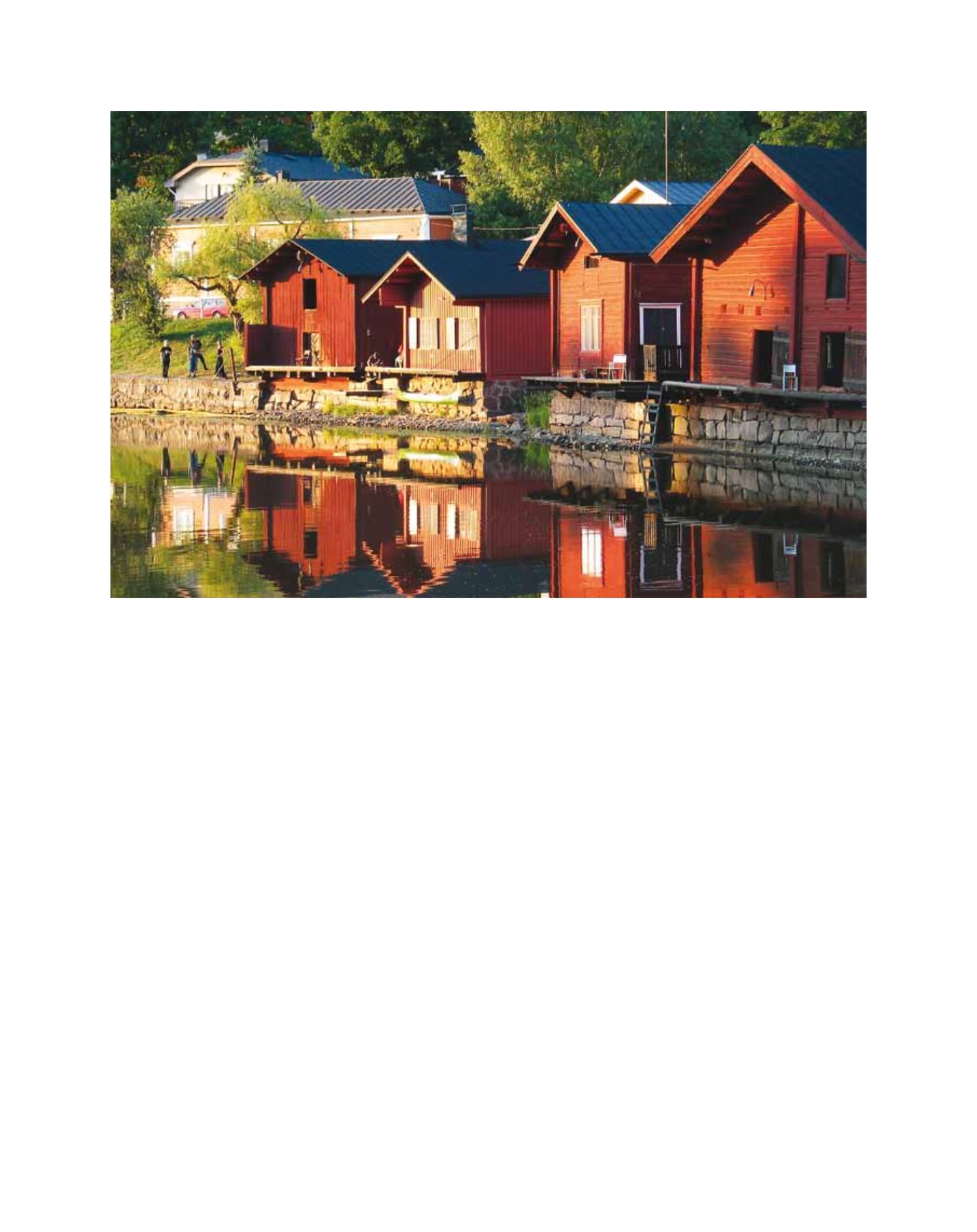
Porvoo National Urban Park is a mix of urban natural and cultural heritage with early settlement dispalys from the Middle Ages
Image: Ministry of the Environment, Finland