


 44 / 208

[
] 44
A sustainable, healthy, inclusive future –
the ground rules must be different
Sharan Burrow, General Secretary, International Trade Union Confederation
B
y any indicator, the planet, our economies and most
importantly, our communities are simply not sustainable
if we continue with business as usual. Twentieth century
models of capitalism are not serving and will not serve twenty-
first century societies. Inequality is the legacy of decades of
greed from individuals, corporations and nations mindlessly
competing for wealth. The people and the planet have both been
victims of this competition. Global Gross Domestic Product
(GDP) reached US$65 trillion in 2011, but while it has been
increasing over time, so have environmental degradation and
social inequalities. The share of global wealth for the bottom
40 per cent of the population remains less than five per cent.
The now much talked-about global imbalances have always been
obvious to the 1.4 billion people living on less than two dollars a day.
However, the extent of inequality as a substantial risk is now recognized
and is indeed growing both within and between nations, including in
the developed and emerging economies. The United Nation’s UNDP
Human Development Report 2011 shows that despite efforts that have
raised living standards, the projections are for a disturb-
ing reversal of those trends in the future, if environmental
deterioration and social inequalities continue to intensify.
A substantial proportion of people living in poverty are
in ‘middle income’ countries including India, China and
Nigeria. As countries emerge from poverty, the domi-
nant development models show increasing national and
regional inequalities within them. These gaping inequali-
ties will persist while wealth and power continue to remain
in the hands of a small number of people.
This risk has also been substantiated by the OECD
study ‘Divided We Stand: Why Inequality Keeps Rising’
(December 2011), which revealed that across the OECD
the average income of the richest 10 per cent is about nine
times that of the poorest 10 per cent. The income gap has
risen even in traditionally more equal countries such as
Denmark, Germany and Sweden, from a ratio of five to
one in the 1980s to six to one today. The gap is ten to one
in Italy, Japan, Korea and the United Kingdom, while it is
P
eople
:
social
inclusion
,
green
jobs
,
education
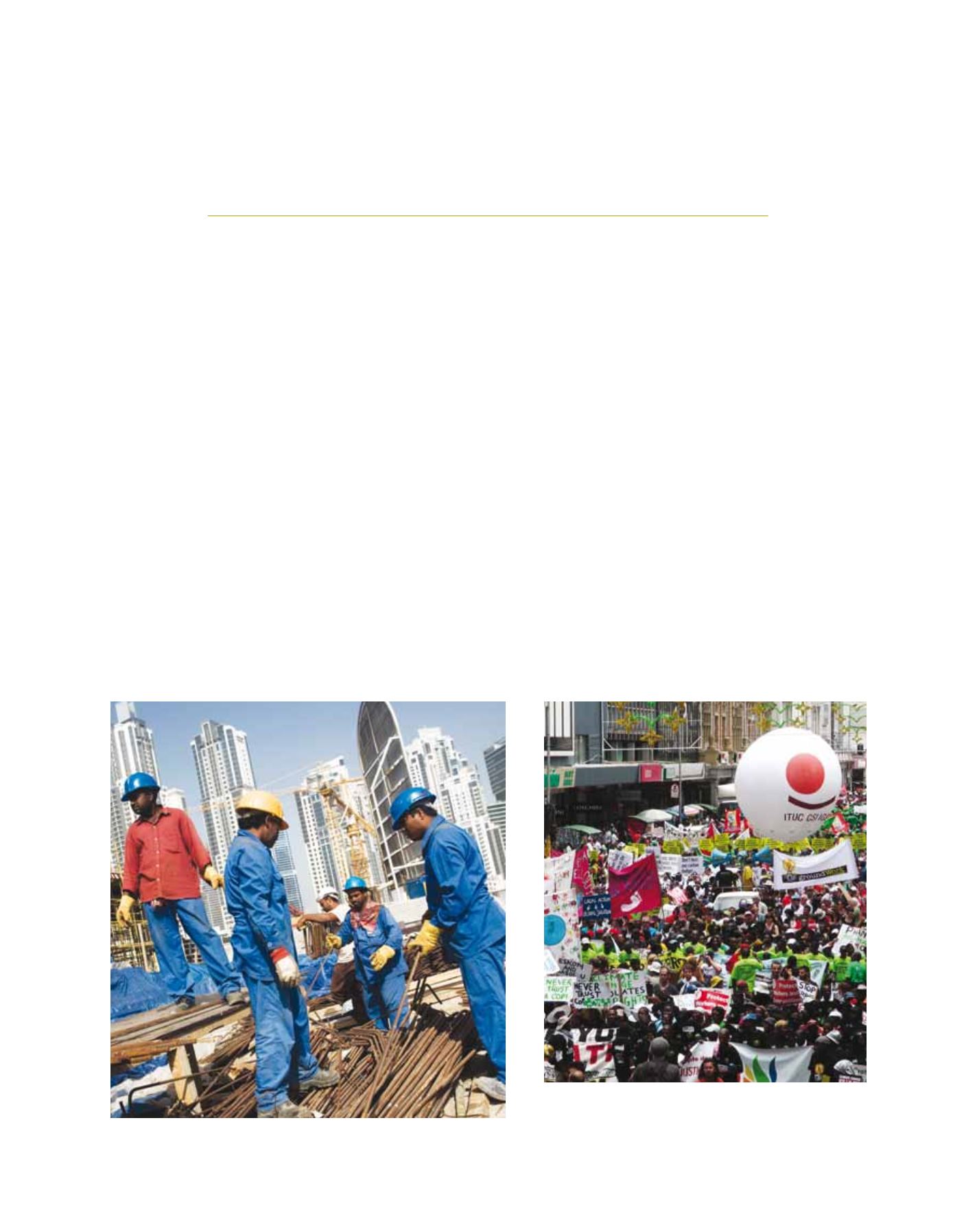
Greening the construction sector offers significant potential globally
Workers from across the globe support issues related to climate
change and sustainability, as in this march for the COP17 meeting in
Durban, South Africa, November 2011
Image: ©Matilde Gattoni
Image: ©www.alter-echos.org