



 74 / 208

[
] 74
E
nvironment
:
air
,
water
,
oceans
,
climate
change
806 houses, construction of 235 houses, construction
of 11 schools, and repair of 6 schools, 46 roads and 3
aqueducts. With the establishment of the Ministry of
Environment and Natural Resources in August 2000,
the Plan became the Department of Reforestation of the
Ministry, continuing its active dynamic reforestation in
the most degraded and poorest areas in the country. In
2007 the Ministry decided to deepen the implementa-
tion of the Plan, allocating more specialized resources
to actions and specific areas in the border zone with the
Republic of Haiti.
The relevance of the implementation of National
Plan Quisqueya Verde was confirmed by storms Noel
and Olga, which occurred shortly afterwards, leaving
a legacy of serious damage, much of which was caused
by the deterioration of our natural resources. A positive
consequence of such phenomena is the increased sensi-
tivity of people to the protection of rivers and forests.
Under these conditions, the National Plan Quisqueya
Verde is revealed as a natural infrastructure to reduce
vulnerability to extreme weather events promoted by
climate change.
The emphasis at this stage has been on the refor-
estation of watersheds and natural recovery. Since late
2007, National Plan Quisqueya Verde has had a sub-
programme, Frontera Verde, operating on the border
with Haiti and aimed at alleviating extreme poverty and
ing coordination among state institutions, local small businesses
and civil society organizations working on behalf of sustainable
development.”
In its first three years of operation, the initiative became a major
achievement. Its most important embodiment, the execution of a
massive reforestation plan that would be implemented nationwide,
was marked by the following characteristics:
• Incorporation of local organizations working in the
environmental sector
• Training of brigades or squads of local people for reforestation in
the major river basins
• Massive participation of the general population in reforestation
field days
• Institution of the month of October as the Month of
Reforestation
• Generation of income for families in extreme poverty and
community development support of these families
• Contribution to the creation of a forest subculture with the
establishment of thousands of forest plots provided with their
respective certification
• The promotion of gender equality by incorporating women in
rural areas as managers of reforestation crews.
The quantifiable results of this period included reforestation of
14,000 hectares, planting of 26.5 million trees, incorporation of
2,108 landowners in forest plantations, delivery of 582 certificates
of entitlement to cut and plant, creation of 2,850 jobs, repair of
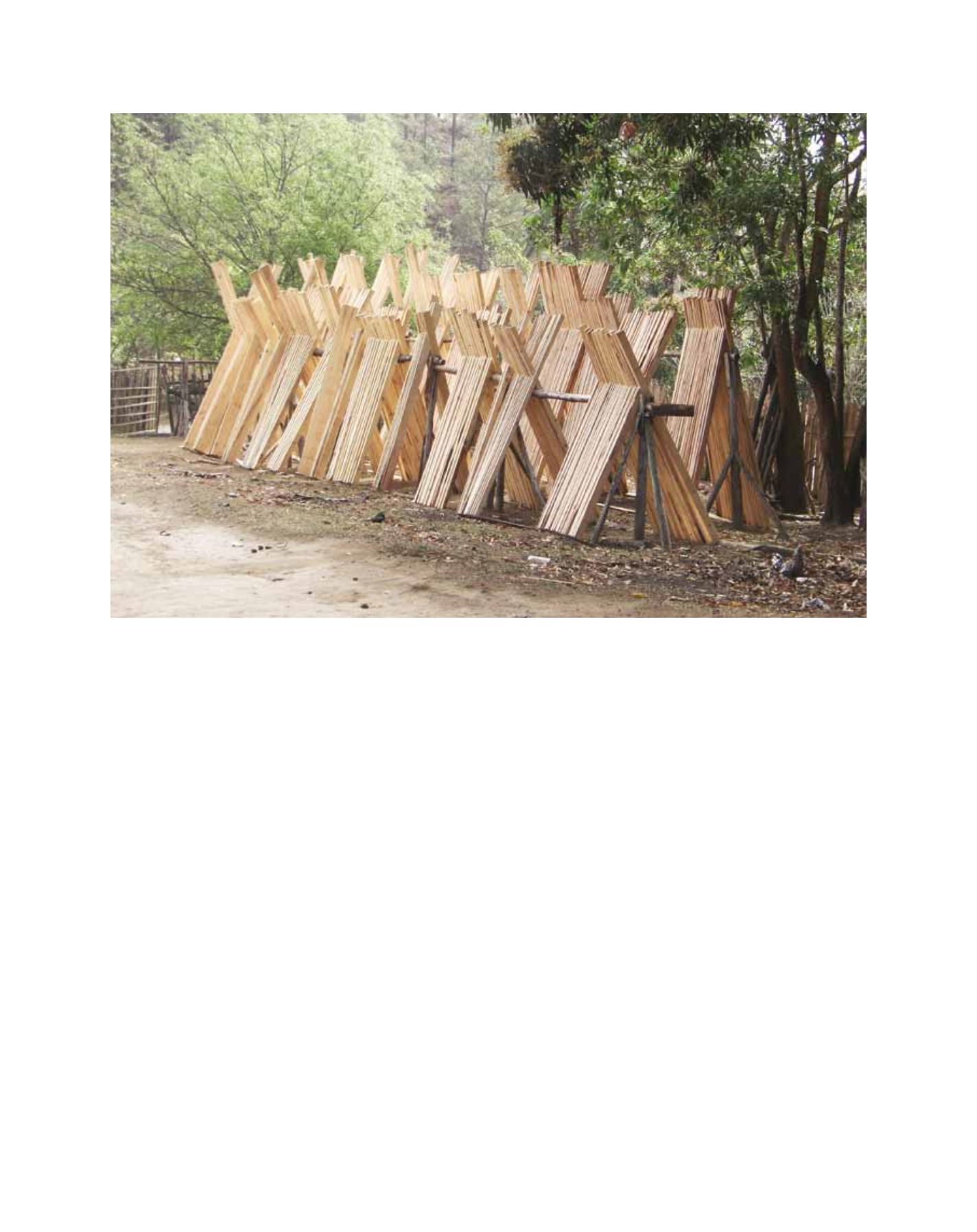
Many communities in the Dominican Republic depend on generation of income through forestry
Image: Min for Env & Nat Resources, Dominican Republic