


 73 / 208

[
] 73
Success with sustainable development
in the Dominican Republic
Ernesto Reyna Alcántara, Minister for Environment & Natural Resources, Dominican Republic
T
he Dominican Republic is located in the Caribbean, occu-
pying the eastern two-thirds (48,442 km
2
) of Hispaniola
Island, and is bordered on the western third of the island
by Haiti. The country’s complex and diverse array of habi-
tats supports a high degree of unique and globally significant
biodiversity, in recognition of which it has been identified as a
“Caribbean Hotspot”
1
.
The National Plan Quisqueya Verde is a direct action of the
Dominican Republic that aims to restore degraded ecosystems
through reforestation and other instruments. It is an example of
how a forest restoration programme has become a state policy,
which has helped to increase forest coverage to 39.6 per cent of
its territory.
For decades, deforestation was perceived as the most
serious environmental problem in the country and was
one of the main causes of land degradation and biodi-
versity loss. The plan was conceived as a response of
the Dominican Government to the process of natural
resource degradation and high poverty rates in the
upper and middle watersheds, home to the poorest of
the poor.
On World Forestry Day in 1997, the Dominican
Government ordered the creation of the National
Plan Quisqueya Verde, with the aim of “improving the
living conditions of people in the rural areas through
the promotion of natural resources, employment
generation, environmental protection and strengthen-
E
nvironment
:
air
,
water
,
oceans
,
climate
change
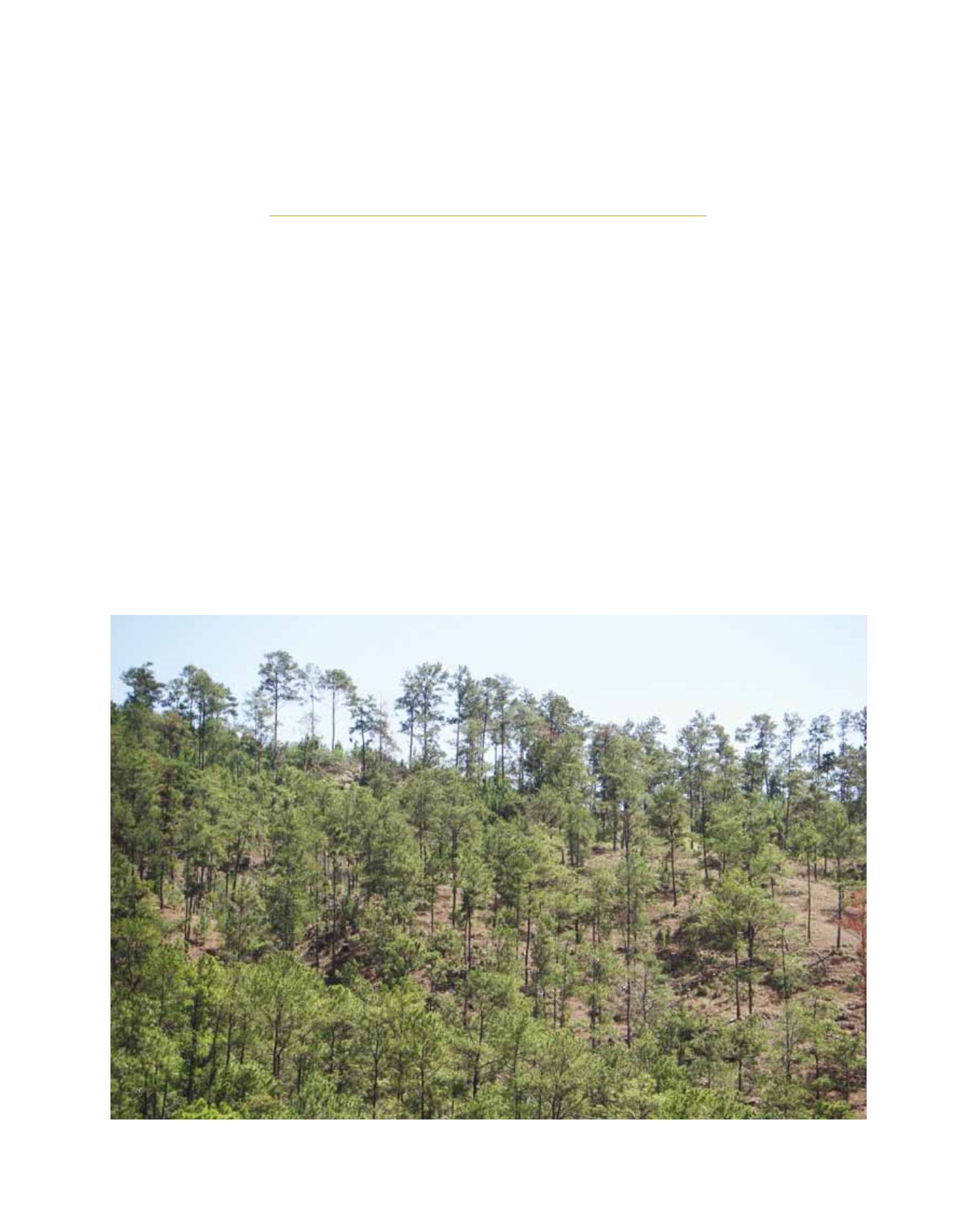
The National Plan Quisqueya Verde aims to restore degraded ecosystems through reforestation and other interventions
Image: Min for Env & Nat Resources, Dominican Republic