



 77 / 208

[
] 77
Sustainable development in Kuwait
Salah Mudhhi Al-Mudhhi, Environment Public Authority, Kuwait
T
he twenty-first century is a time of unprecedented change,
with global pressures impacting society and the natural
environment. Challenges include rapid economic devel-
opment and population growth, increasing demand for food,
water and energy, scarcity of water resources, particularly in the
Arabian Gulf region, degradation of land and water quality, and
global and regional climate changes impacting water availabil-
ity, soil quality and marine productivity.
In addition, there is increasing risk from the impacts of major natural
and man-induced disasters and hazards such as floods, earthquakes,
storms, droughts, sea-level rise, greenhouse gas (GHG) emissions,
endangered plant and animal species, degradation of land areas and
ecosystems caused by wars, and accidental spillage and discharge
of crude oil, untreated industrial waste and sewage water into the
marine environment. Sustainable development has become the first
priority of governments in most countries as they seek to conserve
the Earth’s resources for future generations.
At the Earth Summit Conference in Rio de Janiero in 1992,
the late Amir of Kuwait His Highness Sheikh Jaber Al-Ahmed
Al-Jaber Al-Sabah expressed the keen interest of
the Kuwaiti Government and people in developing
a society that enjoys well-being, safety and security
while conforming to local, regional and international
agreements, laws and regulations on the protection
of the environment.
Kuwait’s policy for the sustainable development of
society and protection of its environment has manifested
itself in several ways. Funds have been allocated for
future generations and in 1995, the Kuwait Environment
Public Authority (KEPA) was established
1
to:
• Set and implement strategies, policies and plans to
safeguard Kuwait’s environment
• Combat and control environmental pollution
• Cooperate and coordinate with all relevant
organizations to draft laws, prepare legislation and
promulgate regulations to ensure environmental
safety, protection and development
• Ensure sustainable development of the environment
and society.
E
nvironment
:
air
,
water
,
oceans
,
climate
change
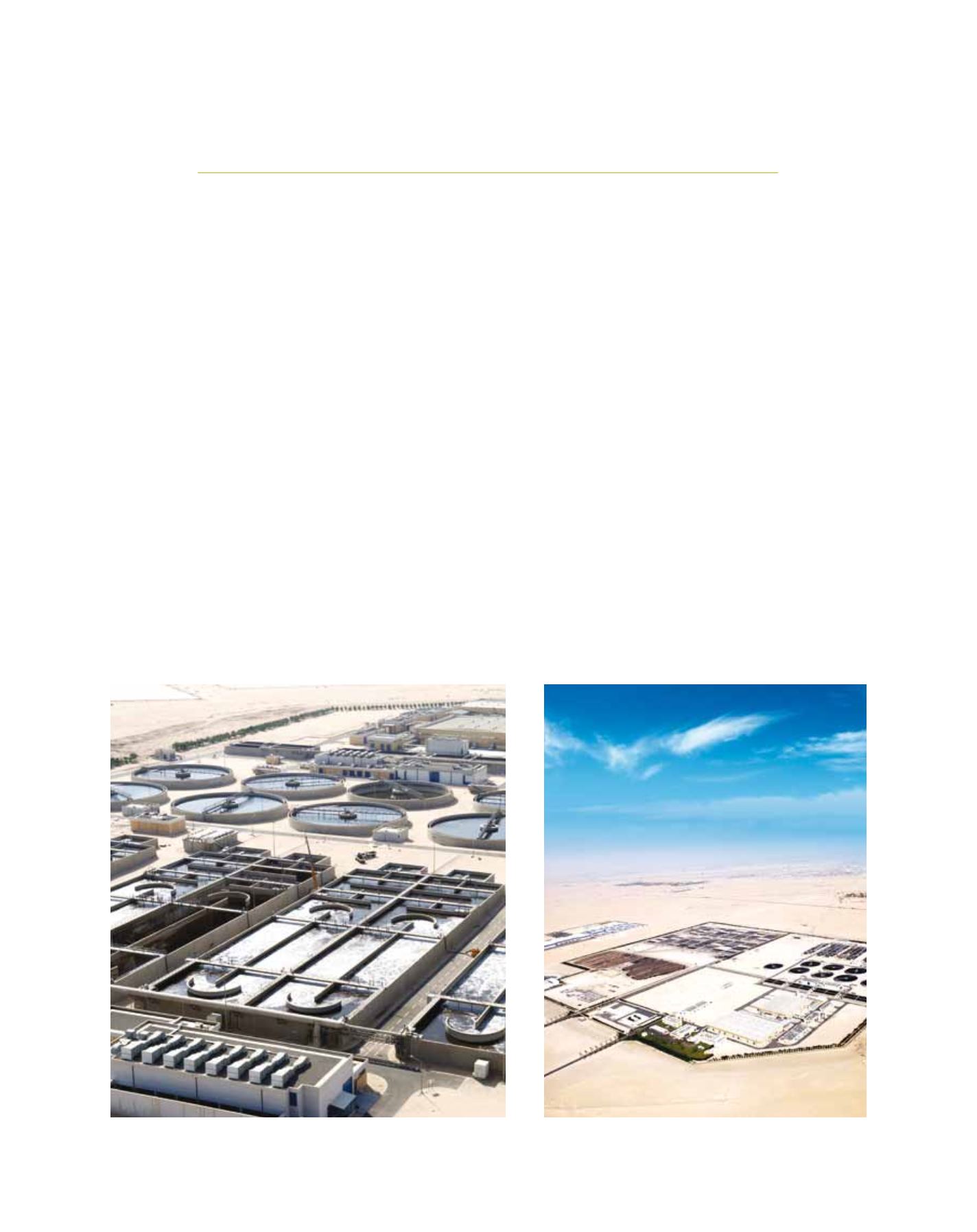
Aeration tanks and secondary clarifiers
Aerial view for Sulaibiya Plant
Image: new edition of Utilities Developing Company publication (UDC, 2009)
Image: new edition of Utilities Developing Company publication (UDC, 2009)