



 82 / 208

[
] 82
A regional initiative within
the Pacific Oceanscape Framework
Kevin Arthur Saimasina Thomsen, Director, Strategic Partnership
and Coordination Programme, Pacific Islands Forum Secretariat
T
he Pacific Oceanscape Framework (POF) was first
proposed by the Government of Kiribati in 2009 and later
endorsed by leaders at the Pacific Islands Forum meeting
in 2010. The POF is considered the catalyst for implementation
of our Pacific Islands Regional Oceans Policy, which aims to
protect, manage and sustain the cultural and natural integrity of
the ocean for present and future generations and for the broader
global community. The overall intent of the POF is to foster
stewardship at all levels “to ensure in perpetuity the health and
wellbeing of our oceans and ourselves.”
1
The POF seeks to address six strategic priorities identified for imme-
diate implementation, namely:
• Establishing ‘jurisdictional rights and responsibilities’
• Fostering ‘good ocean governance’
• Supporting ‘sustainable development, management and
conservation’
• Promoting ‘listening, learning, liaising and leading’
• Sustaining action and facilitating adaptation to a rapidly changing
environment.
Economic rationale
Pacific Island nations depend on the ocean and its resources
for daily sustenance and livelihoods, alongside its role as
the mainstay of their national economies. Strategies for
enhancing macroeconomic stability and future growth
prospects include effective management of coastal and
oceanic fisheries and maximizing of sustainable economic
returns from fisheries resources.
1
These strategies are
central to the sustainable development aspirations of Pacific
Island economies and community well-being. For some,
aquatic resources within their 200 nautical mile exclusive
economic zones represent the only significant renewable
resource and the best opportunity for economic develop-
ment.
2
The region hosts the world’s largest remaining tuna
stocks and provides around half the global catch of tuna.
3
The 2010 catch was estimated at 2,421,113 tons
4
with a
landed value of about $4.5 billion.
3
Offshore foreign-based
fishing is responsible for around half the value of fisher-
ies in the region, with locally based offshore operations
accounting for about one-quarter of the value (mostly due
E
nvironment
:
air
,
water
,
oceans
,
climate
change
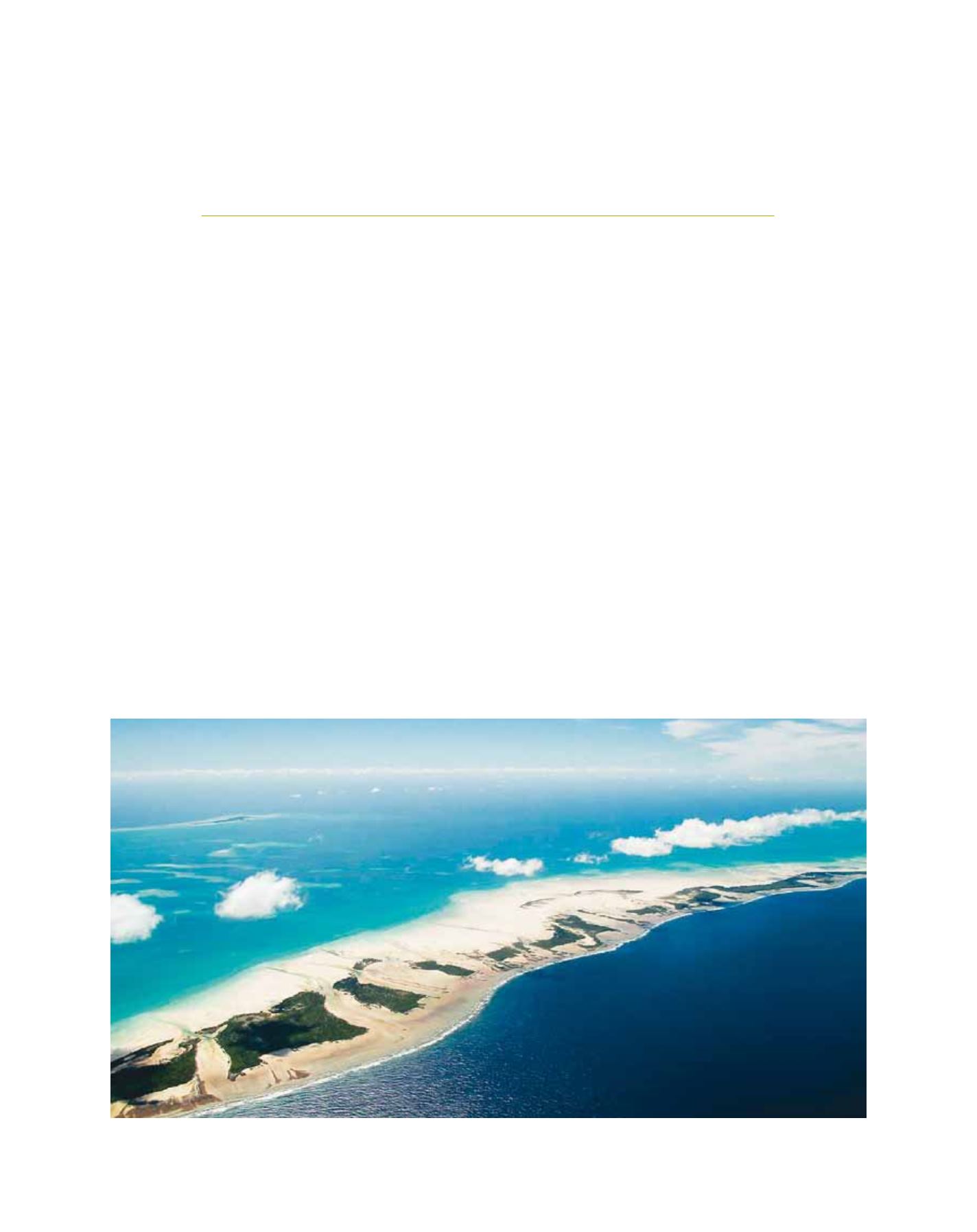
Threatened reefs within the Pacific Islands are among the most pristine in the world
Image: PIFS – Kiribati