


 84 / 208

[
] 84
The promise of the ocean
Ms. Svandís Svavarsdóttir, Minister for the Environment and
Mr. Steingrímur J. Sigfússon, Minister of Fisheries and Agriculture, Iceland
T
he ocean is in many ways the last frontier on Earth, a
vast part of our home planet still harbouring mysteries
even as we are exploring the farthest reaches of our solar
system. We are aware of 200,000 marine species, but there may
be more than 10 times that, as yet undiscovered. But we have
long since crossed this frontier and are affecting the marine
environment in countless ways. Although the impact is less
visible than that on dry land, pollution, acidification and over-
exploitation of living marine resources mean that the effect is
often much worse. However, the ocean is also a place to look for
solutions to many of humankind’s problems, from food security
to energy. We must get to know the oceans better, not only the
vulnerabilities of their ecosystems, but also the opportunities
they present.
More than a billion people rely primarily on protein from the sea
for nutrition. Seafood is important not only for basic sustenance,
but also as an excellent source of quality nutrients such as miner-
als, vitamins and fatty acids. We have millennia of experience in
agriculture, but only a relatively brief history of large-scale utiliza-
tion of fishery resources. With a growing population and mankind
struggling to reduce hunger and meet the Millenium Development
Goals, a sensible way of managing fisheries is to make ocean affairs
a clear priority. Aquaculture is a promising way to boost
food supply in many regions, but needs to be developed
without degrading the environment. We must also pay
heed to the underlying health of marine ecosystems
as providers of countless benefits we take for granted,
from carbon sequestration to human recreation.
In Iceland, marine conservation and sustainable use
of ocean resources is not only a matter of good policy
and respect for the environment, it is an essential
cornerstone of the nation’s livelihood and welfare. The
country’s transition from poor nation to modern welfare
society in the twentieth century is attributed to the
rich fishing grounds surrounding the island, meaning
that collapse of the fisheries would have a catastrophic
impact on the nation’s economy and society.
Iceland has put in place a system of sustainable fishing
where individual vessels are allocated a strictly-enforced
quota from the total catch – based on scientific advice –
an approach designed to ensure the long-term health of
fish stocks and to encourage maximum economic yield.
This model requires state-of-the-art scientific monitor-
ing and a robust enforcement mechanism, along with
continued general consensus among stakeholders and
decision makers that long-term sustainability of fisher-
ies matters more than the short-term profits achieved
through overexploitation. Although this is not a perfect
system and the subject of constant debate in Iceland,
the vast majority of the population want to adhere to
the basic principles of sustainable use, scientific under-
pinning and economic viability of the fishing industry.
Iceland believes that as a fisheries-based economy
aiming for sustainable management of living marine
resources, its experience is relevant to others. Coastal
developing countries in particular face the problem of
managing their fish stocks with inadequate infrastruc-
ture and resources, easily leading to valuable resources
being diminished by local or foreign fleets. In this
respect research and development is imperative, as is
effective capacity-building and training.
The United Nations University Fisheries Training
Programme was established in Iceland in 1998, to help
interested countries achieve their fisheries develop-
ment goals by training professionals from developing
countries in various fields of fisheries and aquaculture
management. About 260 fellows have so far completed
this postgraduate training in Iceland.
Numerous encouraging examples of well-managed
fisheries employing various systems and methods exist
E
nvironment
:
air
,
water
,
oceans
,
climate
change
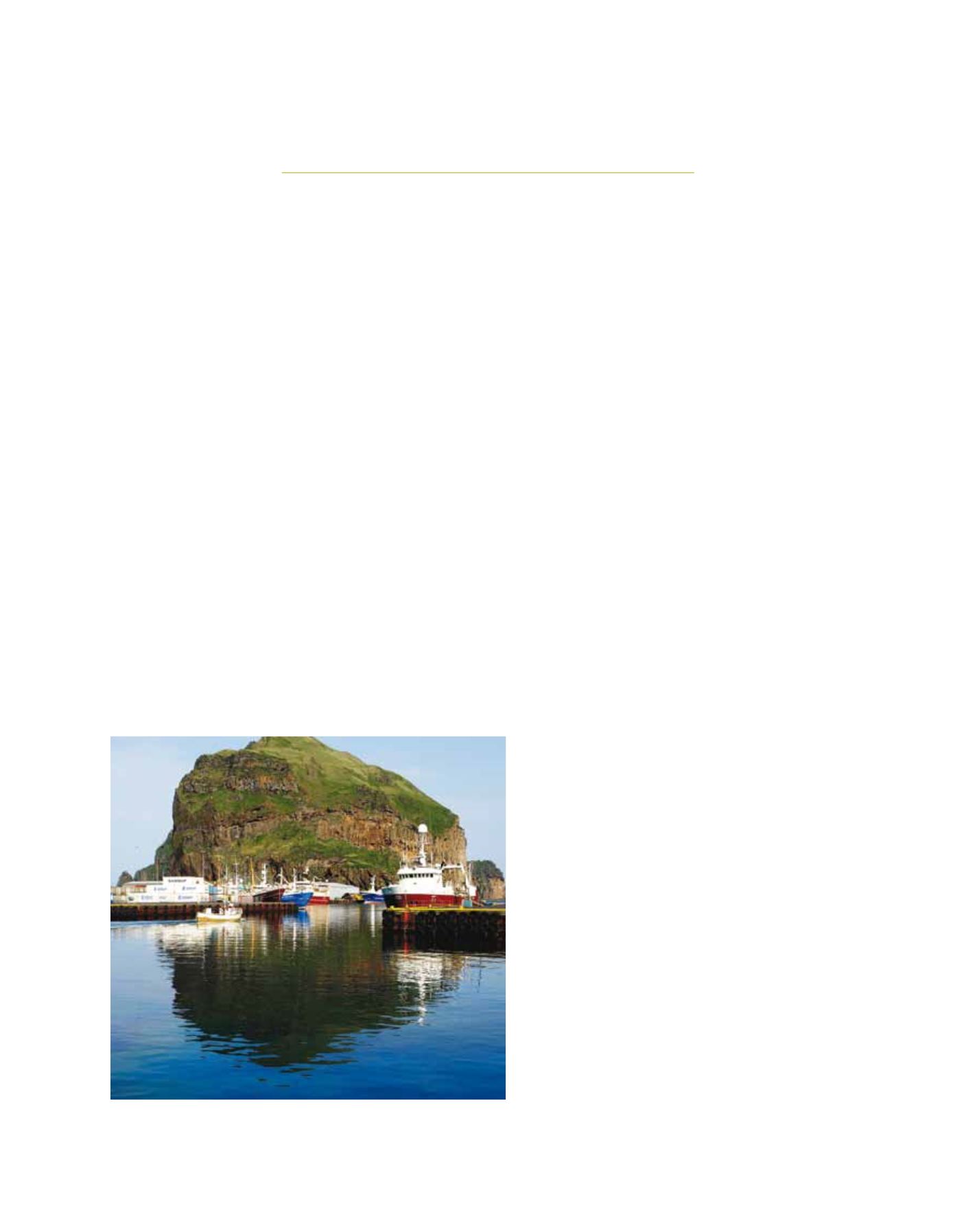
Vestmannaeyjar harbour. Sustainable fisheries are a key to long-term prosperity and
well-being in Iceland
Image: Hugi Ólafsson