



 87 / 208

[
] 87
Portuguese-Spanish transboundary
water management cooperation
Rui Rodrigues, Head, Water Resources Planning and Monitoring and
Information Systems Joint Departments, Portuguese Institute for Water
T
he Iberian Peninsula in South-Western Europe sepa-
rates the Atlantic Ocean from the Mediterranean
Sea. About 44 per cent of its almost 600,000 km
2
area corresponds to river basins shared between Portugal
and Spain. Due to prevailing westerly winds throughout the
year, the incoming moisture induces both a decreasing gradi-
ent in specific flows from north to south and an increasing
Mediterranean torrential component to the flow regimes.
In comparison with other European river basins further north, the
annual average specific flows in the Iberian shared rivers are lower,
although its specific flood flows are much higher. For instance: the
100-year flood flow in the Tagus downstream of the international
reach is about 16,400 m
3
for an area of 60,000 km
2
; the 100-year
flood flow for the Rhine at the border between Germany and the
Netherlands is less than 50 per cent of the former while its drainage
area is 2.75 times larger; and for the Elbe at Dresden,
the 100-year flood flow is almost 25 per cent of that of
the Tagus with similar drainage areas involved.
During the twentieth century, several agreements
were signed by both countries to allocate equitable
amounts of water to each country’s water projects. In
the early decades of the century, the main objective
determining the sharing of waters was power genera-
tion, focused only on stretches of river delimiting the
border. However, eventually a more transboundary
hydrographic scope was adopted and water transfer
impacts were also considered.
At the end of the twentieth century, a more holistic
approach was developed, in keeping with the Water
Framework Directive that was then being negotiated
between the European Union Member States and the
European Commission. This meant the consideration of
ecological status preservation as well as the restoration
of shared waters.
The Water Convention signed in 1998 assigned for
the first time minimum requirements, not only for
the upstream country but also for the downstream
country, in order to secure fresh water inflows to
estuary ecosystems at river mouths.
E
nvironment
:
air
,
water
,
oceans
,
climate
change
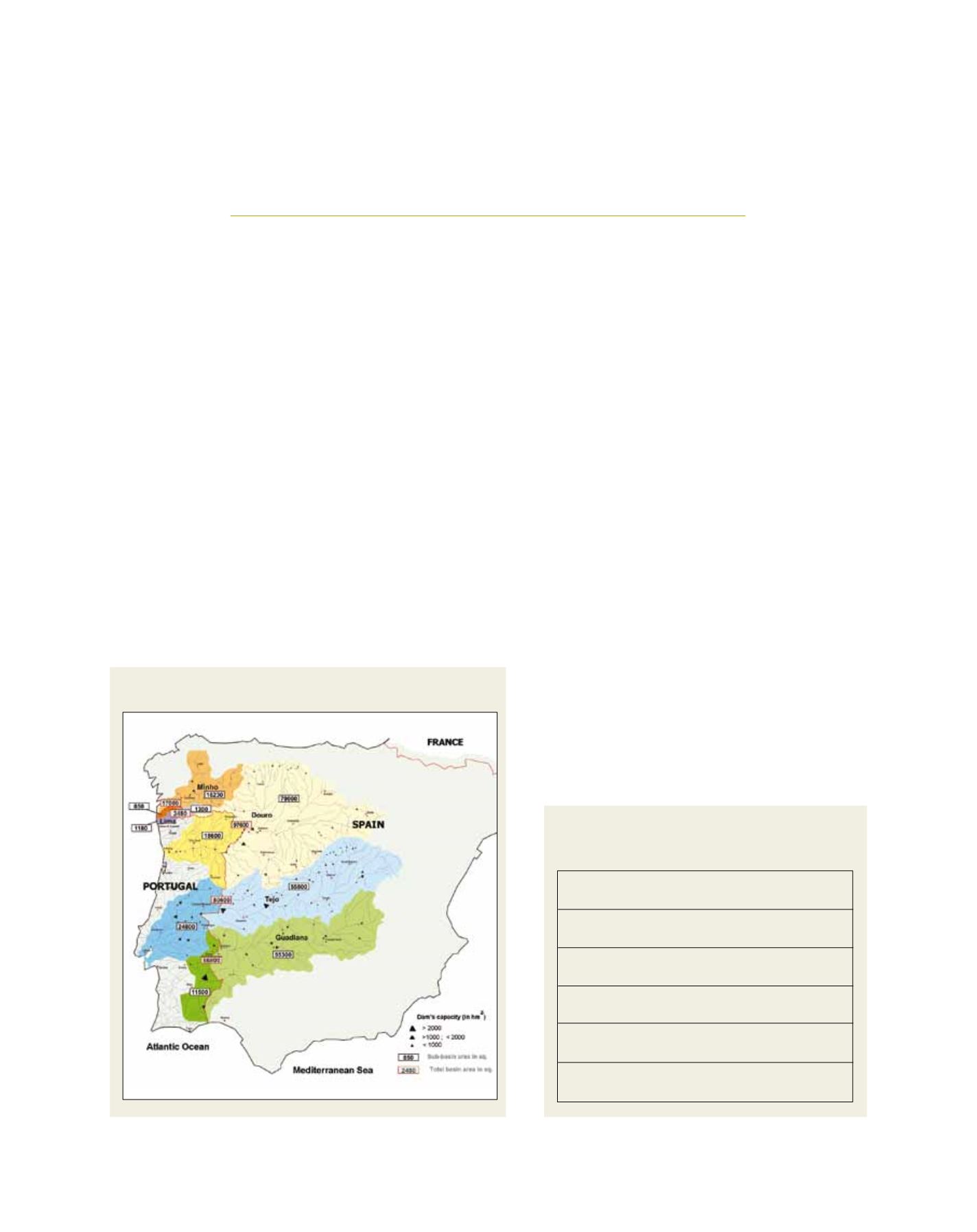
Figure 1: The Iberian Peninsula and its river basins shared between
Portugal and Spain
Source: National System of Information Resources
Final date of rainfall accounting procedure for hydrological
year: 1 March
Weighted amount of rainfall collected in reference rain
gauges within the basin: 142 mm
Minimum rainfall threshold (65 per cent of mean value from
October to February): 182 mm
Total volume stored in upstream dams: 5574 hm
3
(= 5.57 cu. km)
Stored water thresholds (for total exemption:< 2650 hm
3
;
for partial exemption: >2650 ; <3150 hm
3
)
Annual amount of flow due to downstream country in
current year: 400 hm
3
;
Example of verification of dry conditions in current
hydrological year (2011/2012) for the Guadiana
river basin
Source: National System of Information Resources