



 89 / 208

[
] 89
Advancing environmental sustainability
and sustainable ecological agriculture
through community empowerment
Sarojeni V. Rengam, Executive Director, Pesticide Action Network Asia and the Pacific
P
esticides continue to negatively impact the health and lives
of millions of agricultural workers, their communities and
consumers worldwide as well as causing great damage
to biodiversity and the environment. Farmers and agricultural
workers are heavily exposed to pesticides and suffer a range
of acute and chronic health effects while remaining tragically
ignorant of their source. Pesticide impacts compromise people’s
ability to work, earn a living and conduct community and liveli-
hood functions. Long-term chronic effects – including systemic
damage and diseases, cancer, reproductive health problems and
hormonal disruption – seriously threaten the long-term survival
of rural communities. Impacts on women’s health (and that of
their children) are critical as the pesticides women farmers and
workers spray are potentially toxic to the foetus. Endocrine
disruption is particularly dangerous for unborn babies, affect-
ing growth and formation and causing systemic and functional
deficiencies and effects on future fertility.
Pesticides, poverty, food and health are inextricably
linked in a vicious cycle. With poverty, there is less
ability to take action – for example, to seek treatment
for health effects or switch to safer methods. Most
workers are reluctant to report pesticide poisoning for
fear of losing their jobs or experiencing retaliation, or
because they cannot afford time off or medical costs.
With farmers, the problems of pest resistance and resur-
gence intensify a heavy reliance on pesticides: resorting
to more poisonous pesticides, increasing the amounts
sprayed or using dangerous cocktails, all of which
intensify health impacts. Many fall into severe debt and
poverty to keep up with this increasing chemical use
and crop loss. Highly hazardous pesticides also cause
losses in the biodiversity which provides sources of
food, health and livelihoods for many rural communi-
ties. Pesticide production is a multinational industry
whose priorities are profits rather than the health of
communities and the environment.
Pesticide Action Network Asia and the Pacific
Pesticide Action Network Asia and the Pacific (PAN AP)
is the regional centre for PAN International, working
with partners to tackle pesticide problems and advocate
for alternatives. Over the years, PAN AP has evolved its
own regional priorities, which include advancing food
sovereignty for the people, particularly the marginal-
ized sections of society, and promoting gender justice
and environmental sustainability in the region. PAN
AP has been supporting small farmers, agricultural
workers, rural women and indigenous peoples in their
struggles against pesticides that impact their health and
the environment, against unsustainable agriculture and
aggressive development, and against displacement and
loss of livelihood. It seeks to strengthen people’s move-
ments for environmental protection, biodiversity-based
ecological agriculture (BEA), food sovereignty, land
rights and rural women’s empowerment.
Towards these ends, PAN AP has built strong part-
nerships with peasants, agricultural workers and rural
women’s movements in the Asia Pacific region. PAN
AP now comprises 108 network partners in the region
and has links with about 400 other civil society and
grassroots organizations, regional and global.
E
nvironment
:
air
,
water
,
oceans
,
climate
change
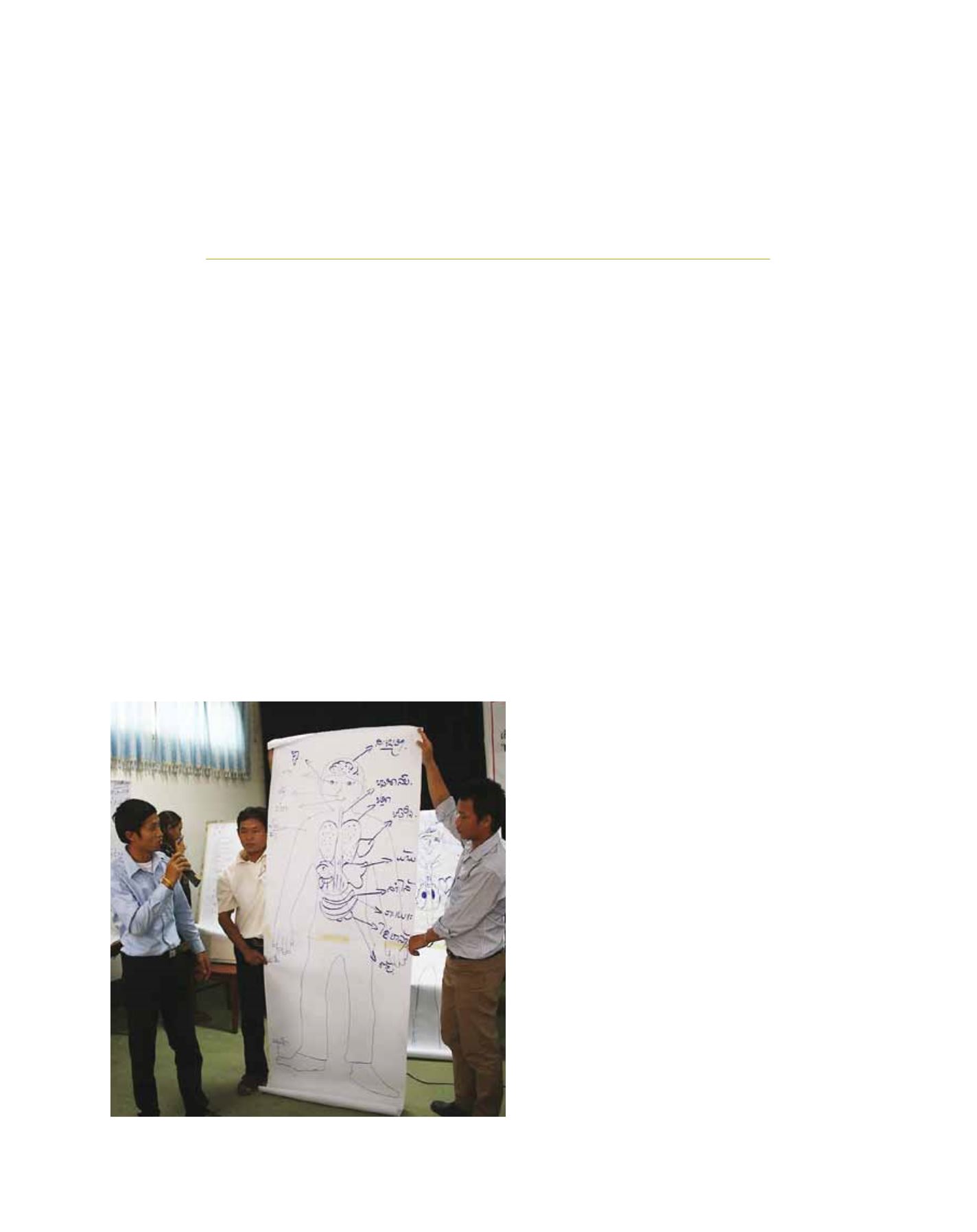
Pesticides have a variety of long-term chronic effects on the body
Image: PAN AP