


 93 / 208

[
] 93
Rwanda’s firm steps on the road to Rio+20
Alex Mulisa, Rwanda Environment Management (REMA), Denis Rugege, Environmental Advisor to REMA,
Rose Mukankomeje, Director General, REMA, Ms Caroline Kayonga, Permanent Secretary,
Ministry of Natural Resources, Republic of Rwanda
A
s the global community convenes for the United Nations
Conference on Sustainable Development (Rio+20),
Rwanda has registered significant strides on the
sustainable development front despite the challenges it faces.
The country has worked to drive the sustainable development
agenda and invested great efforts to benefit from green growth
in line with the Rio vision of globalized sustainable development
objectives. This article provides a summary of Rwanda’s areas
of focus for sustainable development.
Vision 2020
In 1992, when the world convened in Rio for a historic accord
on the multilateral environmental agreements (the United
Nations Framework Convention on Climate Change (UNFCCC),
the Convention on Biological Diversity and the United Nations
Convention to Combat Desertification), Rwanda was in the throes
of war and conflict that later culminated in genocide, destroying
the lives of over a million people as well as property and institu-
tions.
1
In July 1994, the genocide ended and efforts
were rapidly directed to reconstruction, including
institutional building through an emergency period
that lasted until 1998. In the aftermath of the emer-
gency period, Rwanda set its focus on policy and
institutional set-up and reorganization.
In 2000, the country developed a new vision for a
post-war Rwanda and called it Vision 2020. The vision
captured the nation’s aspirations for what the Rwandan
people would accomplish by the year 2020. Vision 2020
is the overarching policy prescription which sets out the
key areas of focus that must guide Rwanda’s progress
towards sustainable development. It envisages “a popu-
lation that is healthier, educated and generally more
prosperous” and its key targets include:
• Achieving annual per capita income of US$900 in
2020 (from US$220 in 2000)
• A poverty rate of under 30 per cent in 2020 (from
the rate of 60.4 per cent in 2000)
• An increase in average life expectancy to 55 years
(from 49 years in 2000).
2
The nationally-driven Vision 2020 targets were aligned
to the Millennium Development Goals (MDGs), an
indication of Rwanda’s national commitment to the
sustainable development target of reducing poverty by
half by 2015.
To implement the vision, a Poverty Reduction
Strategy Paper (PRSP 1) was designed by the
Government of Rwanda in 2001 and implemented
over a five-year period. As part of the national
focus on sustainable development, implementa-
tion of PRSP 1 took into account the integration of
the environment as a cross-cutting issue to ensure
environmental sustainability in social and economic
sectors. Periodic reviews have since led to the consid-
eration of the environment and climate change in the
light of emerging knowledge on their role in fostering
sustainable development.
Following a recent review of current sustainable
development trends, Vision 2020 indicators and targets
have been revised to focus national development efforts
on responding to the rapid pace of Rwanda’s develop-
ment and the changing global environment. This focus
has substantively incorporated environmental sustain-
ability and climate change as key components in the
pursuit of national sustainable development. It serves as
E
nvironment
:
air
,
water
,
oceans
,
climate
change
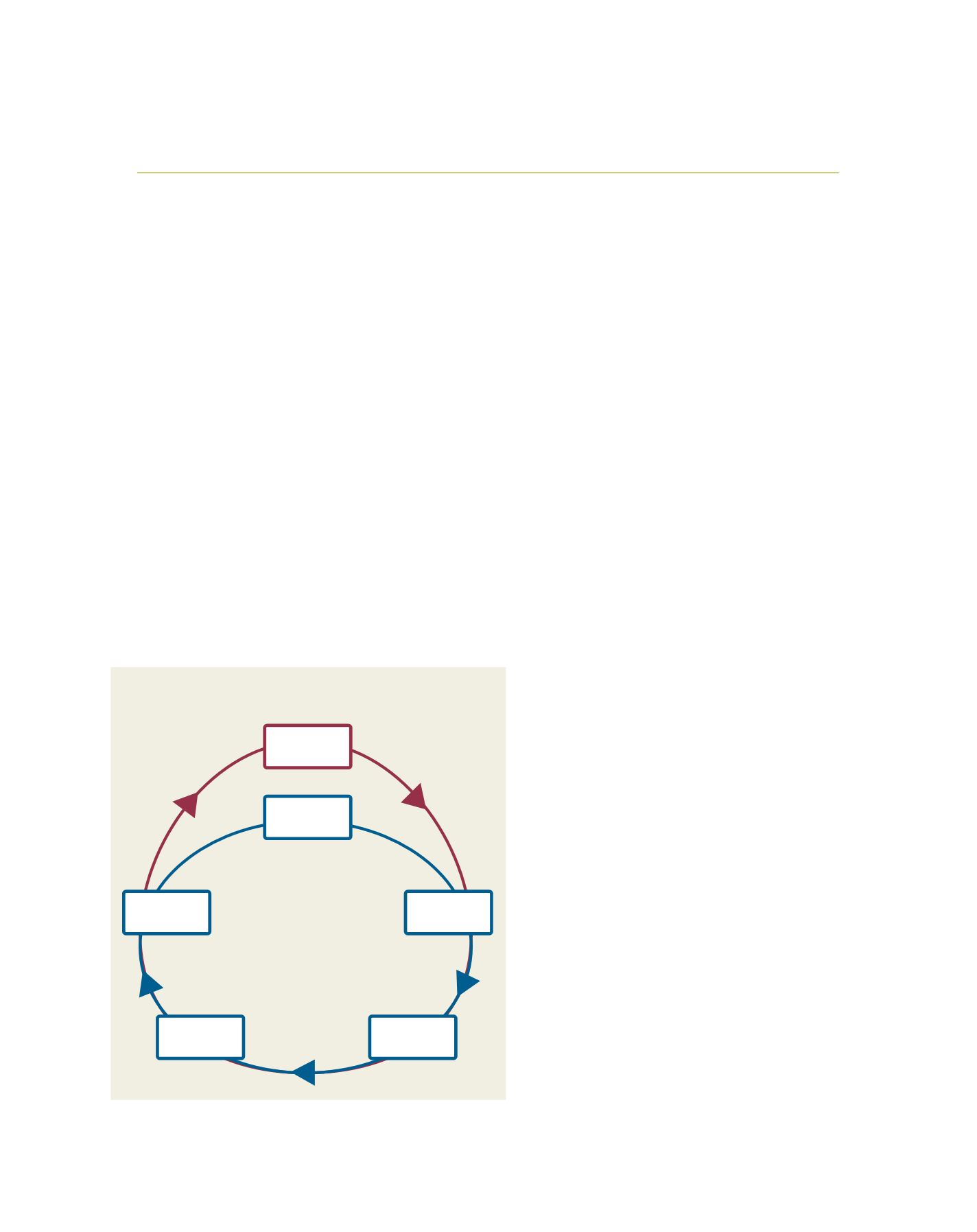
1. Consultations &
District Strategic
Issues paper
2. Budget
framework paper &
3-year rolling MTEF
5. District Annual
Report & Joint
Annual Review
Annual Budget cycle
Updated every 3 years
4. Annual Budget
Execution Report
3. Elaboration of
Action Plan &
Annual Budget
5-year DDP
Sector policies, legislations, strategies, programmes and plans: the
subnational planning and budgeting cycle to implement EDPRS
Source: Rwanda Environment Management Authority/District Environment
Management Project (REMA/DEMP), 2007