



 98 / 208

[
] 98
E
nvironment
:
air
,
water
,
oceans
,
climate
change
waste. The market share for recyclables will reach a minimum of
7-9 million tons each year by 2025, for an estimated 75 million
tons of municipal waste generated in SWEEP-Net’s partner coun-
tries.
11
Provided proper awareness is in place, this should trigger
the proliferation of recycling industries and the establishment of
new professional consulting services.
Finally, the role of the informal sector cannot be overlooked, where
often the cash value of waste is appreciated only by waste pickers and
scavengers, who collect, recover, reuse and sell waste materials. They
have developed an internal economy fromwaste disposal sites, such as
those in Cairo, where at least 200,000 waste pickers – the Zabbaleen
– have created one of the city’s largest informal settlements, which is
home to between 800,000 and 1 million people. Initiatives are now
underway to organize and formally integrate this informal sector in
Morocco, Egypt and Tunisia. Indeed, partner countries can build on
the much-needed expansion of social programmes to create regional
jobs and establish a formal labour force from waste recycling and
recovery, especially in a region where cheap labour costs could offset
expensive technology options. Institutional arrangements between
formal and informal sectors could also be improved, such as those
for marketing recycled waste products, or providing raw material to
manufacturers.
How is SWEEP-Net contributing to greening the waste sector?
As the only regional platform for exchanging best practices and expe-
riences in MENA, SWEEP-Net plays an exclusive and critical role in
strengthening regional cooperation and enabling its partner countries
in moving towards greener SWM.
12
This issue is being addressed by
SWEEP-Net, through four regional work axes:
• Public awareness and community participation,
including induced behavioral changes
• Financial and cost recovery aspects, including market
incentives and environmental tax
• Public-private partnership and cooperation
• Strengthening local authorities to improve SWM
(SWEEP-Net is the subregional secretariat for the United
Nations’ IPLA / International Partnership for Expanding
Waste Management Services of Local Authorities).
The regional platform is being developed with key
stakeholders and direct support from the waste manage-
ment authority in each partner country; this allows
policymakers to learn from the experiences and success
stories of similar countries, exchange ideas on the best
ways to develop and implement new policy frame-
works for waste reduction, reuse and recycling, and to
promote green technologies in the sector.
SWEEP-Net’s second regional forum, held in May
2012, focused on the economic and ecological poten-
tial for ‘greening’ the waste sector in the MENA region.
Attended by international professionals and experts from
the public and private sectors, the forum addressed envi-
ronmental and economic challenges as well as national
initiatives in a green economy, including the role of the
banking and investment sector. SWEEP-Net was also
launched as a regional organization during this event,
which is a further confirmation of SWEEP-Net’s ongoing
commitment to developing effective SWM solutions.
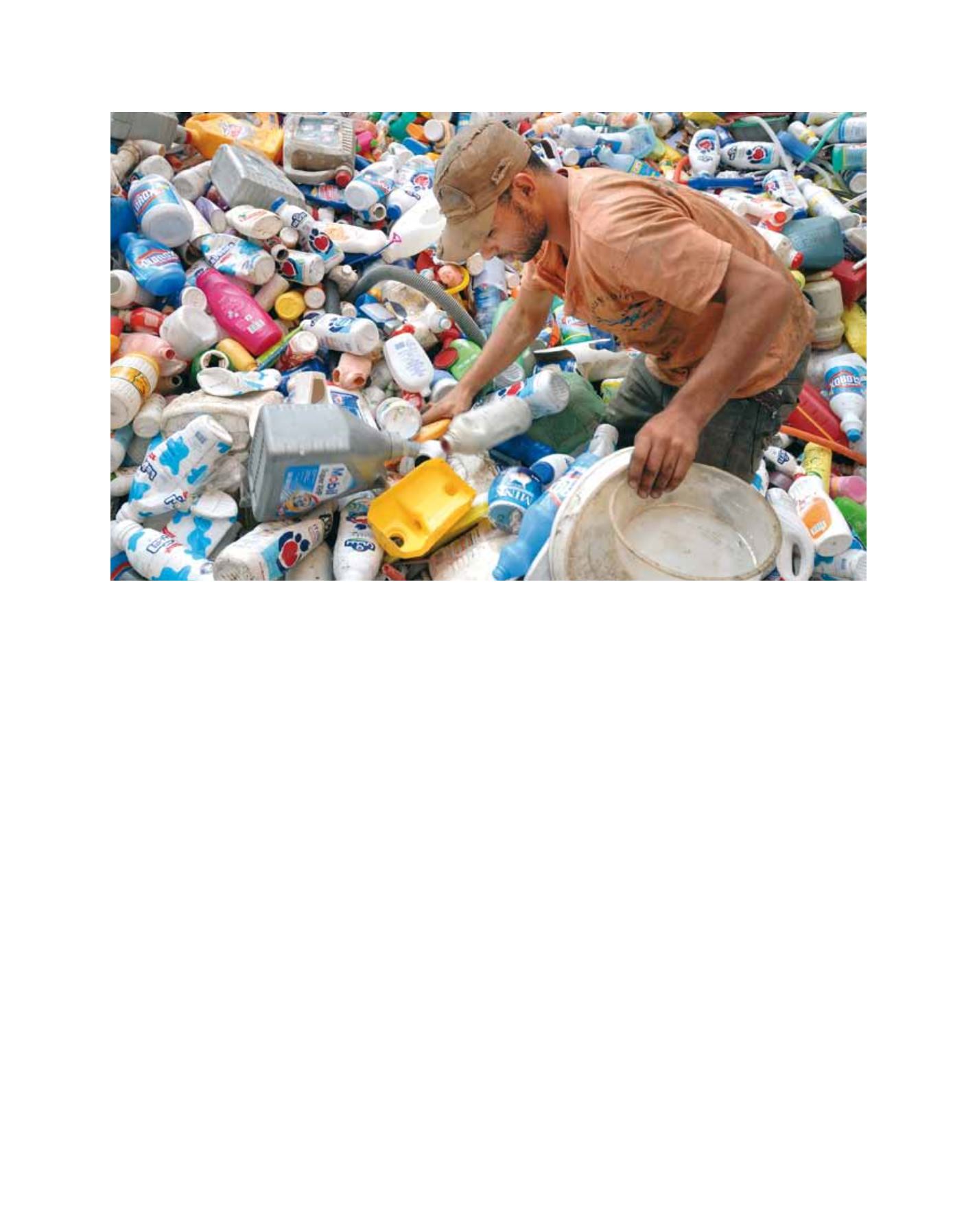
Recovery and recycling is less than six per cent of total waste
Image: GIZ – Nour El Refai – Egypt