



 85 / 208

[
] 85
E
nvironment
:
air
,
water
,
oceans
,
climate
change
But the most pressing problem facing the oceans
now may be climate change and the increasing carbon
concentration in the atmosphere and hydrosphere. The
retreat of Arctic sea ice is more rapid than previously
predicted and is likely to have a profound impact on
ecosystems and human activity in the northernmost
part of the world. Ocean acidification is of growing
concern and we still have poor understanding of how
it could affect marine organisms and ecosystems. What
we do know is that acidification will steadily increase in
tandem with the runaway increase in carbon emissions,
which will have an enormous impact on marine life, so
combating greenhouse gas emissions (GHGs) is one of
the key actions to keep our oceans healthy. One way
to curb GHGs is to use the power of wind and ocean
waves, a vast but almost untapped source of energy in
currents and tidal flows, which awaits our ingenuity to
mitigate climate change.
Acidification is a particularly severe threat to organ-
isms with shells and exoskeletons made of calcium
carbonate, including shellfish, many plankton species
and corals. Tropical coral reefs are often called the
rainforests of the oceans due to the wealth and variety
of life they support, but corals are also found in cold
waters, including those around Iceland. Ten coral areas
in Icelandic waters are now protected, along with two
undersea hydrothermal vents. These areas are being
designated Marine Protected Areas (MPAs), but many
more are protected from fisheries on a temporary or
in all parts of the world. They are, however, too few. It has been esti-
mated that the economic cost of fisheries mismanagement globally
amounts to more than US$50 billion a year. Yet this does not reflect
the human cost, as well-managed fisheries could massively boost food
security, nutrition and coastal societies in many parts of the world.
The sea is not only a source of fish for consumption. It is the
cradle of life on Earth, supporting a vast and complex ecosystem
which we know less about than terrestrial life. We need to ensure
its future by putting a stop to pollution and other destructive human
practices. Although significant progress has been made on many
fronts which can be built upon, we face immense challenges. The
time when the ocean was seen as a vast garbage can has long passed.
We have taken many important steps to reduce pollution from ships
and to stop dumping waste into the sea. Chemical pollution of the
ocean has also been reduced under the auspices of the Stockholm
Convention on Persistent Organic Pollutants and other multilateral
instruments. Yet we cannot maintain we have turned the corner on
marine pollution, most of which comes from the land, where sewage
treatment struggles to keep up with a growing population in coastal
areas. The richest ecosystems and fisheries are more commonly
found along coasts and in shallow waters, where human impact is
more keenly felt.
Important for protecting oceans from land-based activities and
tackling upstream sources of pollution, The Global Programme of
Action for the Protection of the Marine Environment from Land-
Based Activities of the United Nations Environment Programme
recently launched a partnership to combat marine litter – a
growing concern among scientists and policymakers – and should
be strengthened in its efforts.
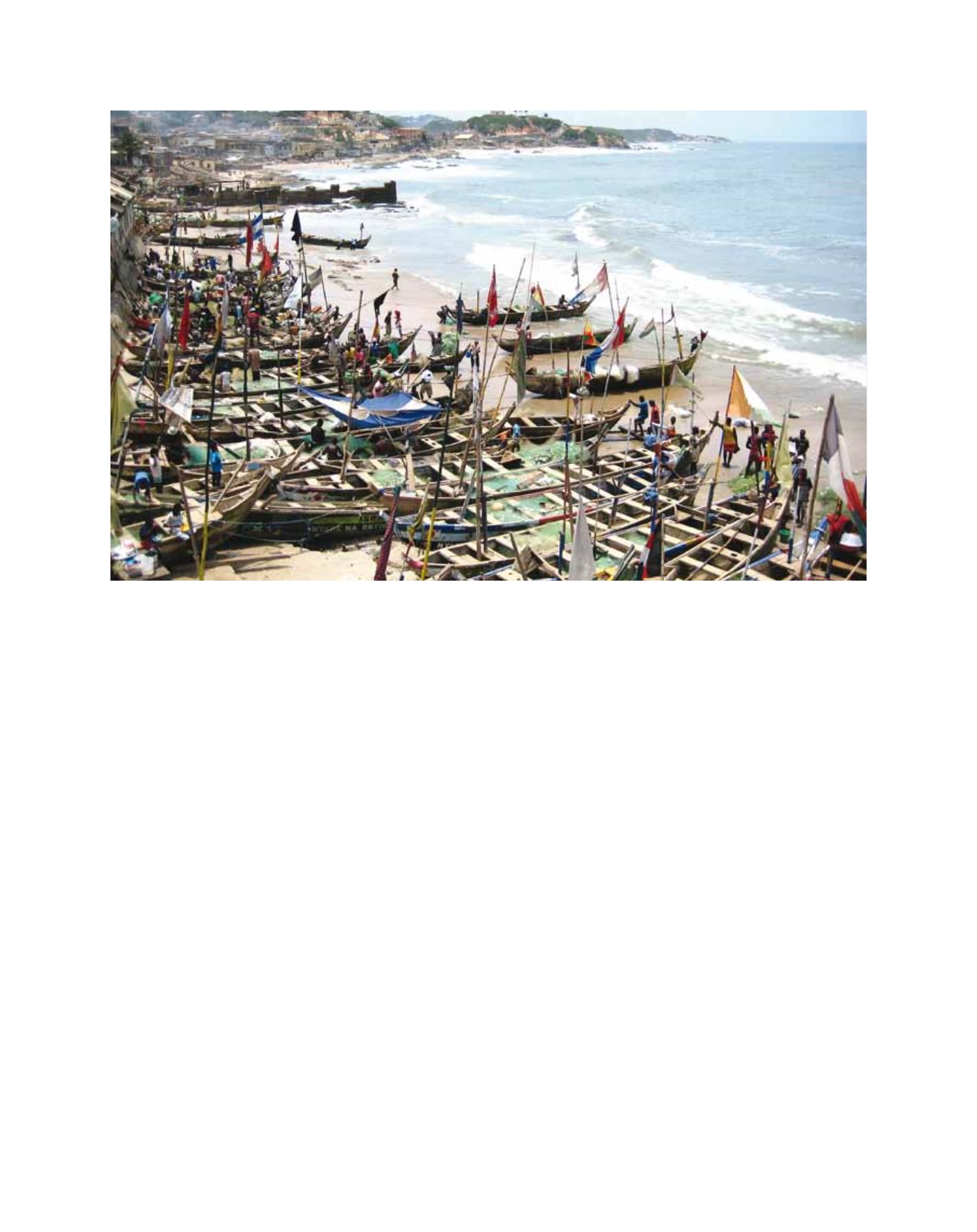
Fishermen in Cape Coast in Ghana. Fisheries are a source of employment, sustenance and quality nutrition to hundreds of millions of people
Image: Hugi Ólafsson