


 109 / 156


[
] 109
T
HE NORTHERN PARTS
of Pakistan are among the most isolated
areas of the western end of the Himalayas, surrounded by
high mountain passes. The area’s remote human communi-
ties reside in narrow valleys dominated by mountains and rivers.
Ethnic diversity of these areas is unique, and many of the passes
are migration routes between central Asia and the Indian sub-conti-
nent. The construction of the Karakoram Highway has opened the
area to outside influences.
Pakistan’s northern regions are disaster prone, falling in a seis-
mically unstable zone at the point of confluence of the Indian and
the Eurasian plates. These regions are regularly impacted by natural
disaster events such as earthquakes, floods, landslides and droughts.
Degradation of natural resources, especially the loss of foliage and
vegetation, has caused land degradation and soil destabilization.
Earthquakes have resulted in the destruction of houses, infrastruc-
ture, facilities and property, as well as creating economic and social
hardship.
The Northern Areas and Chitral (NA/C) portion of northern
Pakistan encompasses two of the country’s poorest regions – 50 per
cent or more of its overall population of approximately 1.2 million
lives below the poverty line. Cultivated land per capita is only 33 per
cent (0.11 hectares per person) of the national average, with per
capita income being 56 per cent of the national average. Only 5 per
cent of the available land in NA/C is suitable for human settlement,
the rest occupied by high mountains. Due to the extreme climate,
winter temperatures in most areas fall to as low as minus 15 degrees
Celsius.
Understandably, thus, the region has poor housing conditions.
Over 80 per cent of all houses are made of mud, or of dry masonry
for wall construction. All houses have wooden roofs with a heavy
layer of mud for insulation. These houses are a death trap in the
event of an earthquake, as demonstrated by the earthquake in nearby
Kashmir on 8 October 2005.
The Aga Khan Development Network (AKDN), through its various
development agencies and affiliate bodies, has been working for the
social, economic and environmental uplift of the NA/C communi-
ties for decades. Recognizing the connection between poverty, high
seismic risk and poor housing construction, habitat risk manage-
ment has always been essential to the AKDN development process,
with physical development undertaken to minimize risks associated
with natural disasters.
As part of the AKDN, the Aga Khan Planning and Building Service,
Pakistan, (AKPBSP) undertakes initiatives to develop built infra-
structure and promotes indigenous construction technology in these
areas. AKPBSP assists organizations and institutions to improve
communities’ built environment and living conditions through
applied research and implementation; improved technological prod-
ucts and tools; and institutional capacity building.
Focus Humanitarian Assistance (FOCUS) is a crisis response
agency affiliated with the AKDN. FOCUS provides disaster risk
management and emergency humanitarian assistance for vulnera-
ble communities in the developing world, and has units in Canada,
Europe, India, Pakistan, Afghanistan and the USA. Through its
Prevention, Mitigation and Preparedness (PMP) programme,
FOCUS Pakistan builds communities’ capacity to reduce their
vulnerability to natural and man-made disasters; prevent disasters
where possible; reduce the harmful effects of disaster; and assist
communities and institutions in preparing for effective disaster
response.
Public buildings – schools and health centres
The Kashmir earthquake killed approximately 83,000 people,
including about 18,000 children who died in schools when the
school buildings collapsed (around 5,300 schools – 66 per cent of
all schools in the affected area – collapsed during the earthquake).
Yet another 15,000 or so children perished when around 400,000
housing units collapsed during the earthquake. The earthquake also
destroyed 420 health facilities (74 per cent of the total health facil-
Risk resilient communities: the Aga Khan
Development Network in northern Pakistan
Asif Merchant, CEO, and Khizer F. Omer, Manager Planning and Evaluation,
Aga Khan Planning and Building Service, Pakistan
Karim Nayani, Nusrat Nasab and Samina Sardar, FOCUS Pakistan
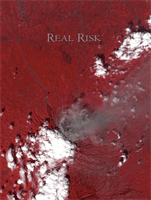
General view of northern Pakistan
Photo: AKPBSP