


 55 / 156

[
] 55
The planning of measures serves to identify and assess those
measures that are necessary and appropriate to reach the protec-
tion goals. The main function of integrated measures planning
is to achieve the intended level of safety for agreed limits in the
most cost-effective way. Organizational, technical and biologi-
cal protective measures must be planned, checked for
effectiveness and undertaken in concert, while keeping in mind
that prevention, intervention and reconstruction are all equally
valid risk management measures. Further criteria such as
sustainability, acceptability, feasibility and reliability of solu-
tions must also be kept in mind.
Safety measures always come along with ‘side effects,’ the
most obvious of which is the financial aspect. But aspects of
ecology, of landscape protection or of land use planning can be
of equal importance. The optimal coordination of all measures
has to consider all relevant aspects, and all activities in the field
of disaster risk reduction must obey the principles of sustain-
ability. Measures need to be environmentally sound, consider
societal preferences and be cost effective. Further, disaster risk
reduction must be part of the sustainable use of natural
resources and of sustainable development, and is therefore
considered a cross-cutting issue.
The socio-political aspects of sustainability are a question of
development and welfare priorities and have to be seen in
context with other targets such as education or healthcare.
Especially in developing countries, reallocation of resources is
often needed after major catastrophes for recovery purposes –
resources that were allocated originally for use in, for example,
investments in education, health care or welfare. A political
balance between long-term investments for prevention and
short-term measures for intervention and recovery is therefore
needed.
Risk dialogue and strategic control
Integral risk management not only dictates that measures are
planned, assessed and applied in accordance with the risk
concept, but also that all those who are involved and affected
are included via a comprehensive risk dialogue, in the process
of planning protection measures. Risk communication and risk
dialogue with all stakeholders and the public have to start very
early. They will be dominated at the beginning more by ques-
tions than answers, and by processes rather than solutions. A
continuous, comprehensive risk dialogue is therefore of vital
importance, thus transforming risk management to become
transparent, understandable and a matter of public trust. Active
information and communication plays a dominant role in crisis
situations – a well-informed public will sustain a catastrophic
situation much better and the risk of panic and long-term
damage can be limited.
A strategic control process periodically checks the risk situa-
tion and the costs and benefits of measures, as well as
monitoring residual risks. Integral risk management shows,
through the basis of the risk concept, how the underlying aims
can be reached with corresponding technically, economically,
societal and environmentally justifiable protection measures.
Outlook
Numerous uncertainties can increase risk in the future. Among
the most important factors that have to be considered, monitored
and periodically checked are globalization, mobility, vulnerabil-
ity, the spread of populated areas and the increase in their value,
sensitivity (through increasing economic interdependencies),
international leisure activities, socio-political changes and chang-
ing climate and weather patterns. Developments in the hazard
and risk process flow must be followed carefully and the poten-
tial for optimization exploited. For the future, the challenge will
be constant change: new risk scenarios, new hazards, climate
change, new social-political conditions, etc. Strategies for dealing
with risks due to natural hazards will therefore have to be adapted
periodically.
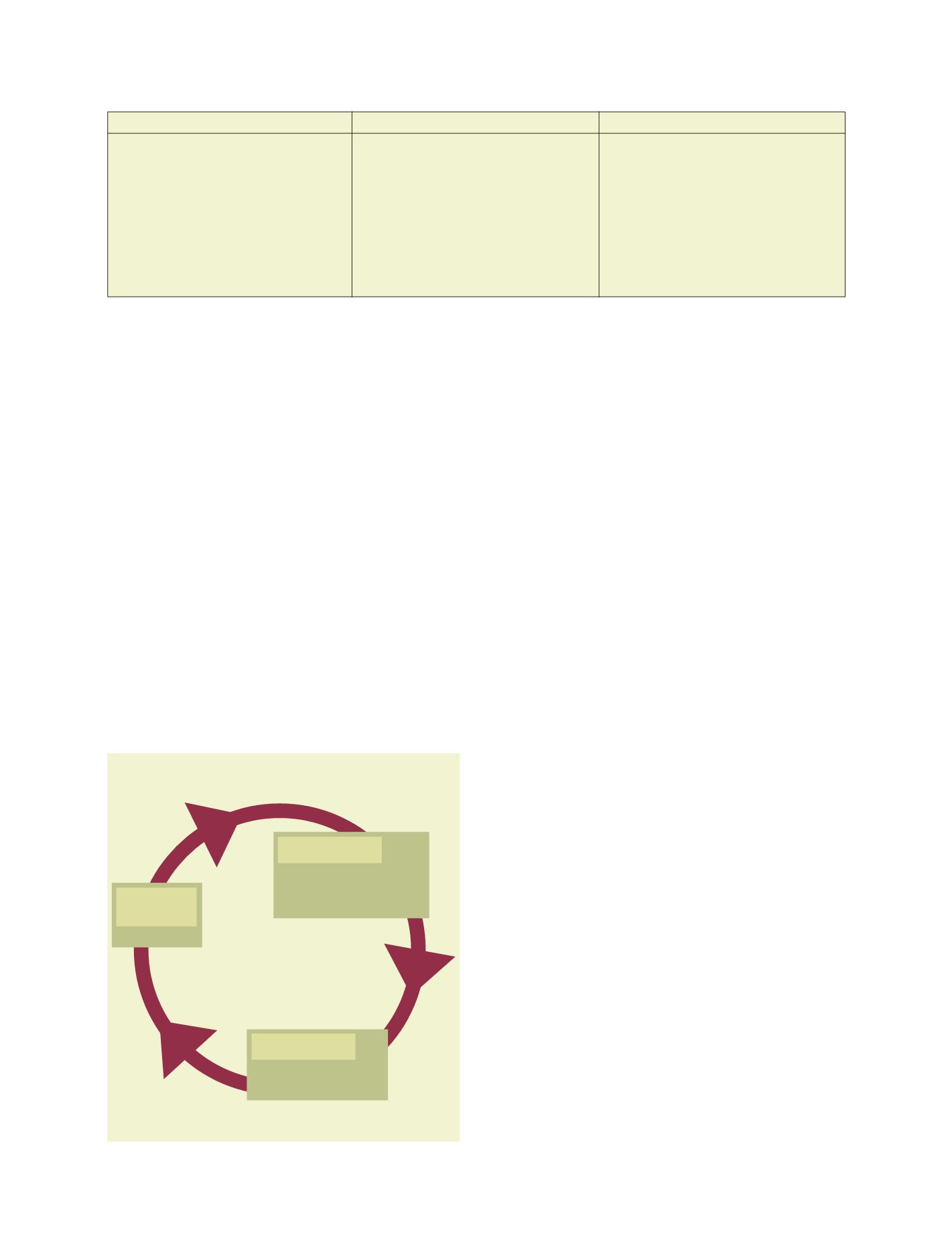
The risk circle and possible measures for risk reduction and mitigation
Organizational measures
Emergency crisis management
Reconstruction
Recovery
Prevention
Intervention
Land-use planning measures
(Hazard maps)
Technical (engineering) measures
Biological measures
Insurance
Necessary steps for risk analysis, risk assessment and integral planning of measures
Risk Analysis
• Hazard analysis
– Event analysis
– Effect analysis
• Exposure analysis
• Impact analysis (vulnerability analysis/robustness)
• Risk estimation and risk description/visualisation
Risk Assessment
• Protection goals
– Life risk
- Individual risk
- Collective risk
– Assets/material damage
• Risk categories
• Risk aversion
Planning of Measures
• Risk-cost-relationship
• Marginal costs
• Integration of all possible measures
• Comprehensive assessment of all measures