


 61 / 156

[
] 61
One of the most important objectives of the WVH National
Emergency Plan was the distribution of basic food and material
supplies for human survival. As WVH already had significant
experience in emergency distribution, through CAMI it concen-
trated on improving existing structures, programmes and
personnel. Through CAMI’s third objective, the majority of ADPs,
regional and national offices were able to implement an emer-
gency supplies distribution programme complying with SUMA
standards.
Two important aspects of CAMI were:
• The development of training materials and curricula
• The strong link between community RRTs and
municipalities.
Training materials were developed by project staff integrating
information from a variety of sources, contextualized to local
culture and national context. Training was provided to commu-
nity leaders and members, representatives of local municipalities
(Patronato) and members of ADP local boards. A strong focus
was on including women, children, the elderly and other vulner-
able groups in training activities.
Significantly, the scope of training included a past-present-
future review and planning process, including a review of
Hurricane Mitch and previous local disaster experiences, and
simulations written into WVH five-year strategies. This helped
participants to develop important analytical and planning skills,
identifying strengths and weaknesses in their own communities
and engaging them in short- and longer-term planning.
CERDM
In 2003 WV expanded the CAMI programme in the region,
beginning with Ecuador and Nicaragua, with support from the
Government of Australia (AusAID) and the efforts of WV
Australia. It was renamed CERDM, and its programme structure
continued to be adapted according to changing local contexts.
The expanded CERDM had two special areas of emphases: chil-
dren and advocacy.
CERDM school project
Based on initial CAMI efforts in Honduras in 2004, WVH initi-
ated a school-based project developing the skills and leadership
capacities of children to be active members in building the
resilience of their communities to disasters. This project triggered
as much interest among school administrators as it did among
community leaders. The CAMI model was introduced in primary
schools through the organization of CODELs elected from the
student body. CAMI trainers trained the CODELs and their teach-
ers in essential areas of community-based disaster reduction, so
teachers could continue the programme in the future. By creating
the youth CODEL through student elections, children were chosen
by their classmates and viewed as role models. They were seen as
community youth leaders and were more able to influence their
communities’ preparedness and mitigation prior to an emergency.
According to Maria-Luisa Interiano: “Children want to know
what to do before, during and after a disaster. They are very
aware of the risks but, like their parents, they do not know what
to do.” The objective of the CERDM school project was to reach
the next generation of community leadership and influence
them during their formative years. The project provided a way
for the children to become a vital, prepared part of their commu-
nity before, during and after a disaster.
Community-based advocacy for resilience
It is common knowledge that disaster response and the resources
associated with it can fall prey to prevailing political agendas and
corruption. Hurricane Mitch, among many other disasters,
demonstrated that communities were mainly passive recipients of
assistance. An external evaluation confirmed a lack of engage-
ment among local people in assessing and meeting their own
needs during a disaster. This is known to lead to corruption at
all levels through misappropriation of relief supplies, utilization
of affected low-income and isolated communities for political
gain, and provision of inappropriate relief goods, such as offering
canned sauerkraut to a community that is accustomed to consum-
ing beans and tortillas.
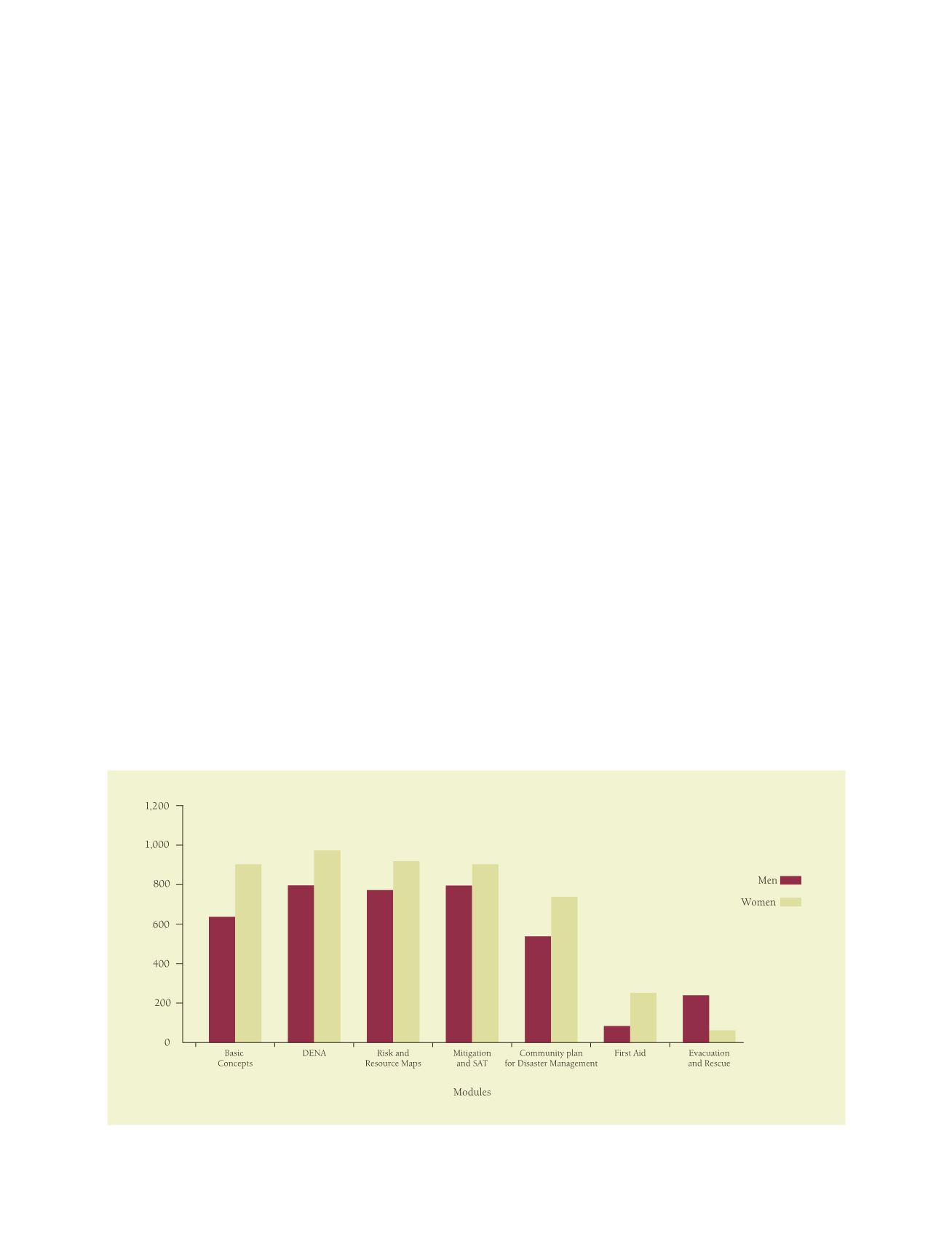
Participants in CAMI, divided by gender
Source: World Vision Honduras